
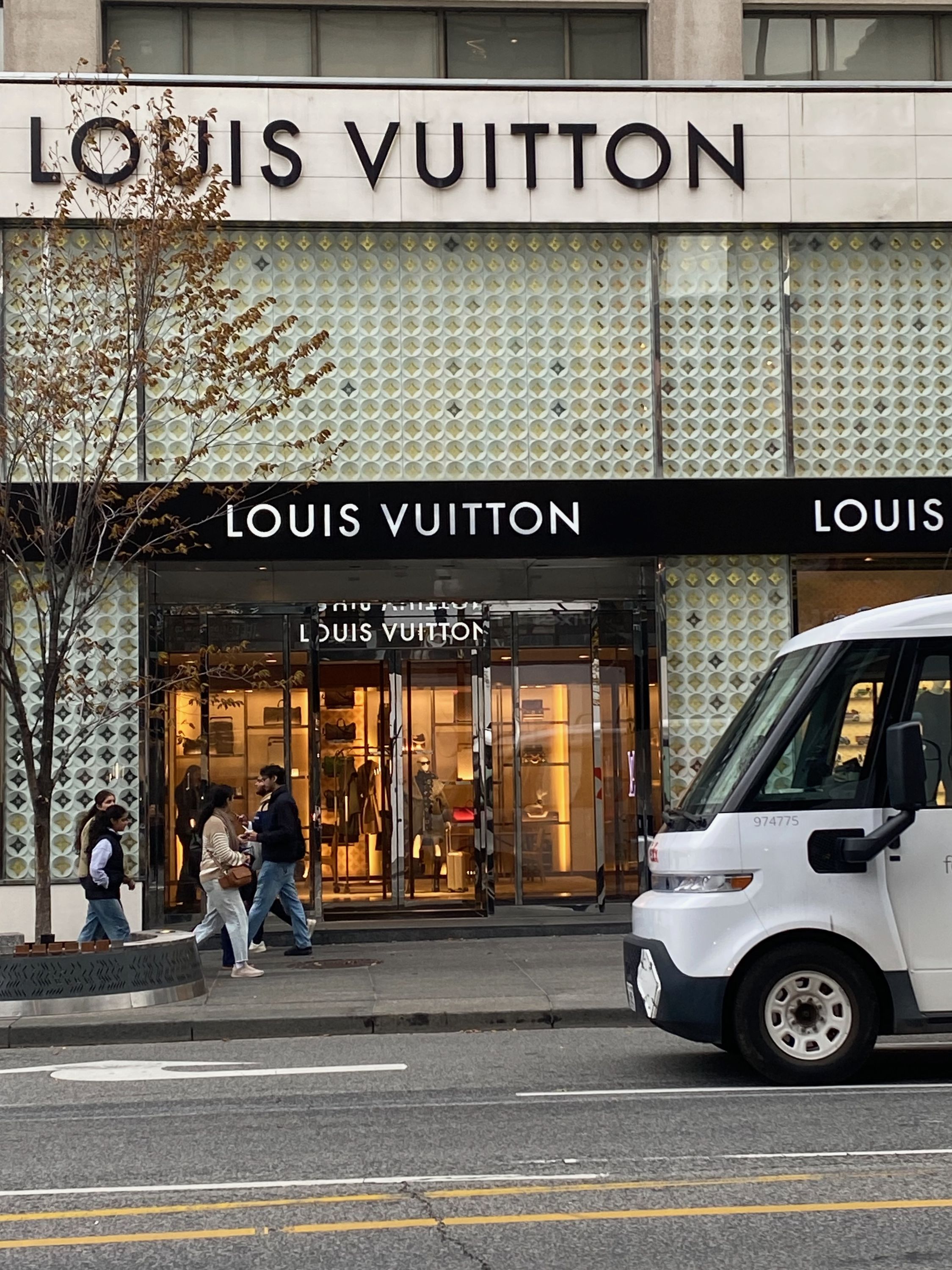
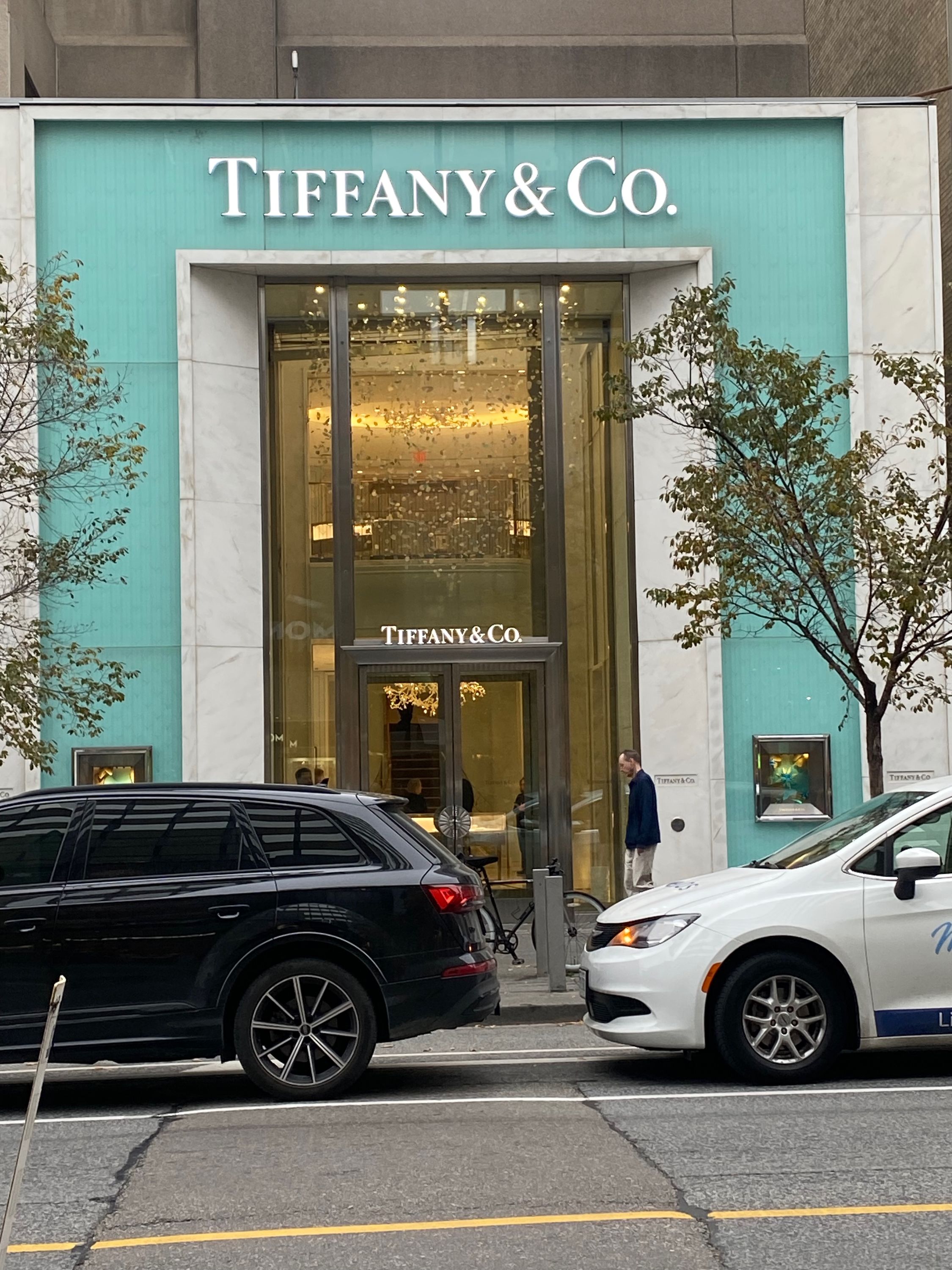
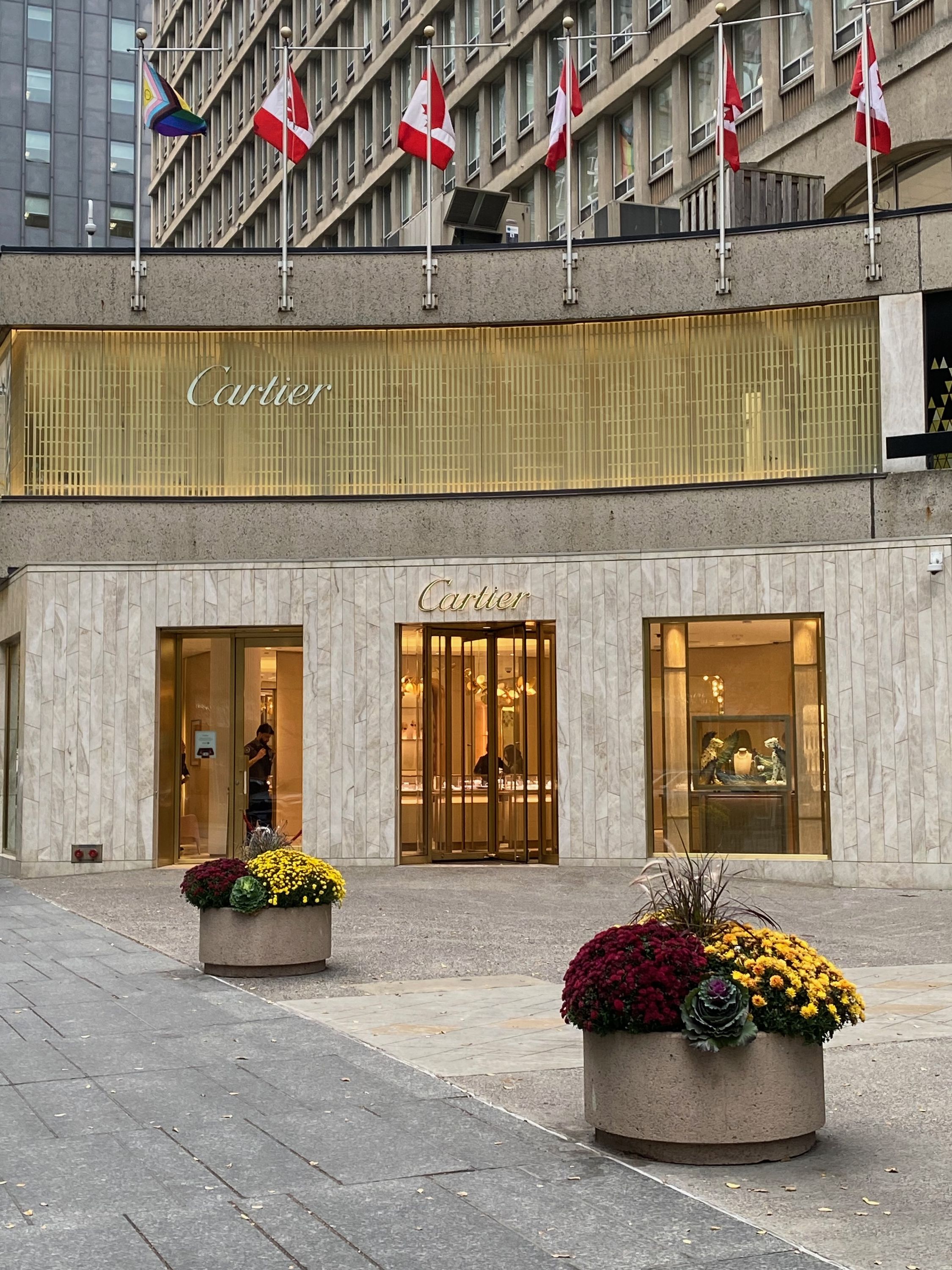
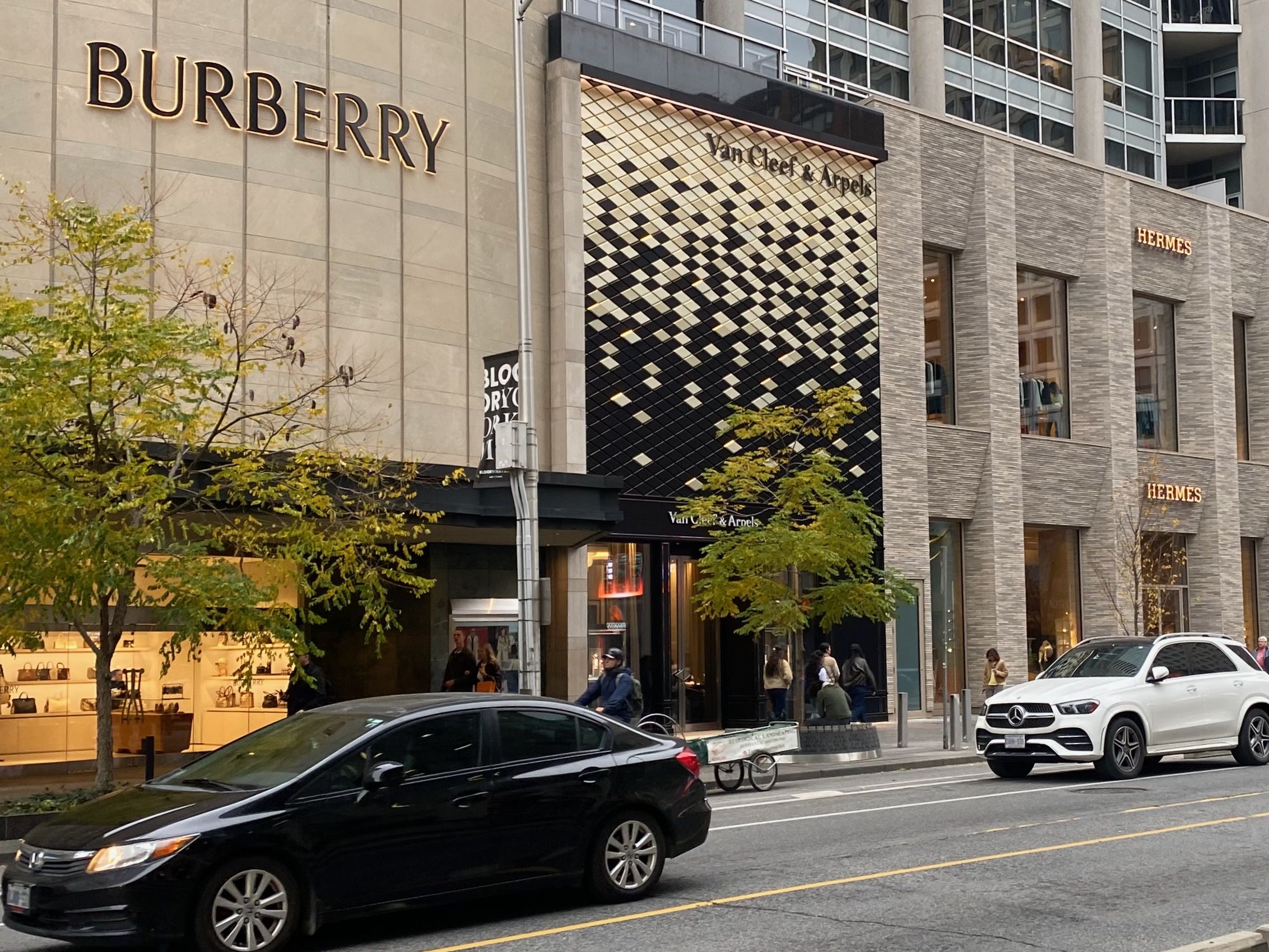
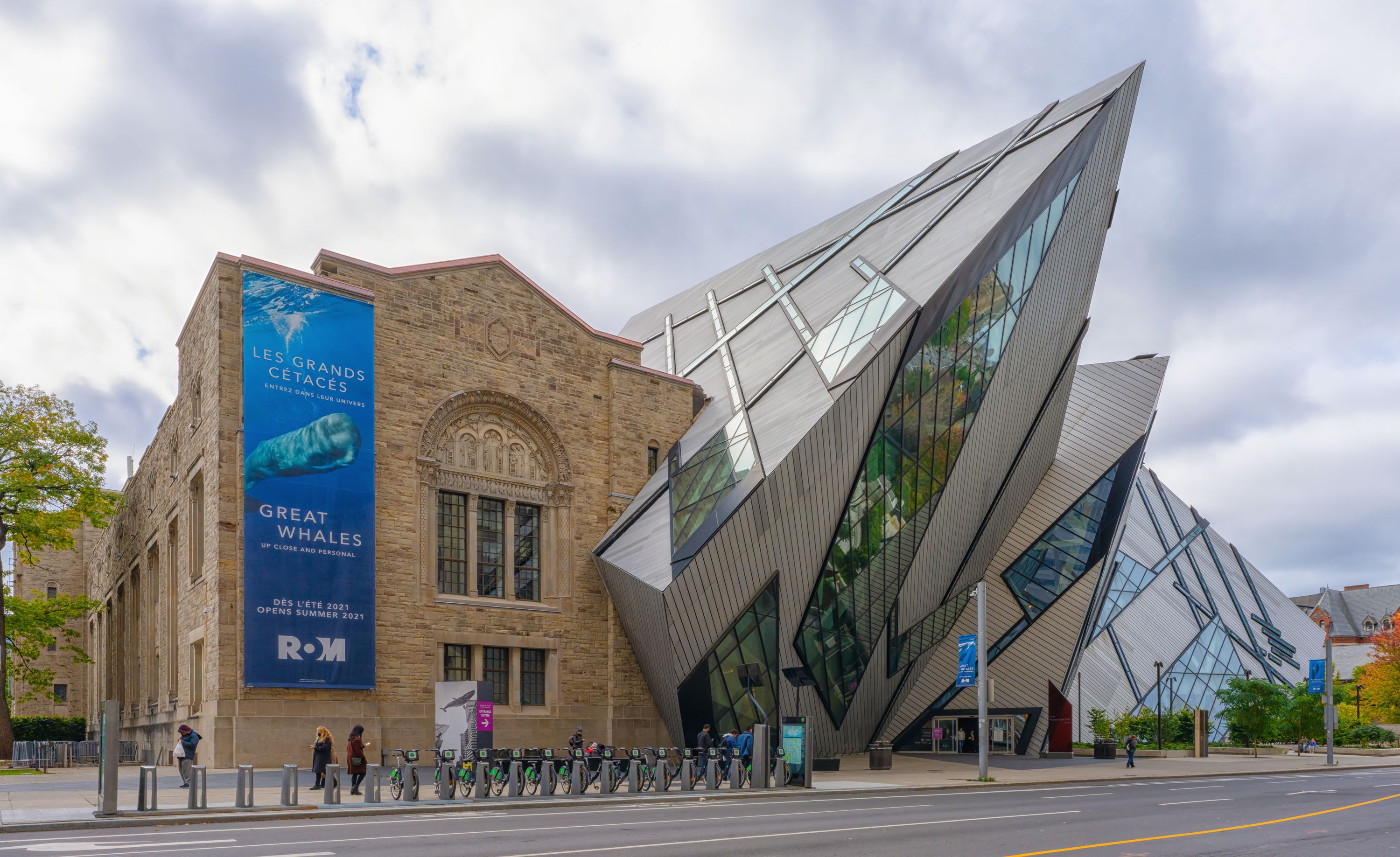
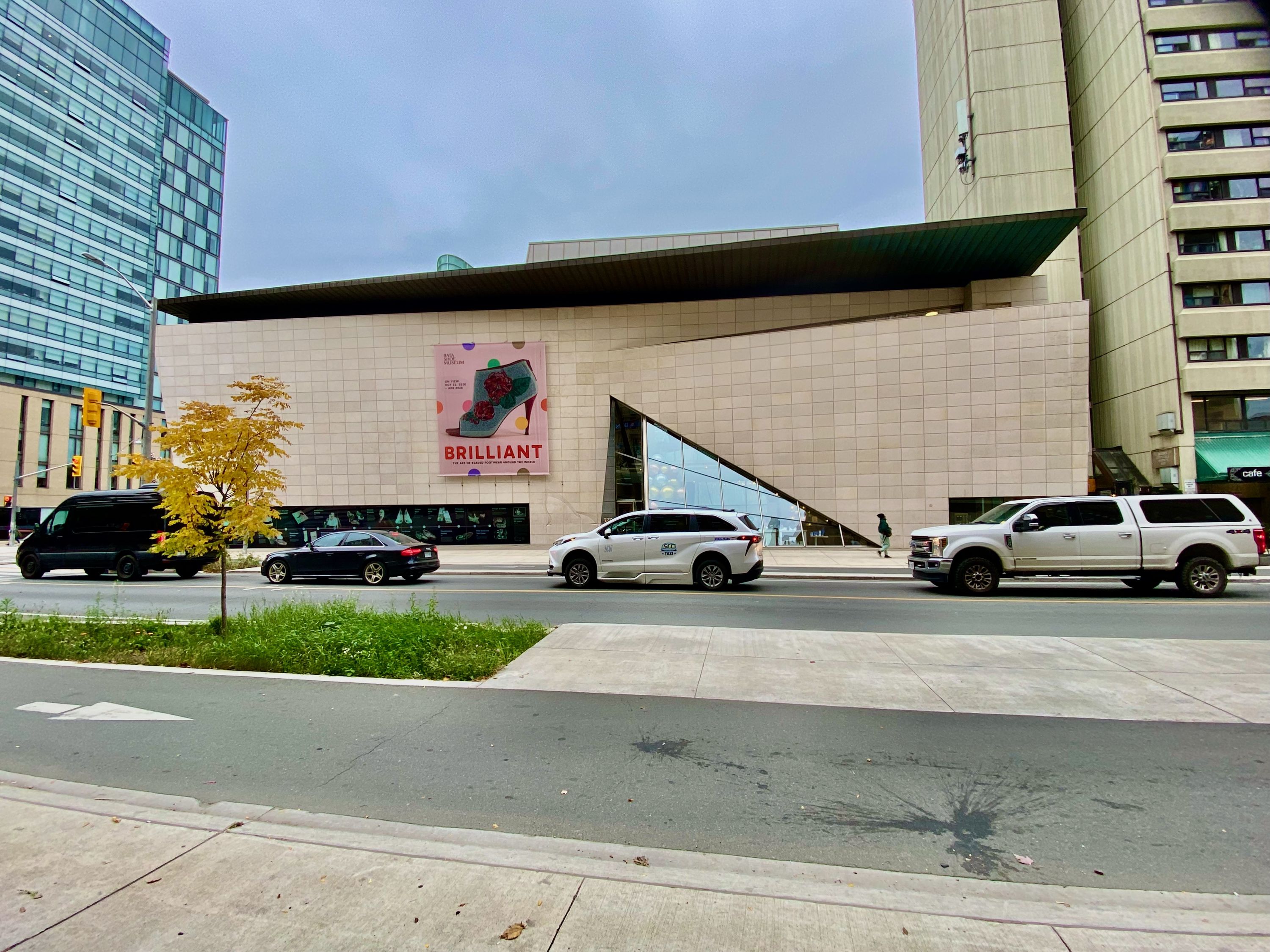
Looking for a fall break, we decided on a long weekend in Toronto, one of our favorite cities. We sought out experiences not on the top ten attractions list (other visits had included the Royal Ontario Museum, the Bata Museum and the CN Tower.) We were reminded of how much Toronto is like not only New York but also Chicago and at the same time of what gives Toronto its own personality and atmosphere. The largest city in Canada, over half its residents were born outside Canada. It resembles New York with its array of skyscrapers and luxury stores from Hermes to Cartier and Chicago with its dramatic skyline along a lake and multiple ethnic neighborhoods. But you will also find signs in French as well as English, a 16 mile virtually straight street that encompasses Koreatown, an internationally ranked university, unique museums, and the highest end shopping. And of course, an international food scene dotted with such uniquely Canadian treats as poutine, peameal bacon sandwiches, and maple flavored chocolate.

Exploring accommodations, we found a new and unusual hotel, the Nomas, on top of a Japanese fusion restaurant called Bellis Bar on Bloor Street. Named for the Greek word for nomad, Nomas is designed to “suggest curiosity about other cultures” and suit the traveler. Priced well below other options, it lacks an elevator and room service, has only online check-in, and a “help yourself” amenities closet. Yet the room itself was handsome and comfortable and fortunately on the second floor.
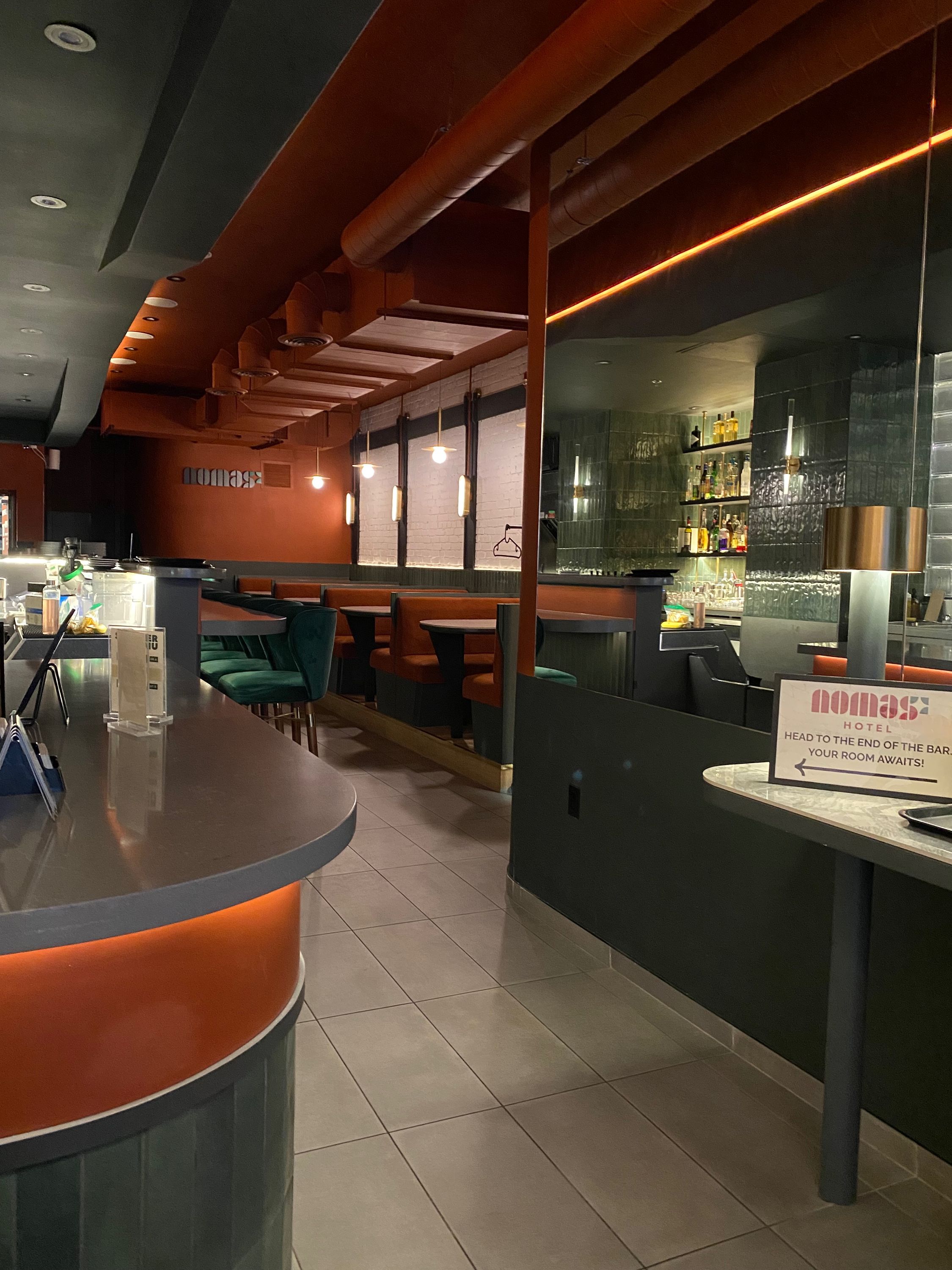
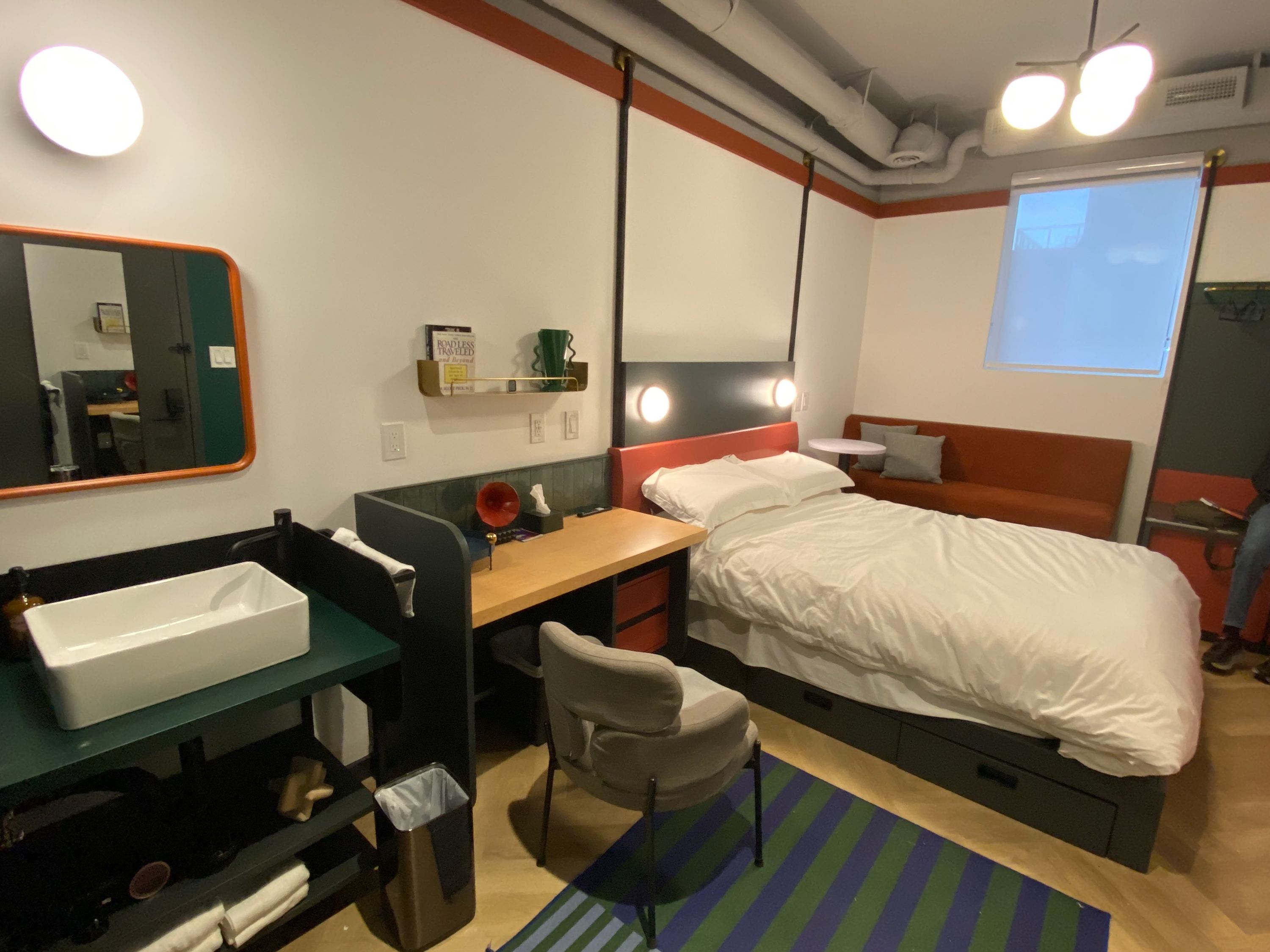
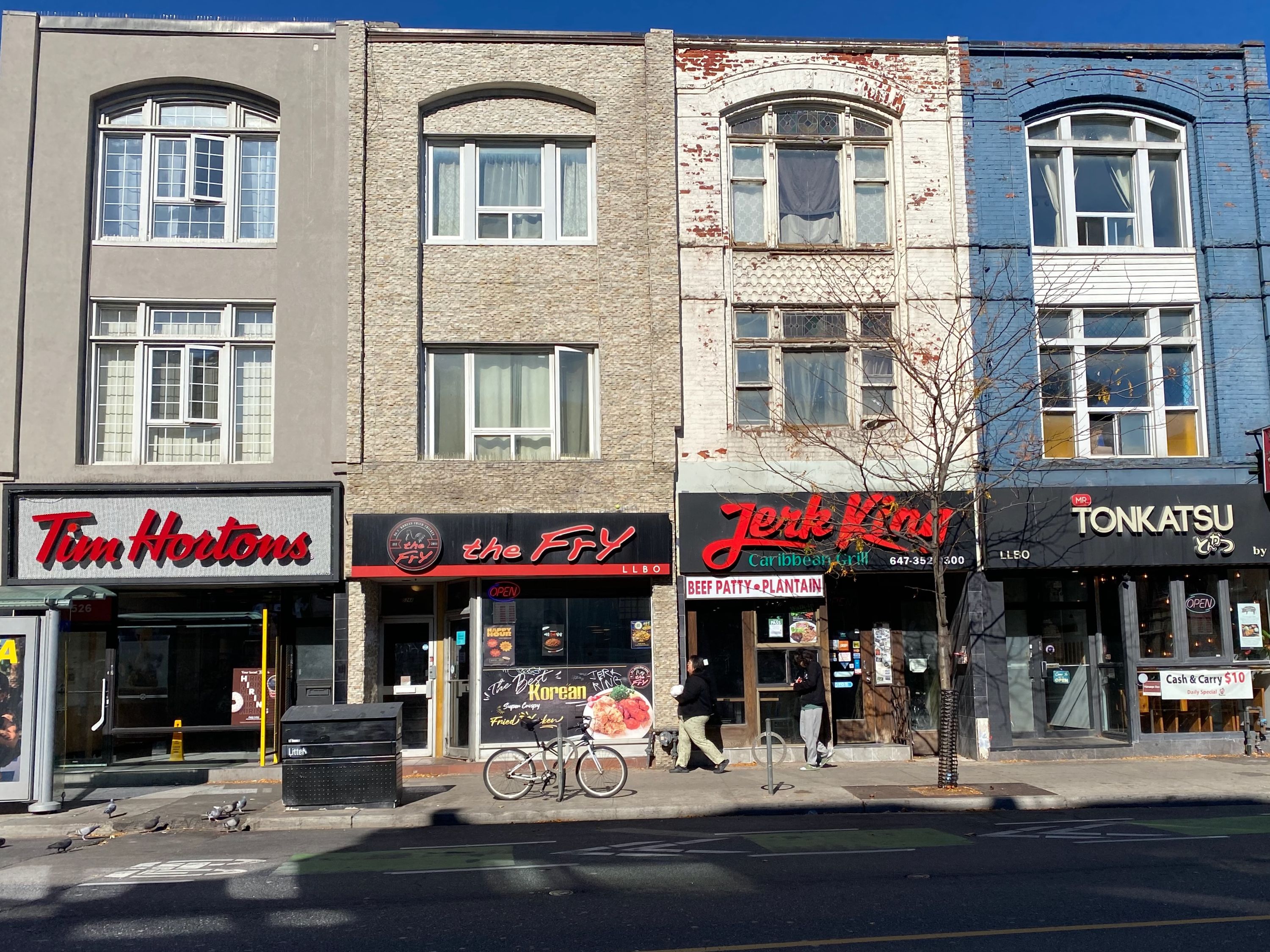
Nomas is in the Annex neighborhood adjacent to Koreatown, one of Toronto’s many ethnic neighborhoods. It faces Bloor Street, a fascinating street and subway line that frequently changes personality dramatically along its 16-mile length. The Koreatown/Annex area features blocks of narrow storefronts encompassing restaurants of multiple ethnicities, beauty parlors, gift shops, and service businesses of all kinds, usually catering to specific nationalities. Narrow storefronts and ubiquitous Tim Hortons (named for what else but a Canadian hockey player and Toronto’s answer to Dunkin’ Donuts) are backed by a mix of modern residential high rises and Victorian architecture. Bicycle culture is well-established with bike lanes and very fast cyclists (keep your eyes open!).
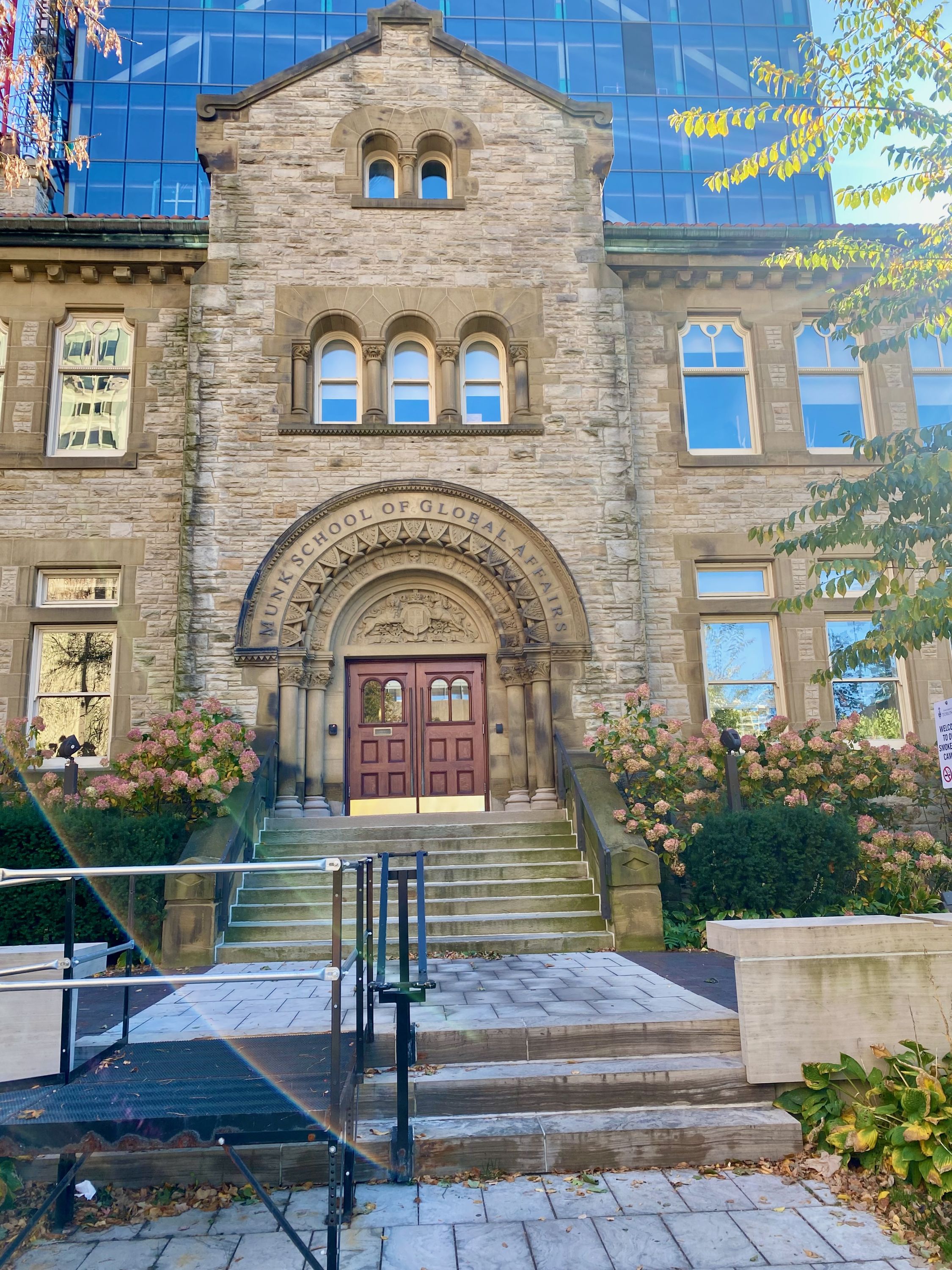
Continuing our exploration of Bloor, we walked less than a mile to the main campus of the University of Toronto, called the Harvard of Canada and globally ranked as the top university in North America and within the top ten universities in the world. Most recently, poet and essayist Anne Carson, with three degrees from the University of Toronto, won the 2026 Nobel Prize in Literature, one of 12 Nobel laureates with university connections.
Boasting a top-rated architecture school, the University itself is a marvelous mix of architectural styles, reflecting its nearly 200 year-old history. Founded as Kings College in 1827 under the auspices of the Anglican church, it became a public, secular university as the University of Toronto in 1850. Examples of medieval, Gothic Revival, Richardsonian Romanesque, Brutalist and contemporary design characterize its downtown campus.
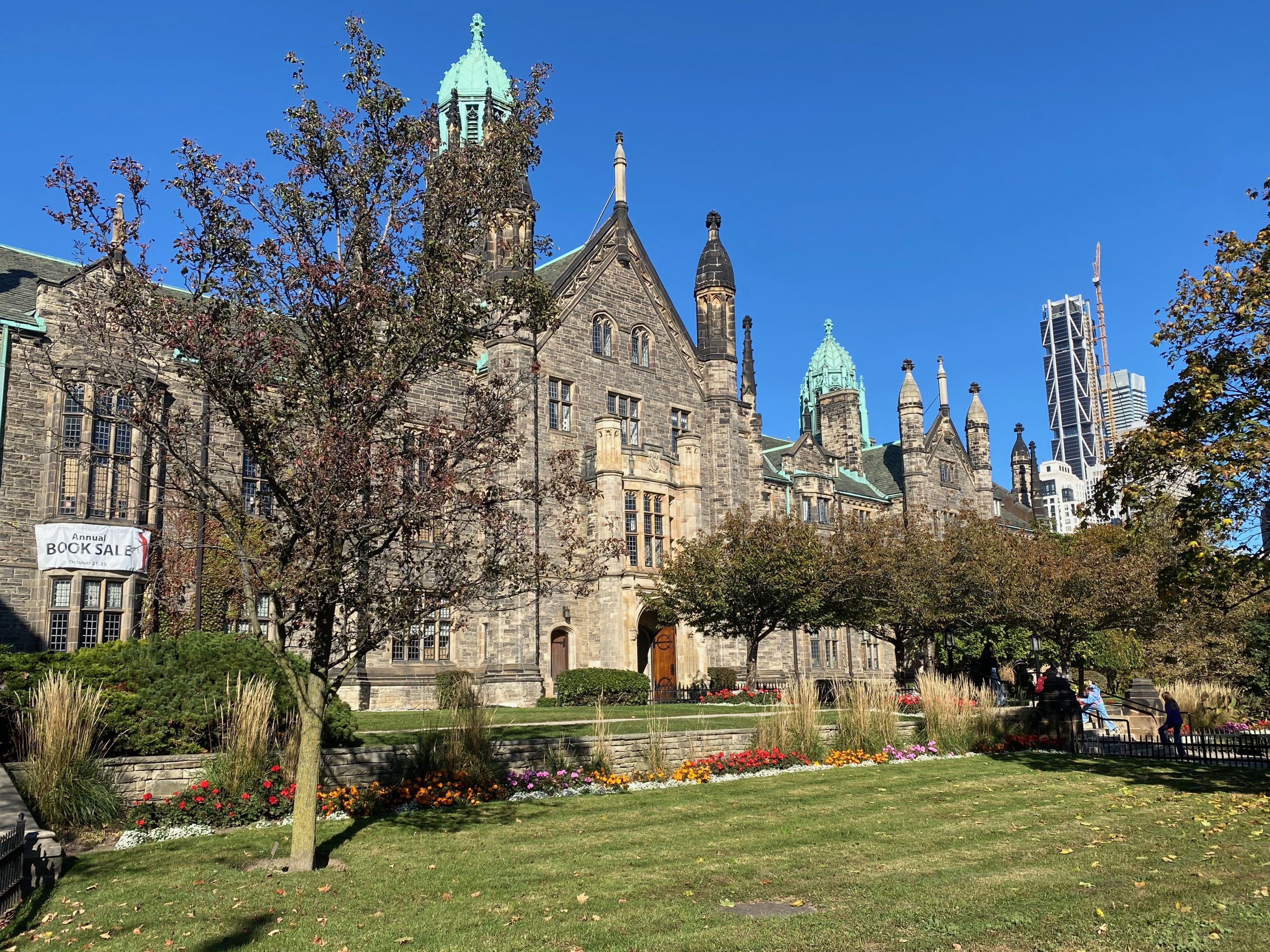
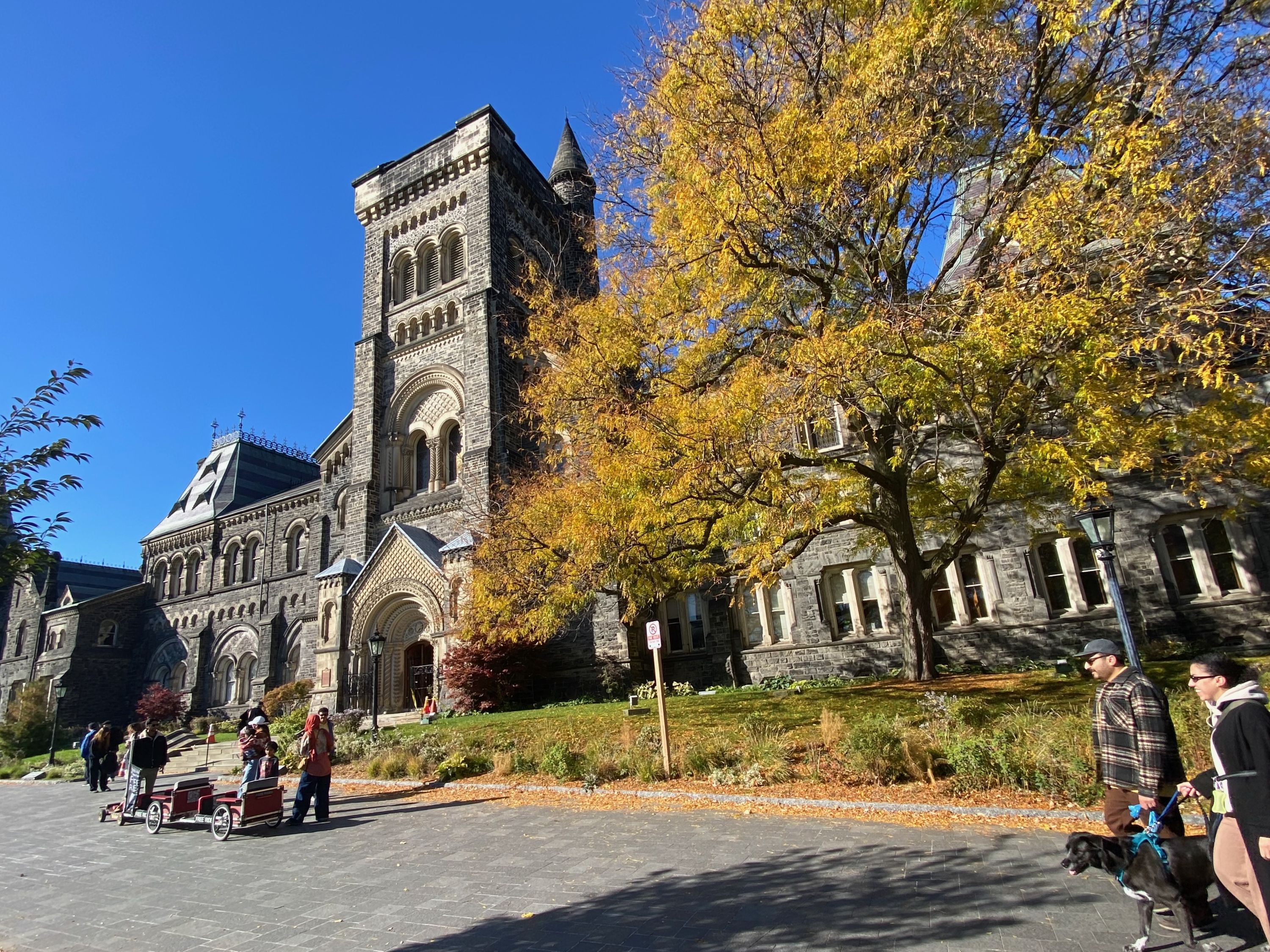
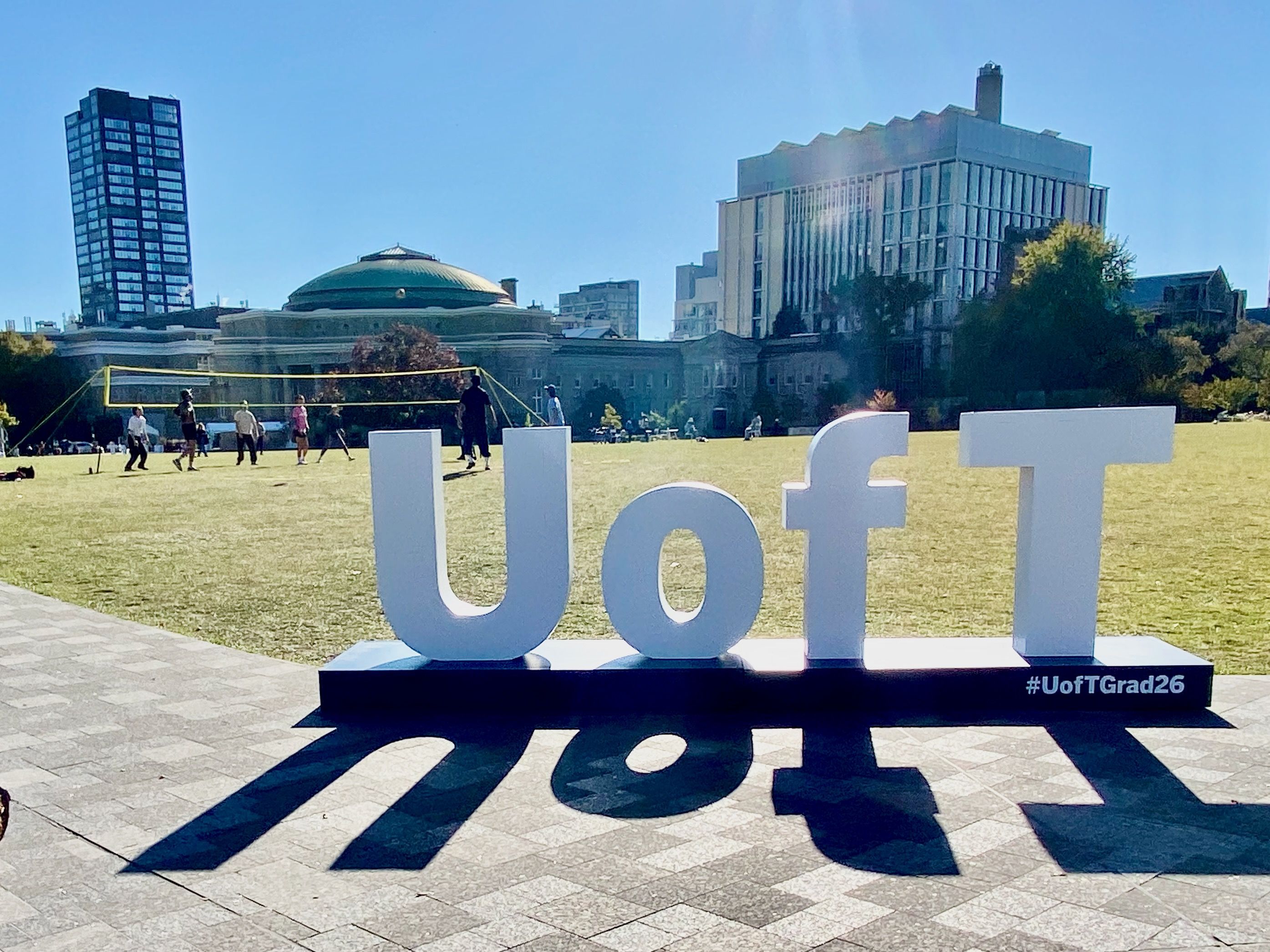
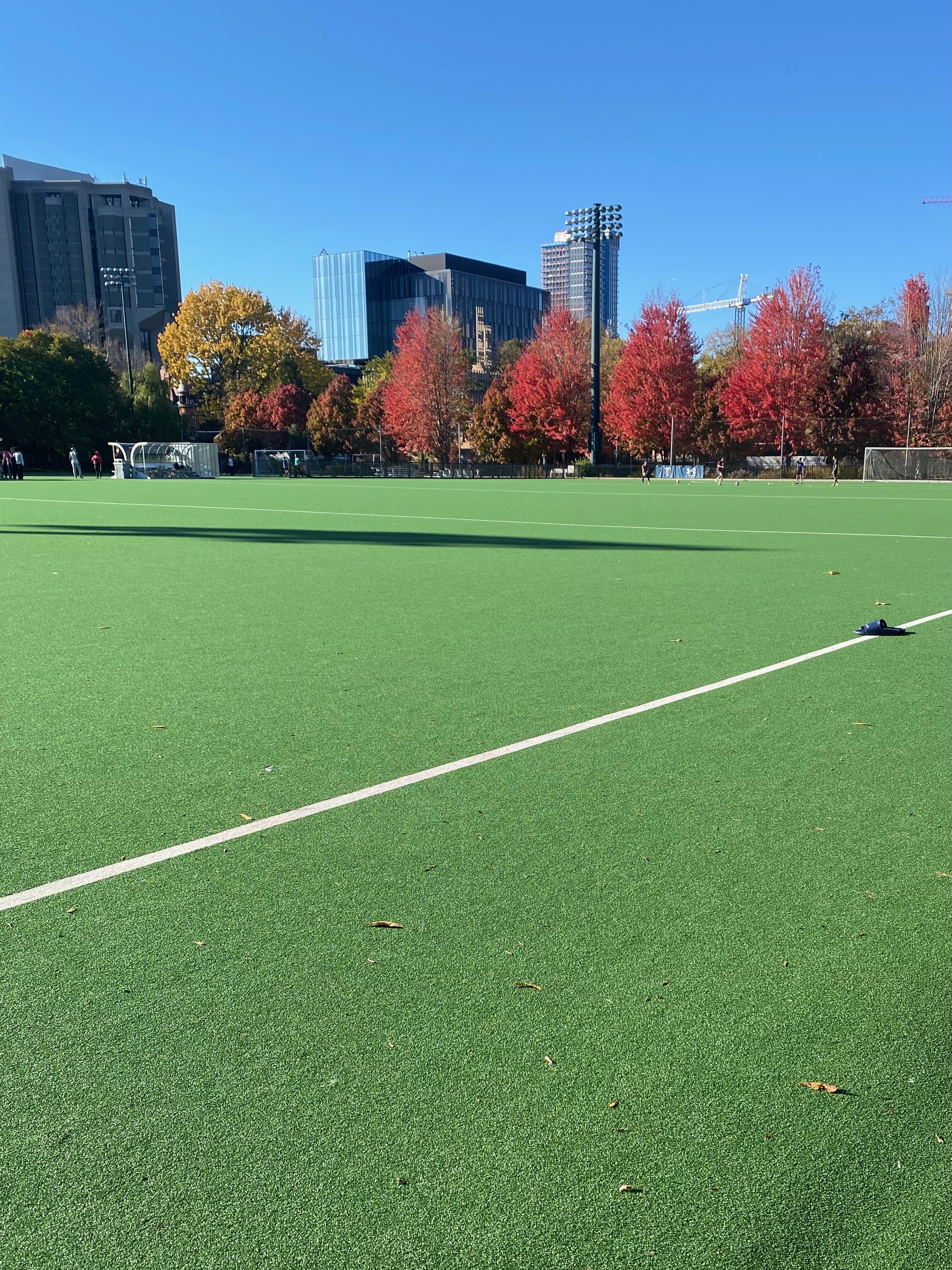
Returning to Bloor Street, we found a totally different city scape as we walked east. This is the beginning of Yorkville, featuring the famous “Mink Mile.” (think Chicago’s Magnificent Mile). The storefronts speak for themselves.
Bloor Street also encompasses some of Toronto’s outstanding cultural institutions. The Royal Ontario Museum or ROM, with its dramatic new entrance, combines nature, art, and culture; it feels a bit like a merging of the Art Institute of Chicago and the Field Museum. Its collections of everything from minerals and dinosaurs to photography and Japanese prints. We had also discovered the Bata Shoe Museum, established by Sonja Bata, the daughter-in-law of the Bata Shoe Company founder. It’s definitely worth a stop to see the largest shoe collection in the world with marvelous shoes from 4500 years ago to stylish 21st century Manolo Blahniks.
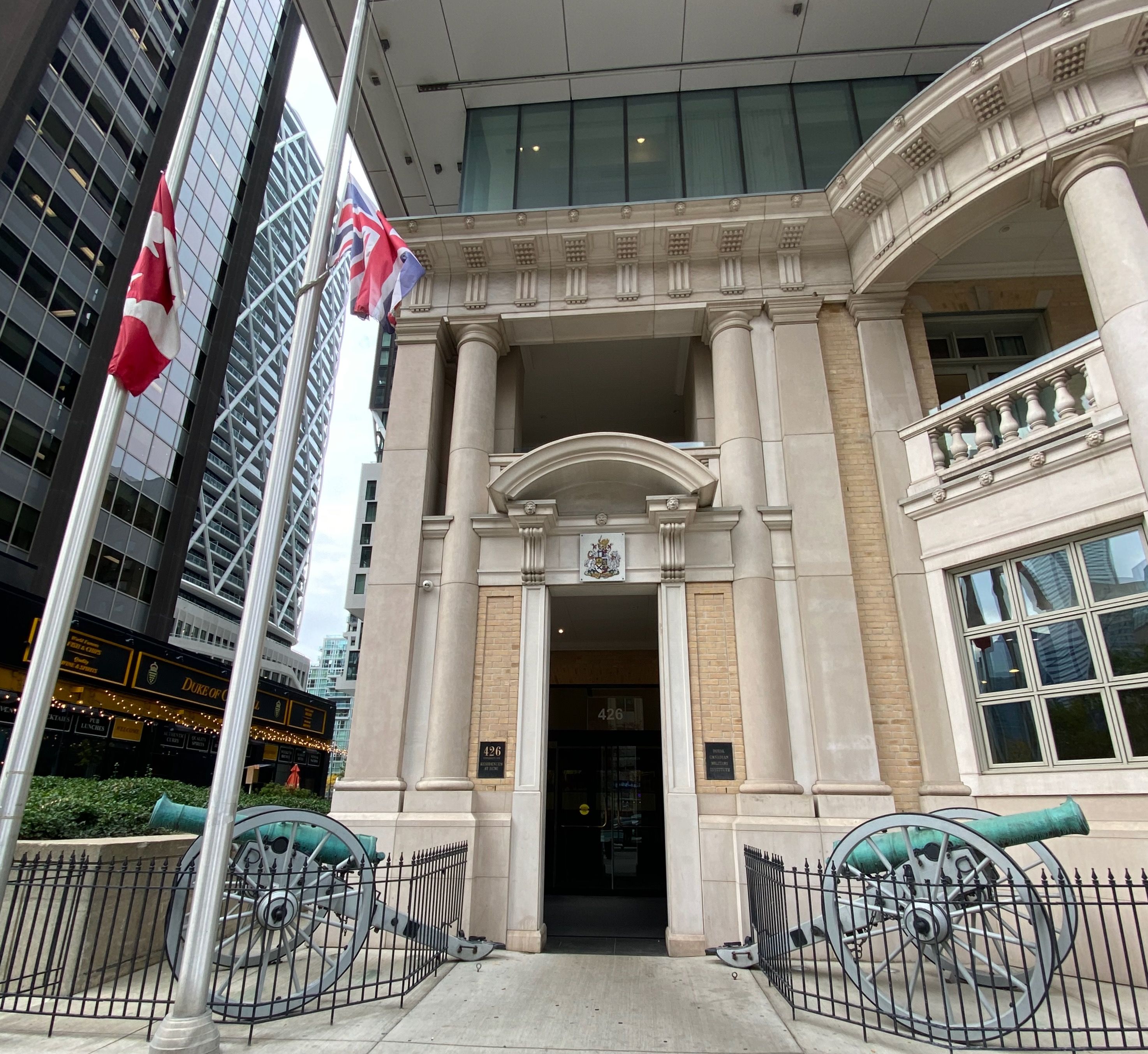
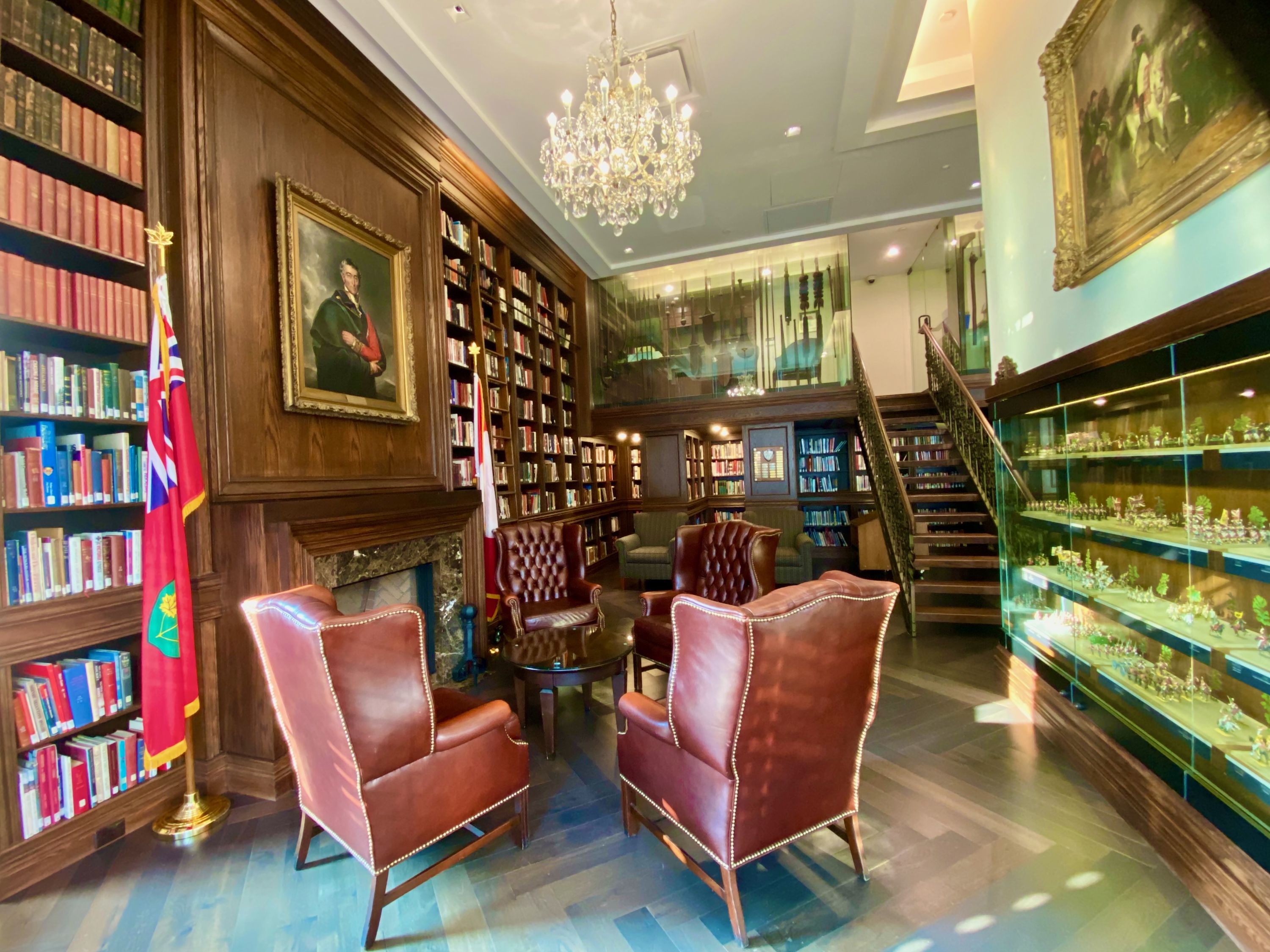
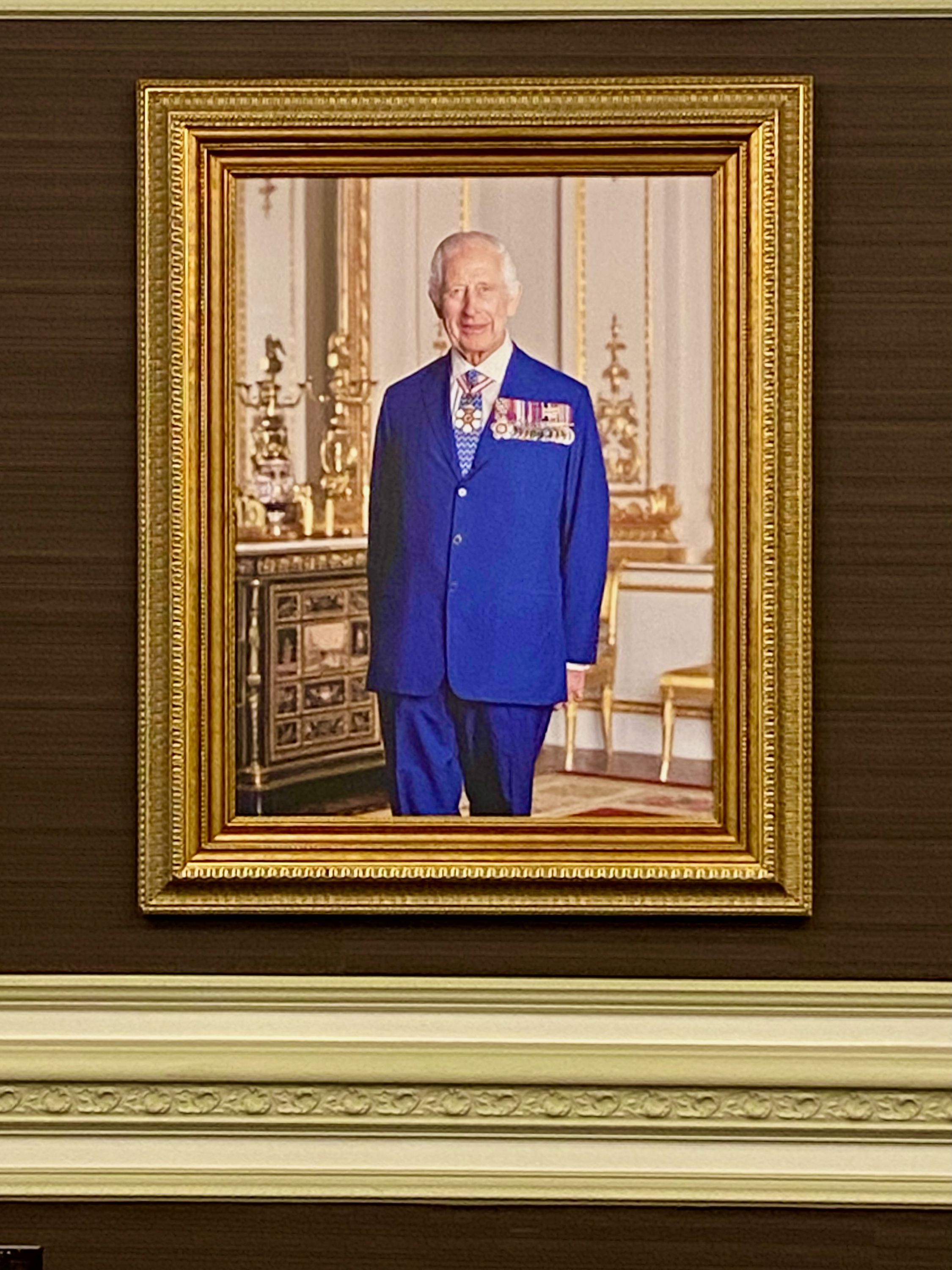
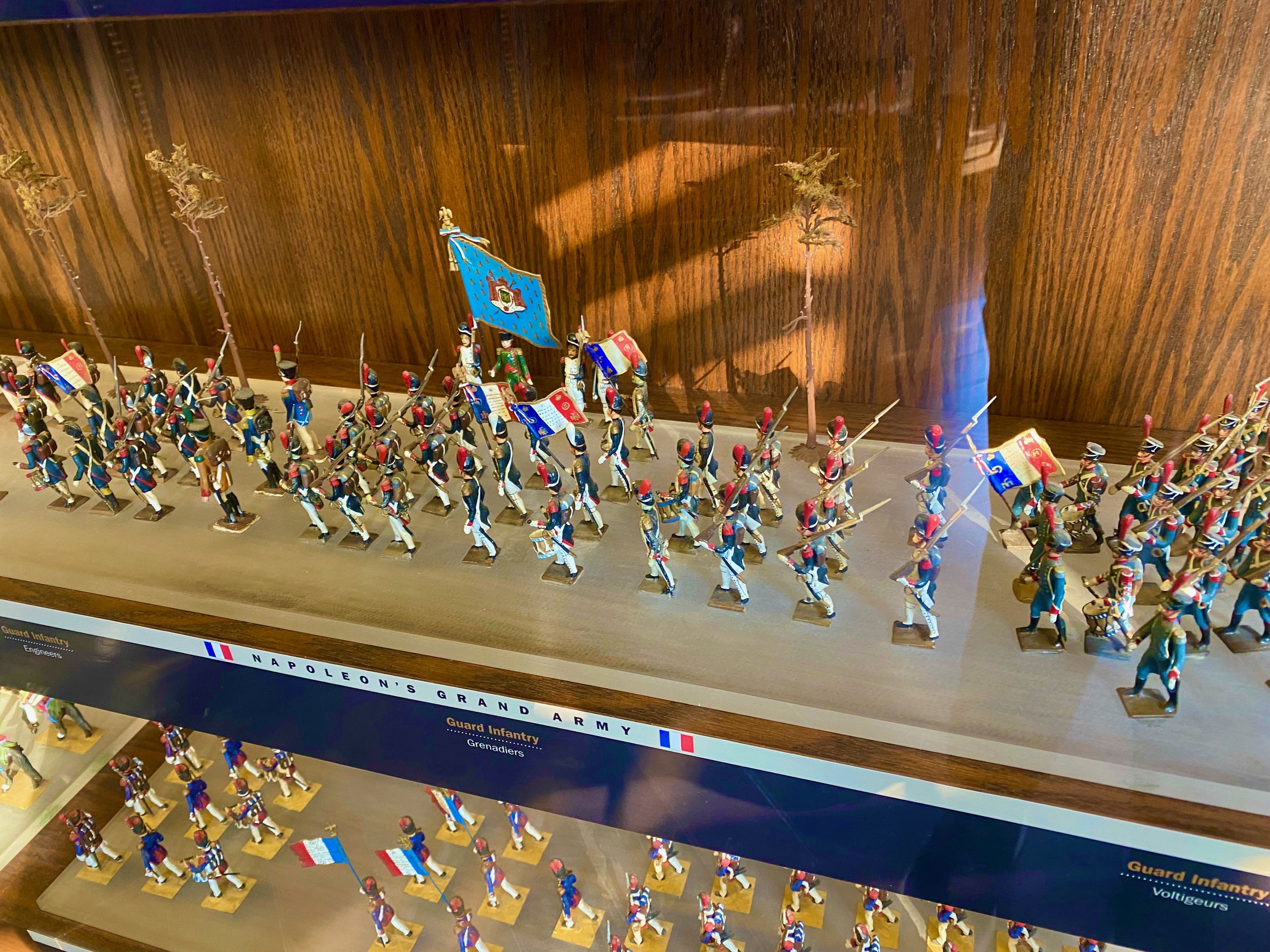
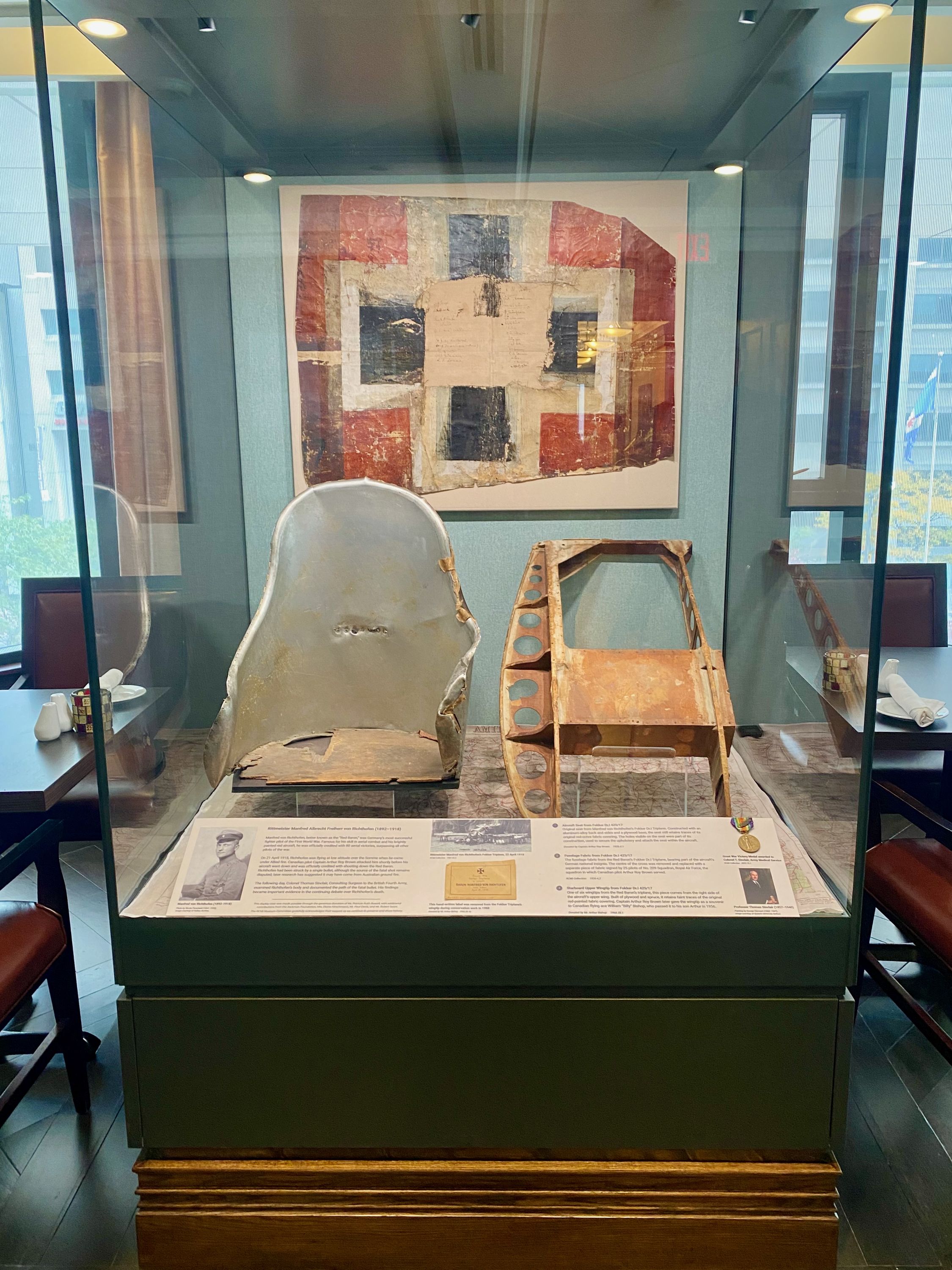
We continued our museum exploration with the Royal Canadian Military Institute, a private club founded in 1890 for Canadian military officers, a few blocks off Bloor Street. Canada’s largest privately funded military library and one of its largest military museums, the RCMI is open to the public by appointment and offers an impressive dip into Canada’s military history. Within its fully functioning club with handsome accommodations, we explored its atmospheric library and exhibits scattered among dining and meeting rooms.

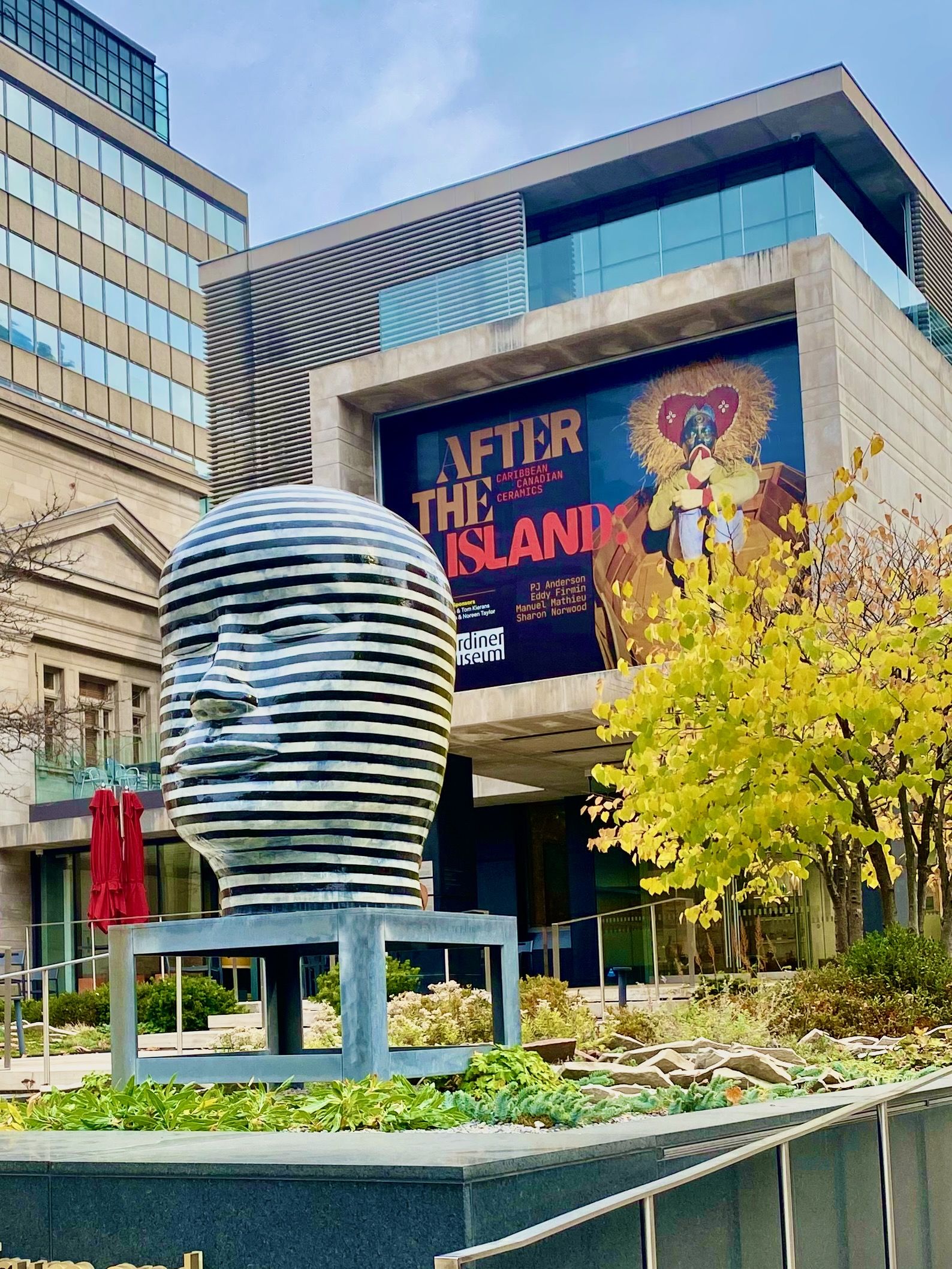
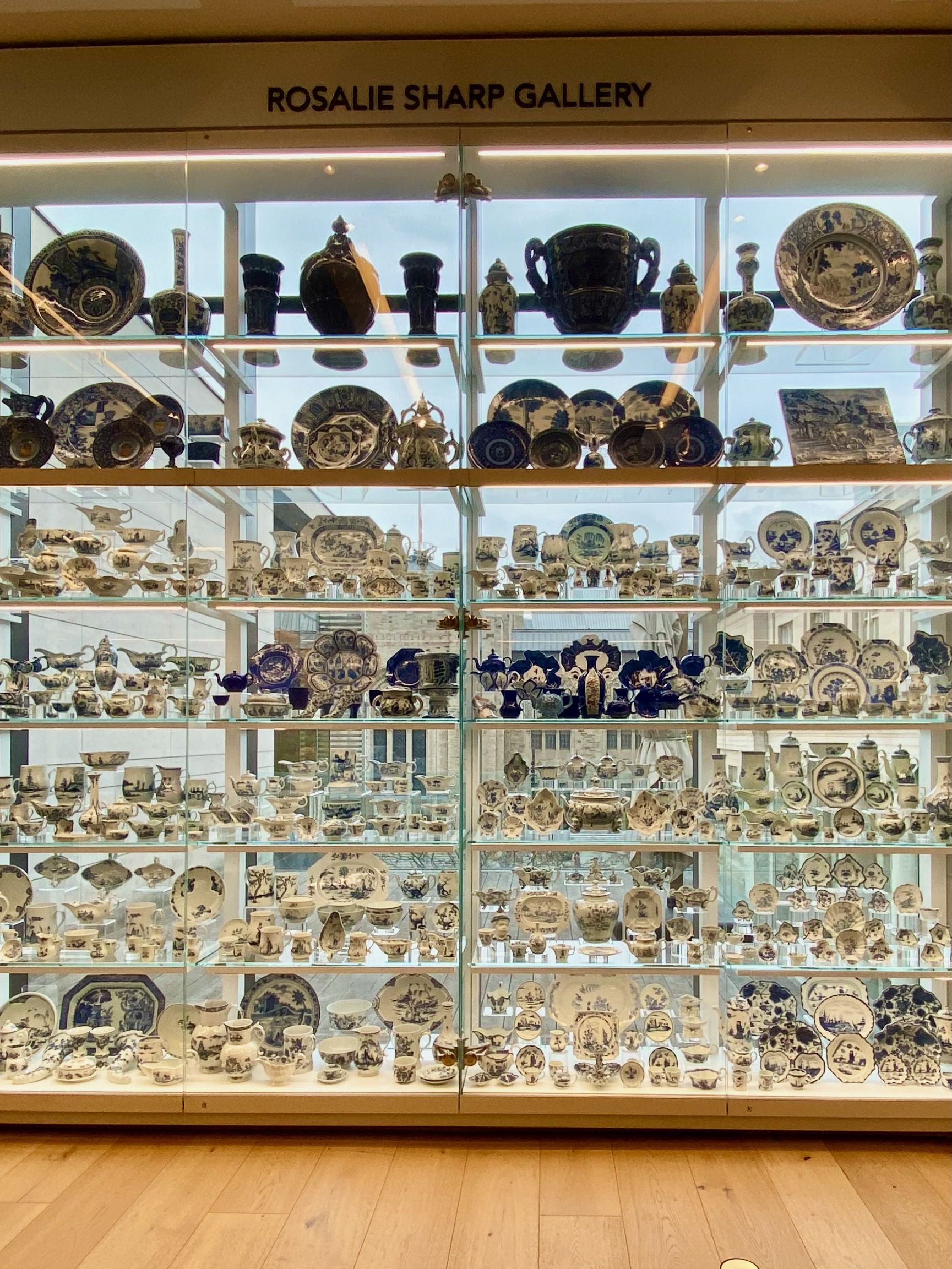
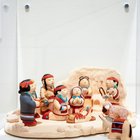
From combat to clay, the museums of Toronto continued to impress. The Gardiner Museum of Ceramic Art, back on the University of Toronto campus, exhibits earthenware and porcelain, ancient and contemporary, in Canadian, indigenous, Asian and European exhibits celebrating religious, decorative, utilitarian, and decorative creations. The newly renovated galleries were beautifully arranged and lit to show off the craftsmanship and imagination of the artists. A detailed exhibit told the story of the discovery of the secret of Chinese porcelain in Europe in the 18th century and the establishment of the pioneering Meissen factory in Saxony, the first in Europe.
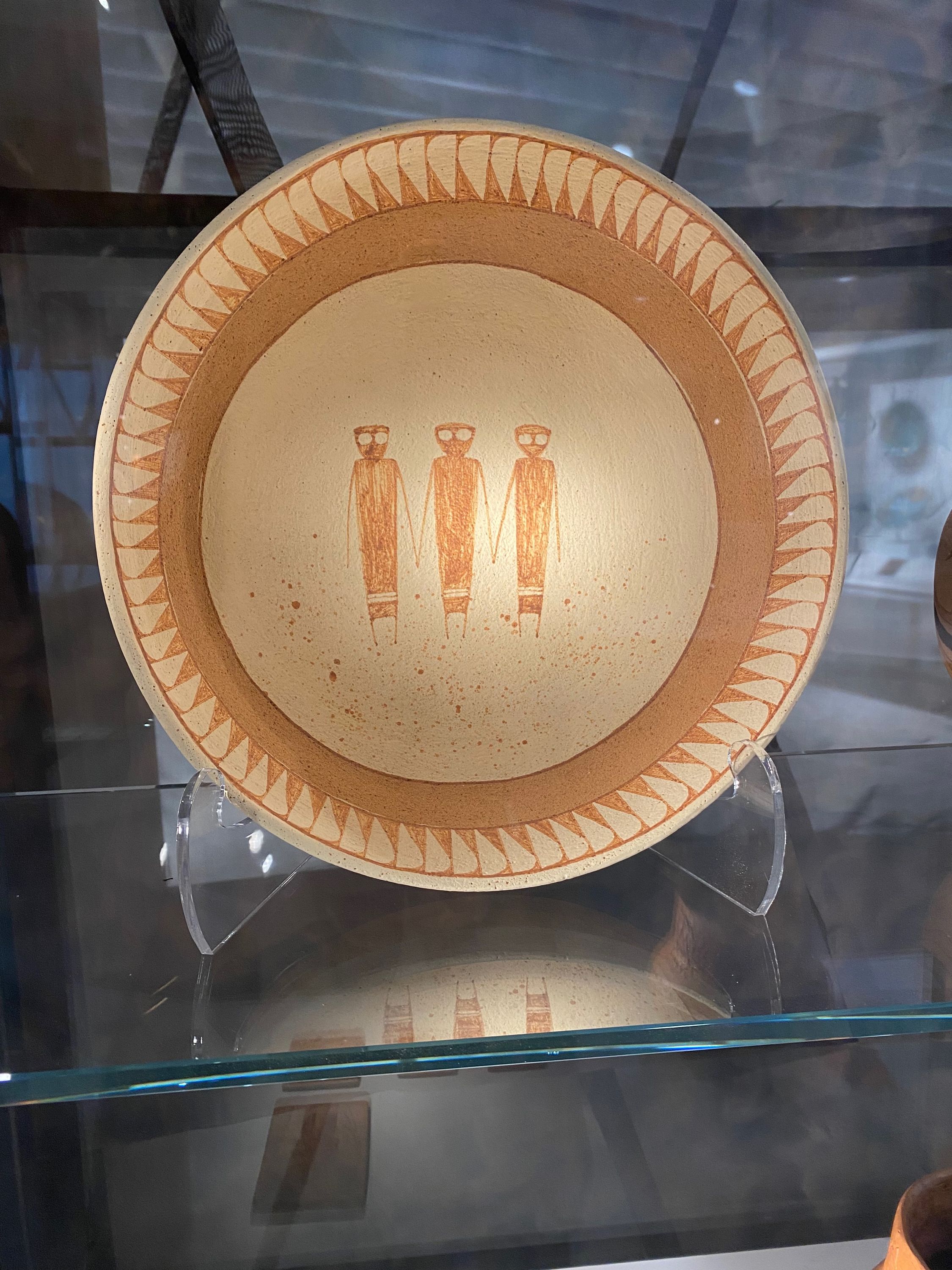
David Migwans (Ojibwe M’Chigeeng First Nation)
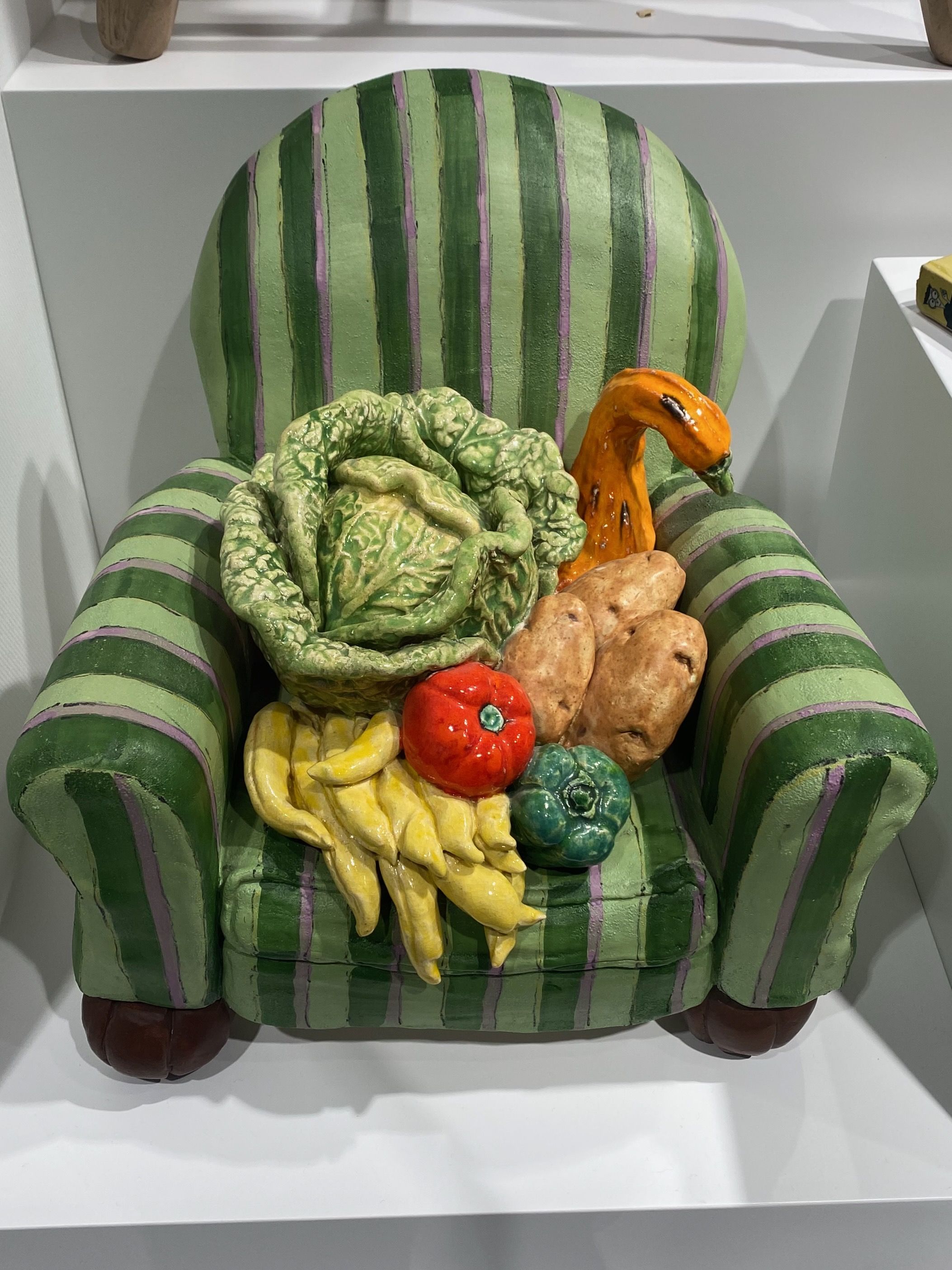
Victor Cicansky (Canadian, 1935-2025)
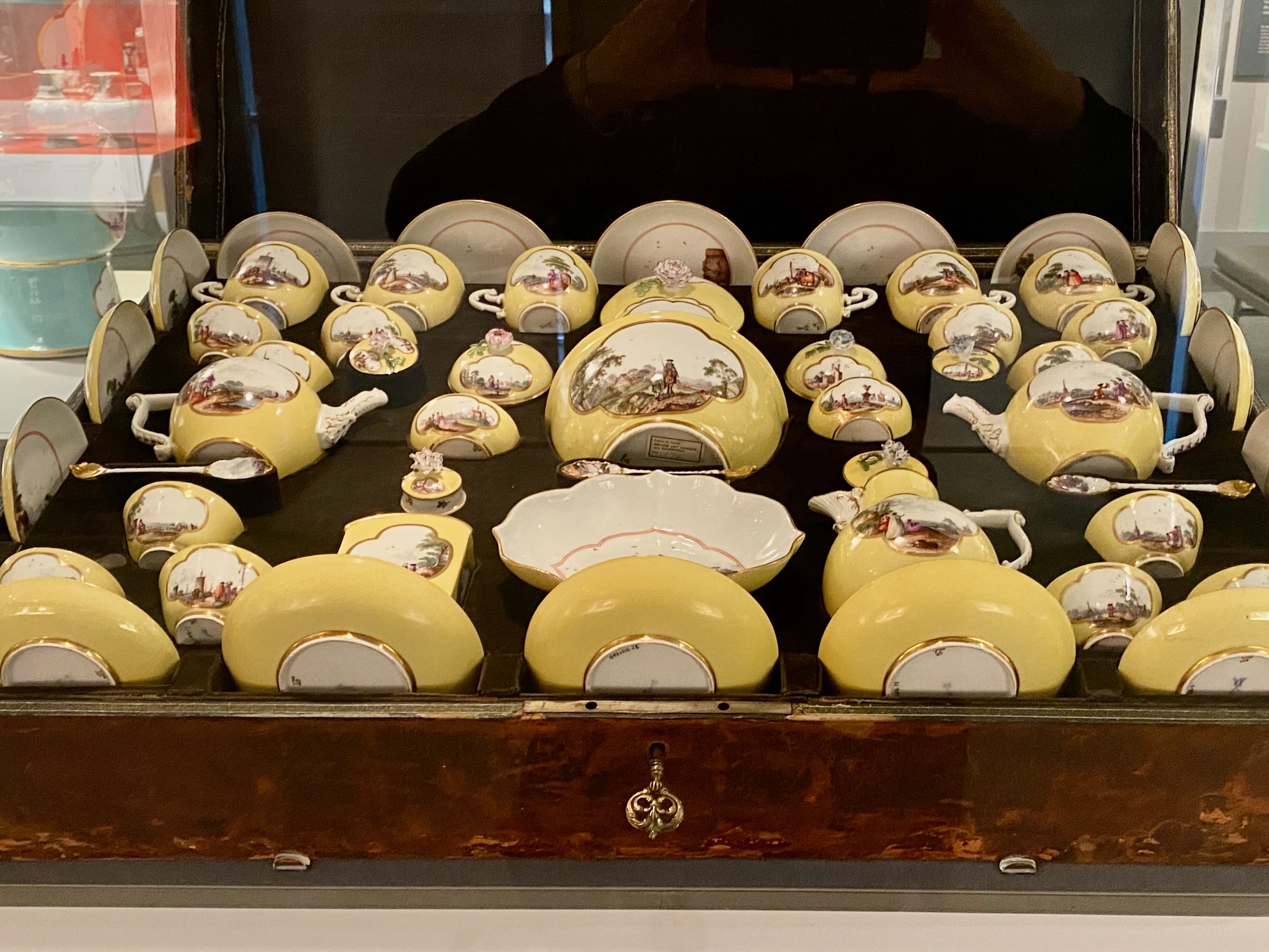
Meissen, Germany porcelain 1740-45
An excellent lunch at the museum’s cafe, Clay, fortified us to begin the mile plus walk to our hotel. Over the course of the trip, we traveled the globe with a delicious Indian meal at Banjara, a vegetarian meal at Fresh, and a Chinese meal by the harbor at Pearl. Toronto is a great city for foods of all nations and kinds. We avoided Tim Hortons’ donuts and all offerings of poutine (although I’ve heard it can be good: gravy-covered French fries and cheese curds) but indulged in gelato and maple-flavored chocolate.
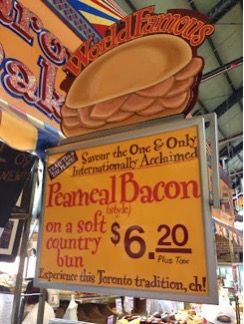
We also decided to skip the very large and iconic peameal bacon sandwiches at the St. Lawrence Market, but the market itself was not to be skipped. The market is a huge indoor market with permanent food stalls, restaurants, meats, produce and just about anything else you could imagine. I’ve found lovely leather gloves there in the past. It’s also the place for Canadian souvenirs from tiny bottles of maple syrup to Toronto tea towels to warm hats and scarves. Peameal bacon sandwiches - in case you don’t know – consist of bacon (similar but not quite the same as Canadian bacon) made with a lean cut of pork, brined, and rolled in ground yellow dried peas or cornmeal. It’s sliced, grilled, stacked and made into a sandwich with mustard and sometimes lettuce, tomato, or cheese. It was too much for me on this visit.
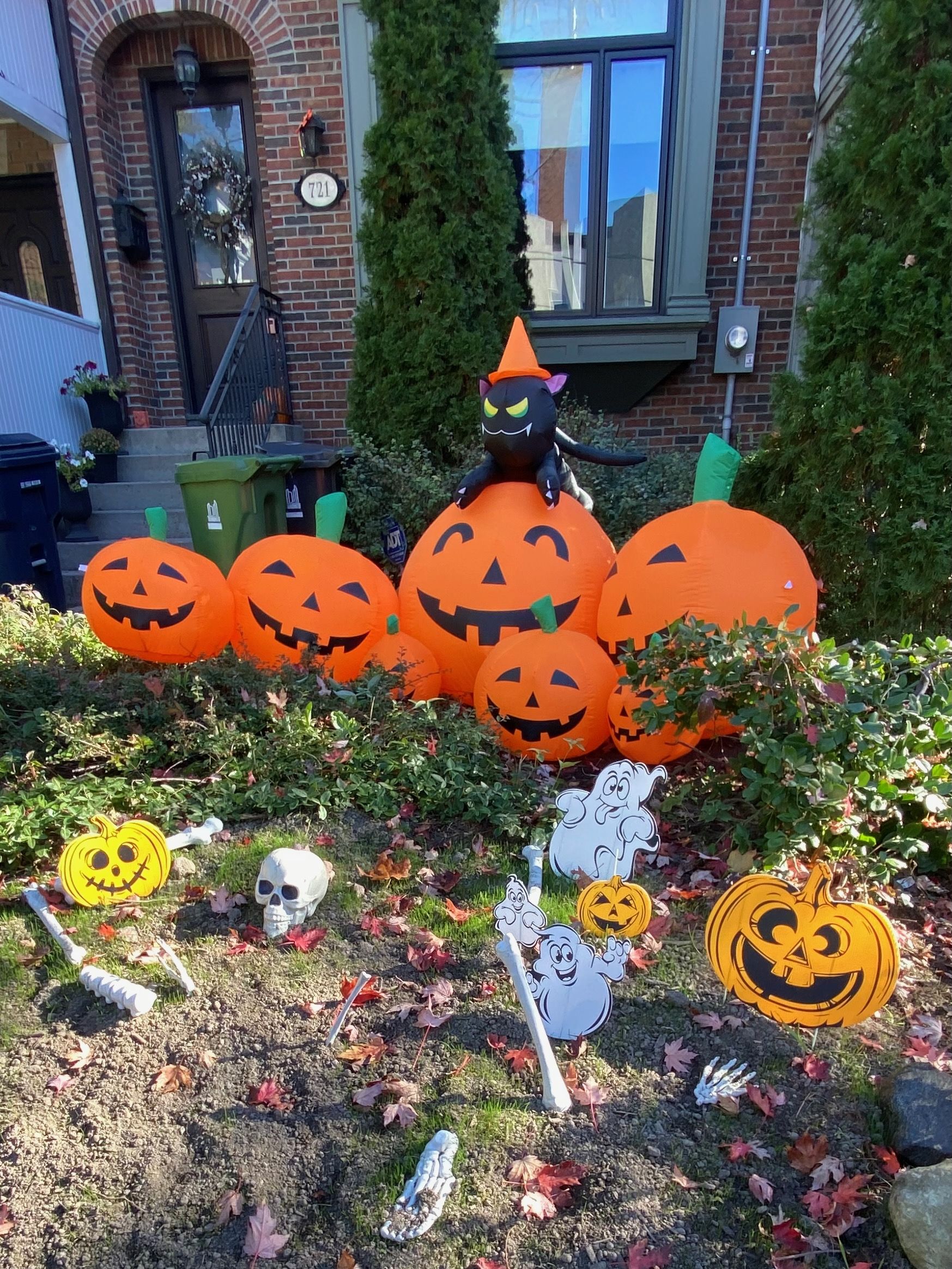
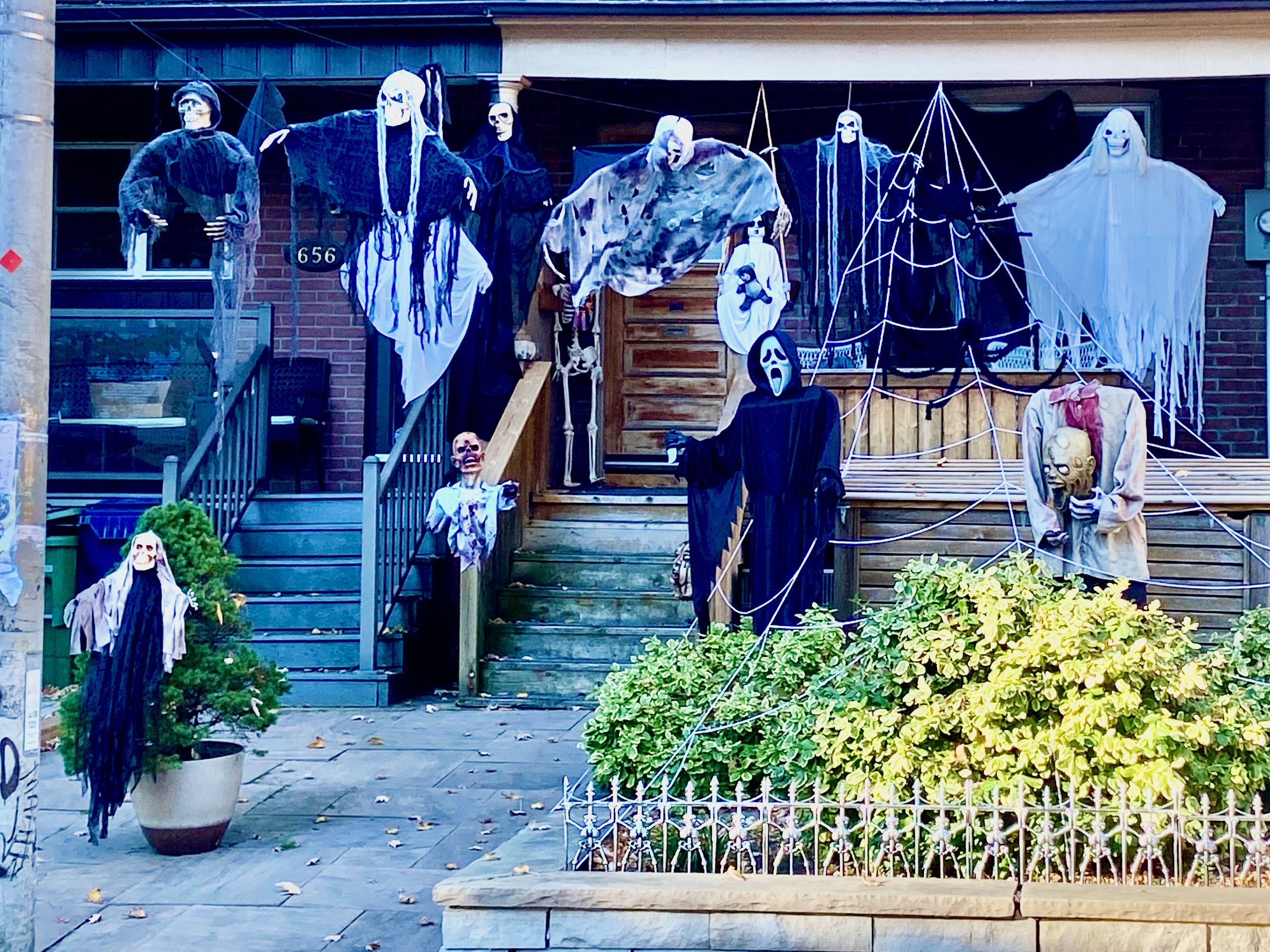
Our trip was the week before Halloween, and Toronto was in a festive mood. There were the usual store displays, and although I noticed fewer decorated homes than we have on our block in Chicago, some very elaborate and clever ones were quite realistic.
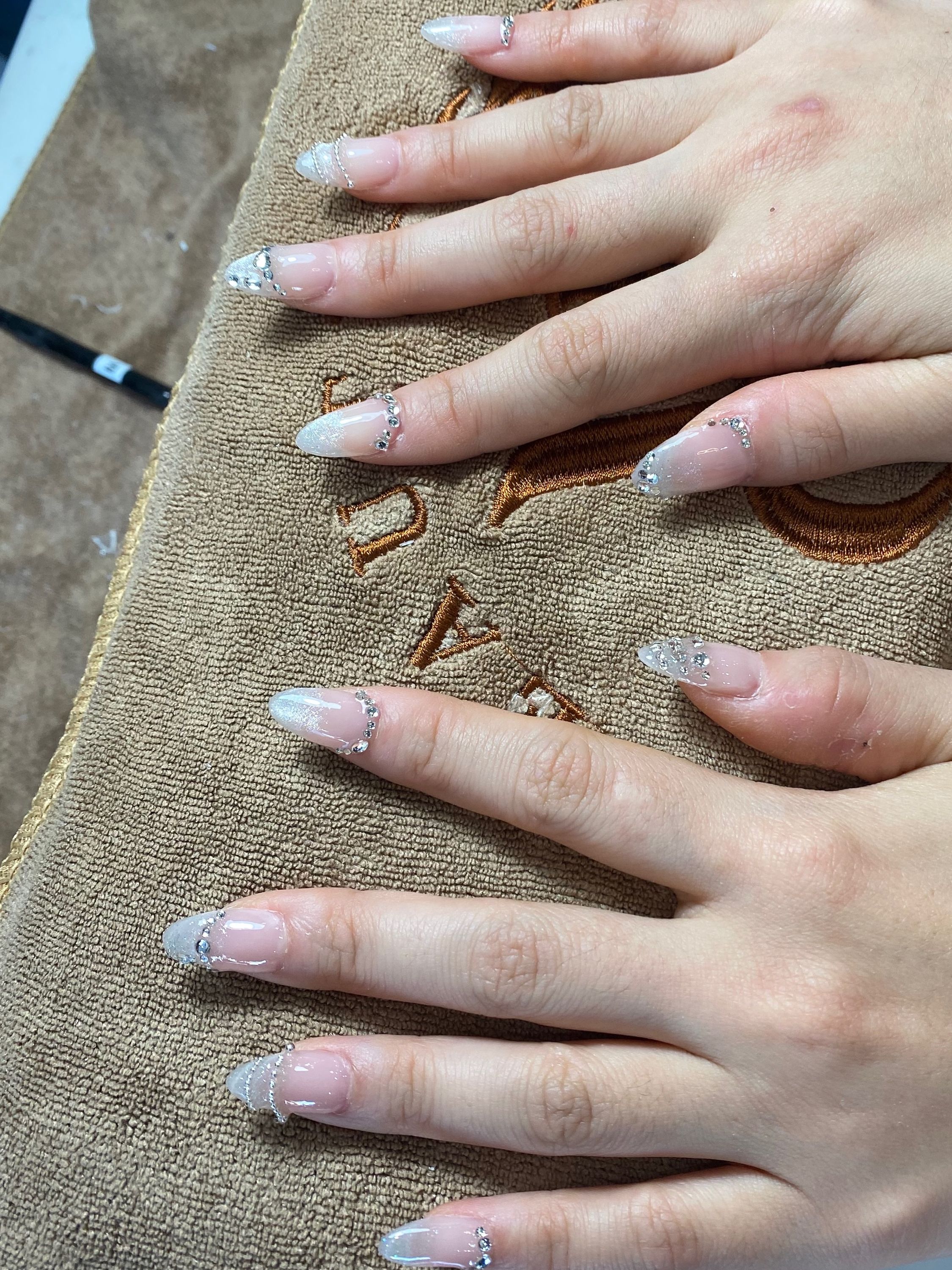
Preparations for the holiday weekend were underway. As I got a manicure in a Korean nail salon, a very elegant young woman was half-way through what she said was for her Halloween costume. The manicurist was applying individual sparkles (rhinestones?) in various designs on each nail. First a dab of glue and then a careful lifting and positioning of each tiny individual stone. Yes, it was taking a long time! I asked the customer if she had someone to help her at home with cooking and cleaning and she wistfully said no, but she was “ready.” I’d love to see her costume!
Our trip was also enhanced by Toronto’s music and theatrical offerings. We were delighted to discover a concert by young performers from the Taylor Academy, a prestigious training ground for gifted musicians aged 8-18. The Shaw Festival had recently moved some of its offerings to the Fleck Theater on the waterfront, where we enjoyed Anthony Shaffer’s 1970 mystery play “Sleuth.” We returned to Chicago newly enriched by our quick multi-cultural experience. We highly recommend Toronto for an international change of pace that doesn’t require a Duolingo degree!
 ← Previous: Осторожно
 Next: Sally Kalmbach: A Walking Tour to Highlight the Holidays →