
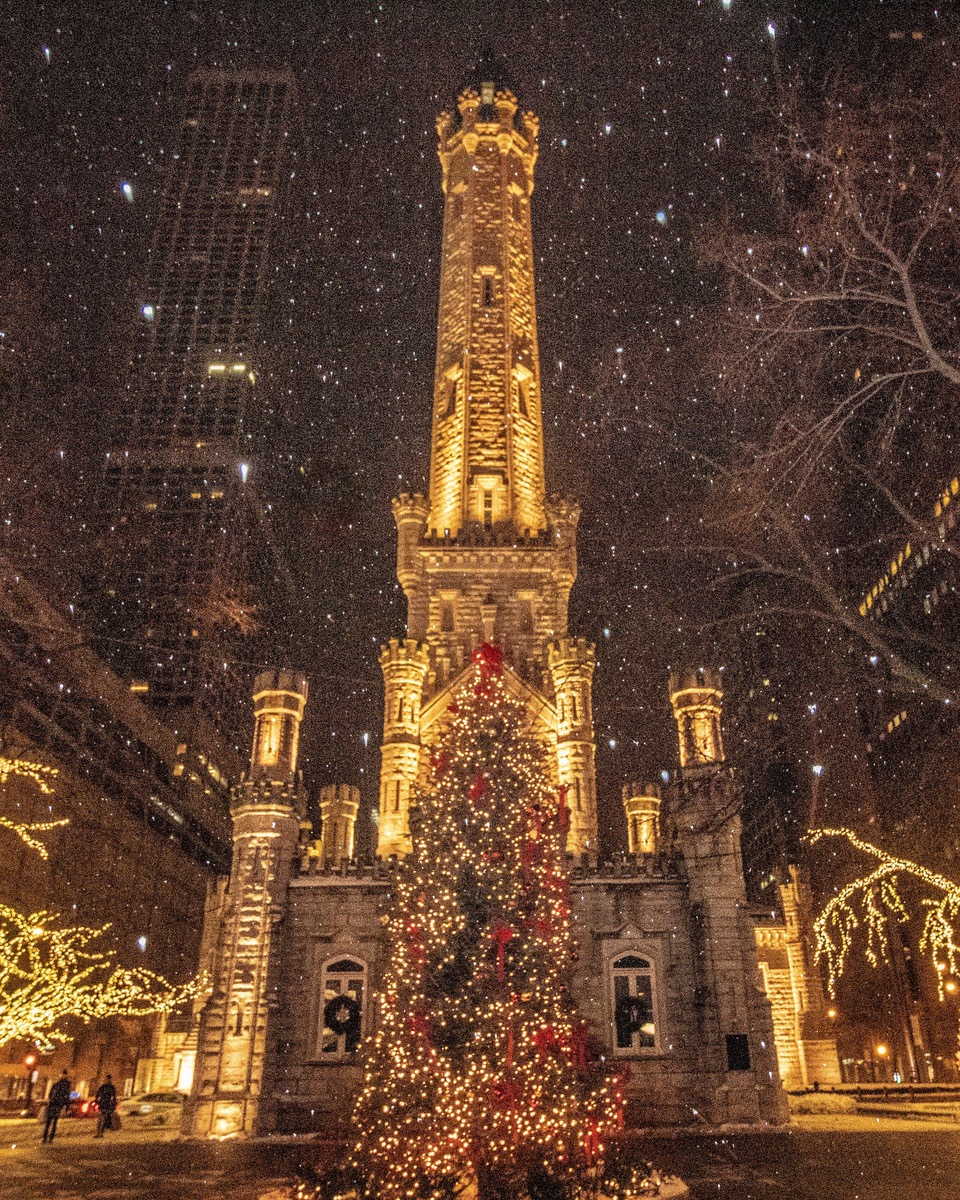
On December 14, Sally Kalmbach will take guests on a 90-minute Holiday Walking Tour of the Water Tower neighborhood where 100 creches, purchased in over 100 countries by James and Emilia Govan, shine as holiday treasures at the Loyola University Museum of Art (LUMA).
We asked Kalmbach, a fourth-generation Chicagoan who has been giving walking tours in neighborhoods and museums for many years, what’s in store for participants:
“I wanted to include some highlights of the Christmas season while sharing historical Chicago stories and facts about Christmas in America. Americans began to celebrate Christmas on December 25, 1789 but it was not until 1870 that it became a federal holiday.
“We begin at the Water Tower designed by William Boyington in 1869 sharing its history, pictures of the Fire and of the Water Tower Court with its beautiful mansions dating from the 1880s. In 1878 a crowd gathered around the building to witness a brilliant light at the top of the tower: Chicago had entered the age of electricity. But this battery-powered electricity was replaced by Edison’s bulb the following year. I note that while visiting Chicago in 1882, Oscar Wilde called the Water Tower a "castellated monstrosity with Pepper Boxes stuck all over it”.
“Directly across the street from the Water Tower is the Loyola University Museum (LUMA) exhibiting over 100 creches from around the world during the holiday season. I wanted this to be the focus of the tour because it is a hidden treasure of Chicago.”
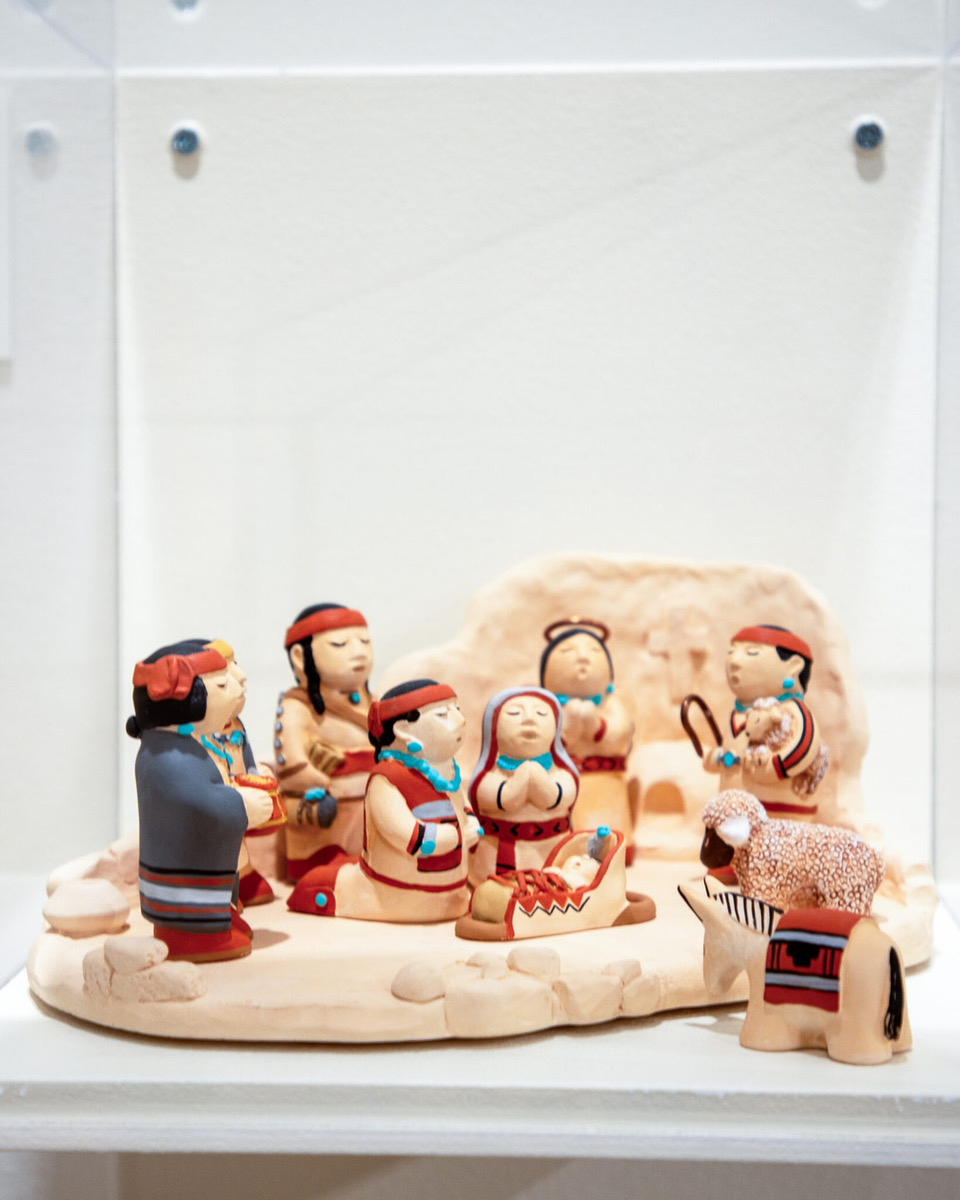
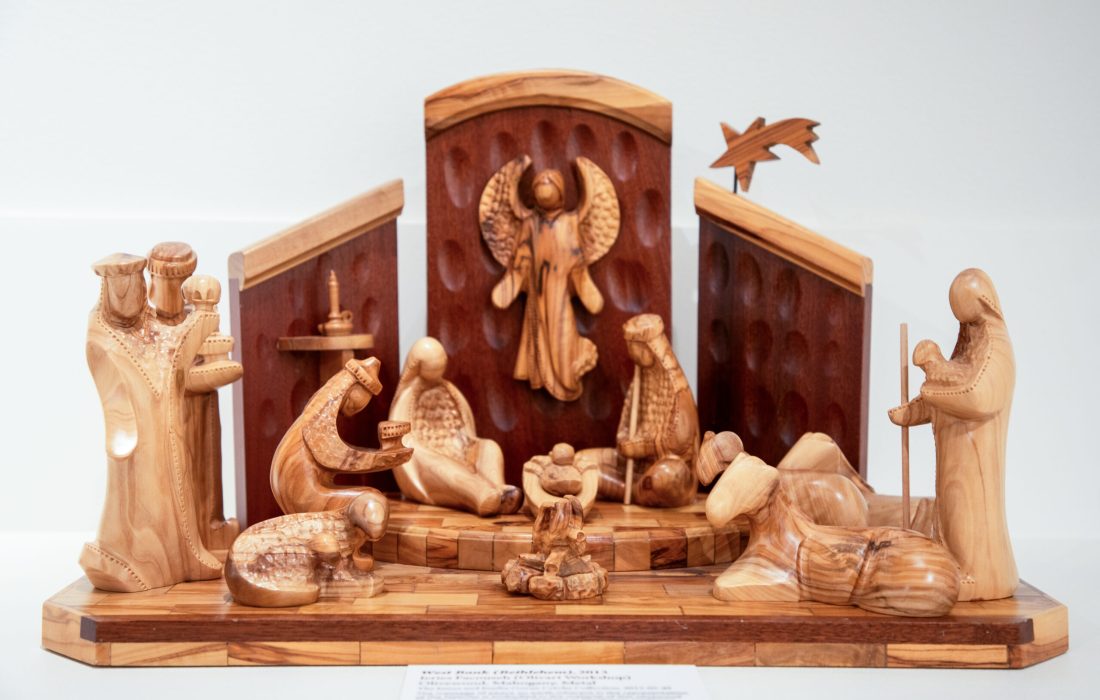
The Govans found their first creche in Italy and James bought it as a gift for Emilia. The gift piqued a passion for collecting these manger scenes and soon family and friends began to add to their collection and they amassed over 500 creches over the years. The couple’s first creches were in varied styles but they soon focused on folk art pieces, roughhewn and typical of the countries they represent. Varied materials include wood, stone, clay, cloth, porcelain, rubber or shell. James Govan worked for USAID and frequently traveled to Africa for his job and Emilia often accompanied him. They joined the growing number of creche collectors and before Emilia’s death last year they were involved in planning a US Friends of the Creche for collectors, historians and artists.
Kalmbach shared more:
“The next stop will be the Fourth Presbyterian Church constructed in 1914 in the Gothic revival style by architect Ralph Adams Cram. It is fitting that the church stands where the three neighborhoods of McCormickville, Streeterville and the Gold Coast all intersect at the northern end of what was then Pine street. The neighborhoods grew up around the church, and except for the Water Tower it is the oldest surviving structure on Michigan Avenue north of the Chicago River. The stained glass windows designed by Boston artist Charles Connick are noteworthy for their cobalt blue color similar to the windows at Chartres Cathedral. We will view the wooden angels carved by an Italian craftsman in Chicago and the 14 wooden angels playing musical instruments. We will discuss the history of Christmas caroling introduced by Saint Francis of Assisi in Umbria in 1223. This is our chance to sing some carols in the church. Most of the carols popular today were composed during the 19th century.”

“We end at the Drake Hotel designed by Benjamin Marshall and opened on New Year's Eve in 1920. In front of the beautiful tree in the upstairs lobby we will talk about the origin of the Christmas tree. In the 7th century a monk from England traveled to Germany and used a fir tree to teach the word of God, but the custom is certainly Germanic. The tour ends with the story of the Christmas schooner that delivered trees from Michigan's Upper Peninsula for over 30 years beginning in the 1880s. “
“Captain Herman Schuenemann and his brother started bringing Christmas trees by boat in 1884. Trees and wreaths were sold from his boat that docked at the Clark Street bridge. In 1910 Captain Schuenemann purchased the Rouse Simmons ship but in 1912 following severe weather problems it sunk. His wife brought trees to Chicago by rail and chartered a boat to sell them to honor her husband’s tradition. Fishermen periodically would bring up nets clogged with Christmas trees. The Rouse was discovered by a scuba diver in 1971 with one tree still attached to the ship”.
At the end of Kalmbach’s tour the group will gather around the gingerbread house display at the Drake, first created by Executive pastry chef Raul Cuevas in 1989.
We asked her what are qualities important for a guide?
“Probably one of the most important first steps for a guide is research followed by constant studying. Whenever you think you are knowledgeable it quickly becomes clear that you don't know much about the subject. The exciting part is to always be learning.
When giving a tour I think it is important to make eye contact and draw the group in so they feel part of the tour. If you are losing someone, and yes, that happens, ask that person a question and they will feel connected. Have a sense of humor---it works for every tour!”
What are Kalmbach’s favorite tours?
“Typically, I enjoy tours that include children. They are very responsive to questions---always answering and in most cases with better answers than the adults. I would like to become the guide most sought after in offering tours to children to introduce them to works of art in an organized and enjoyable manner.
“I am currently working on a little booklet---not a scavenger hunt---but a fun activity to instill a love of art.”
What is her advice for us as amateur tour guides for visiting family and friends?
“I think an architectural walking tour is the best way to show what an amazing city Chicago is. Visiting the buildings, talking about the architecture and viewing the lobbies designed by so many
famous Chicago architects----Burnham & Root, Holabird & Roche, Louis Sullivan and list goes on. Combine with the boat tour to view the skyscrapers, depending on the weather. However, it should be combined with an architecture walking tour to visit the fascinating lobbies of the historic buildings: the Rookery designed by John Root and updated by Frank Lloyd Wright, a favorite of all Chicagoans, the Marquette Building with its beautiful Tiffany mosaic and the most stunning building in all of Chicago---the old library building designed by Shepley, Rutan and Coolidge, now the Cultural Center with mosaics that rival the Middle East and containing the largest Tiffany Dome. This is a must!
“Combine the Art Institute with a guide for a better highlight tour and possibly to the Thorne Miniature Rooms with a visit to Millennium Park which always enjoyable no matter what time of year. For families, the Museum of Science and Industry offers everything---permanent exhibits, special exhibits, and the best nature movies on a big screen. They are terrific! An old favorite for me is the Colleen Moore's dollhouse there.
“Try a Chicago hot dog and pizza, although the deep-dish pizza doesn't interest me at all. It is always worth checking what is playing at the Shakespeare Theater at Navy Pier because their productions are excellent. Two house museums: Driehaus for a taste of the Gilded Age and Charnley House if you are interested in Louis Sullivan and the beginning work of Frank Lloyd Wright.”
For more information about the December 14 tour visit: [email protected]
 ← Previous: A Getaway North of the Border