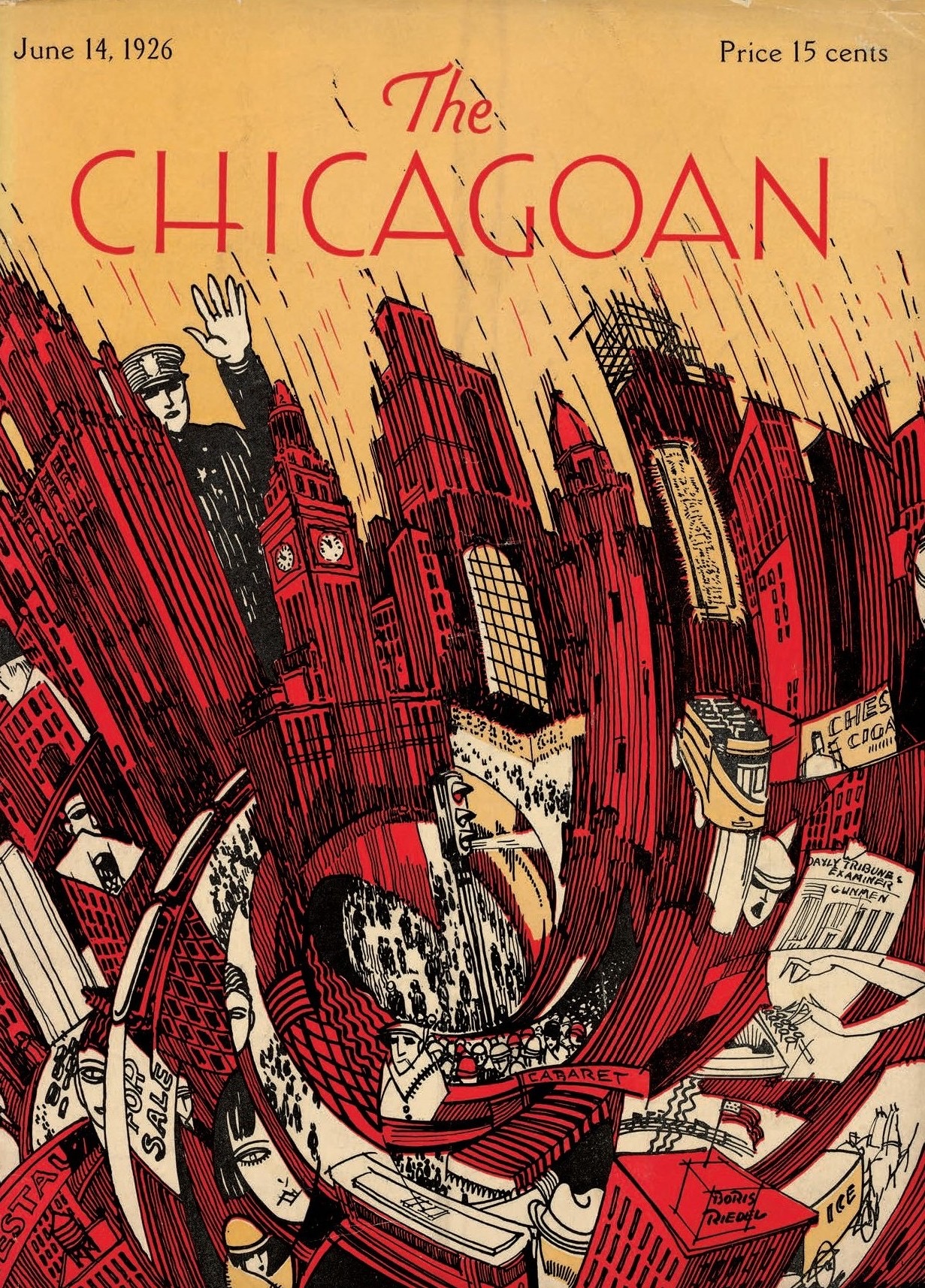
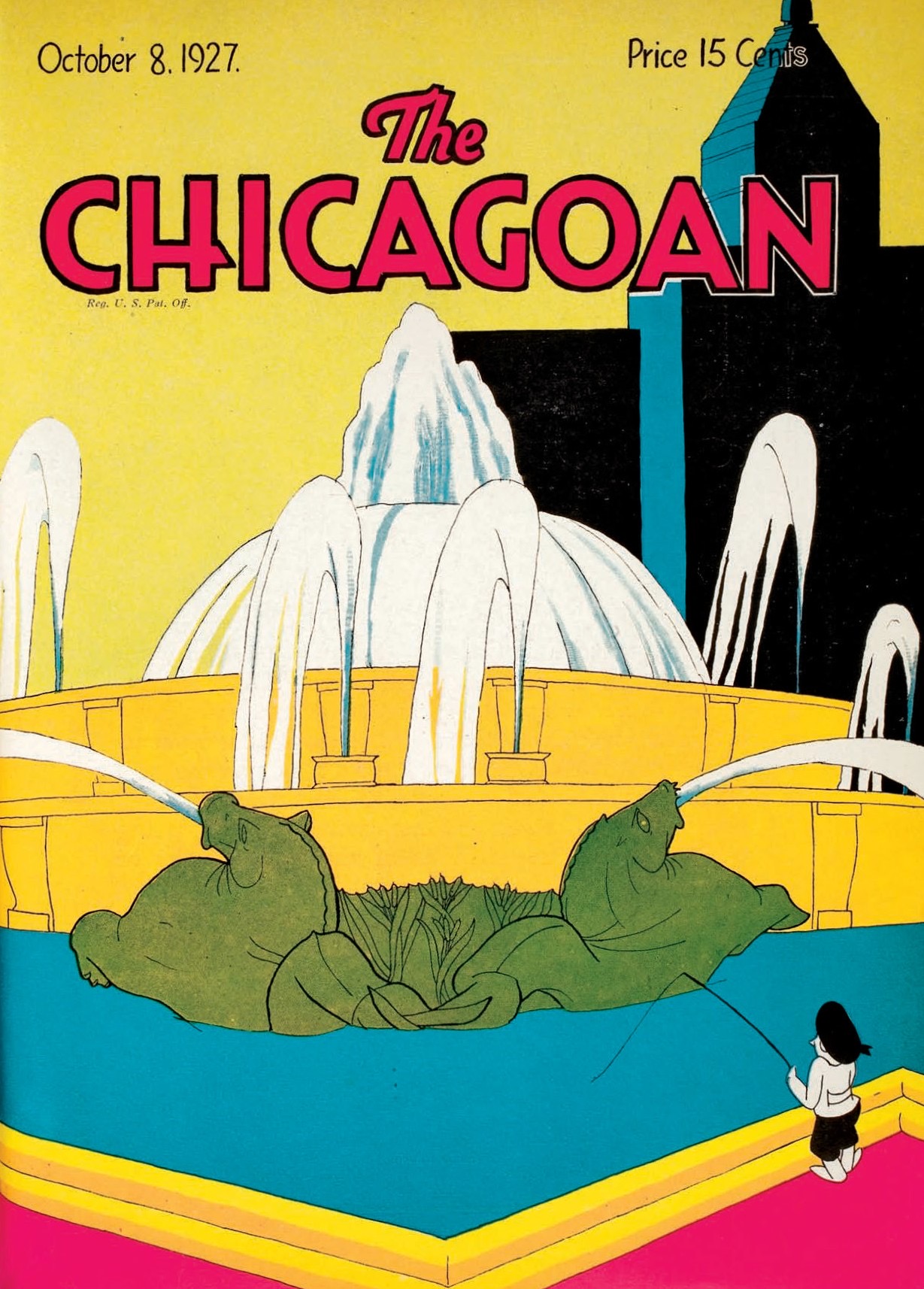
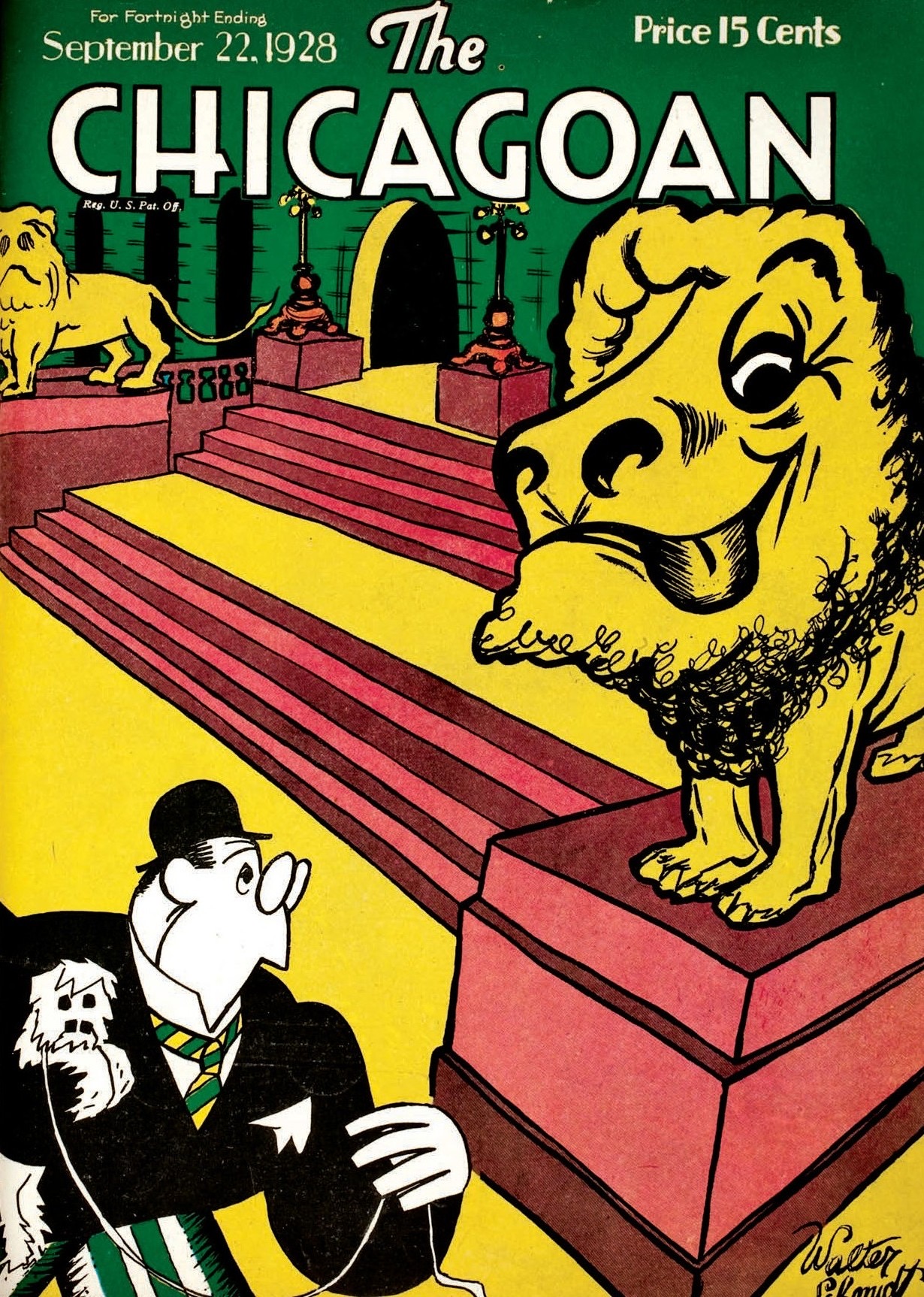
While browsing the stacks of the Regenstein Library at the University of Chicago 30 years ago, noted cultural historian Neil Harris came across a series of hefty volumes whose unassuming spines bore the name The Chicagoan. Opening one, Harris discovered Chicago’s version of the New Yorker with arresting covers, fanciful art, witty cartoons, profiles of local personalities, and a whole range of incisive articles that mysteriously had slipped through the cracks of history and memory. Just republished and reissued in its centennial year by the University of Chicago Press, Harris’s The Chicagoan returns us to Jazz Age Chicago, captured, to use its own words, as “a cultural, civilized, and vibrant city which needs make no obeisance to Park Avenue, Mayfair, or the Champs Elysees.”
Harris is the Preston and Sterling Morton Professor of History and Art History Emeritus at the University of Chicago and the author of seven books still in print at the University of Chicago Press. Recently he described to us how this urbane and beautiful magazine, appearing just sixteen months after the 1925 debut of the New Yorker, was like no other publication in our history. Gossipy and glamorous, adored by society and the cultural cognoscenti, these rare issues fascinated Harris immediately.
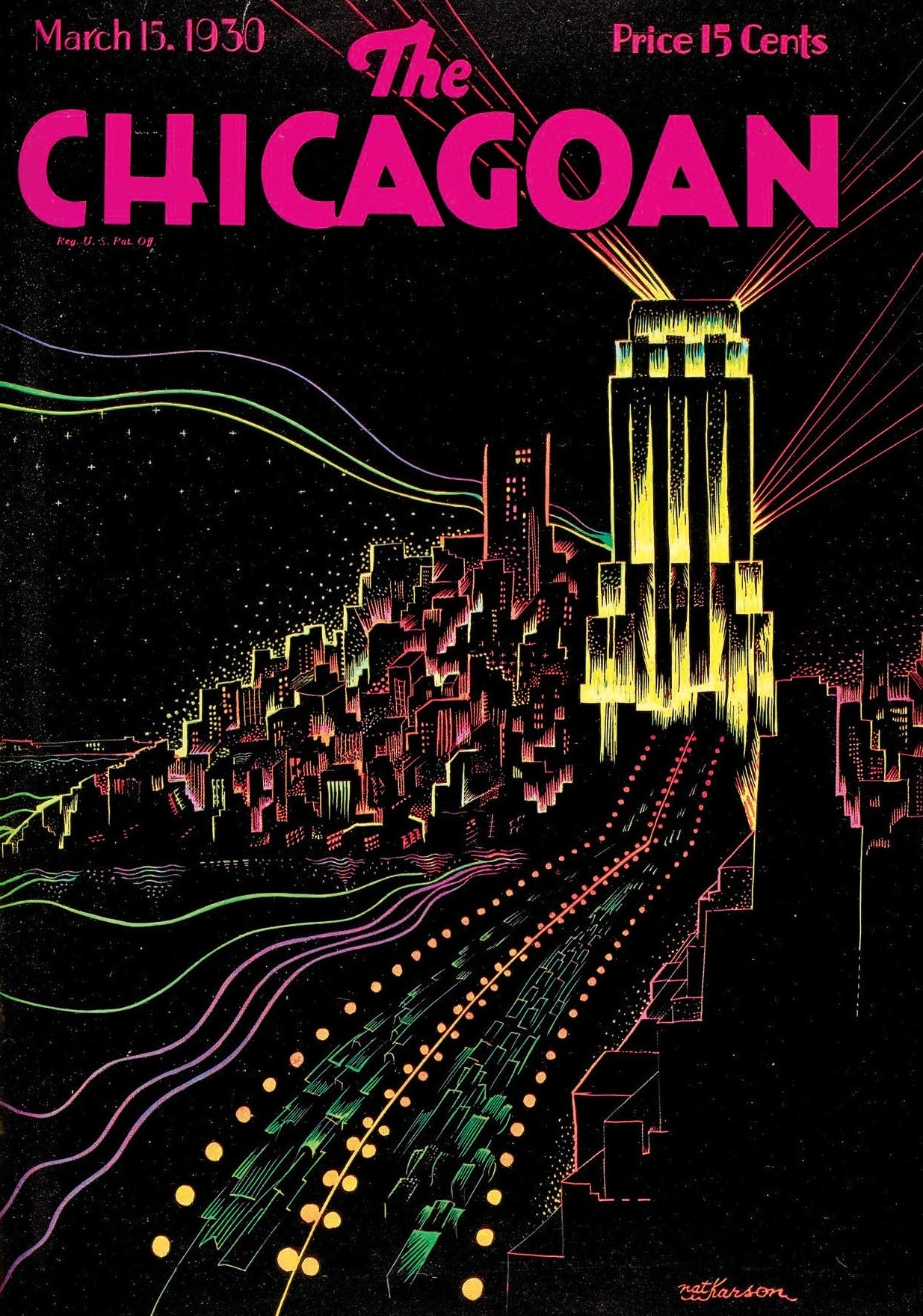
“It was the covers that first attracted me and frankly I was worried that someone might want to cut them out and take them home. I brought them to Special Collections where I knew they would be safe, but they really got my curiosity going.
“Like almost everyone, I had never heard of them. They got no mention in the 2004 Encyclopedia of Chicago. There is only one complete set in the world and that is at the New York Public Library. My wife Teri and I looked through all the issues at Regenstein and found that its run was almost complete. Now many of the covers are up on the web and everywhere to be seen. But they still seem fresh and attractive.
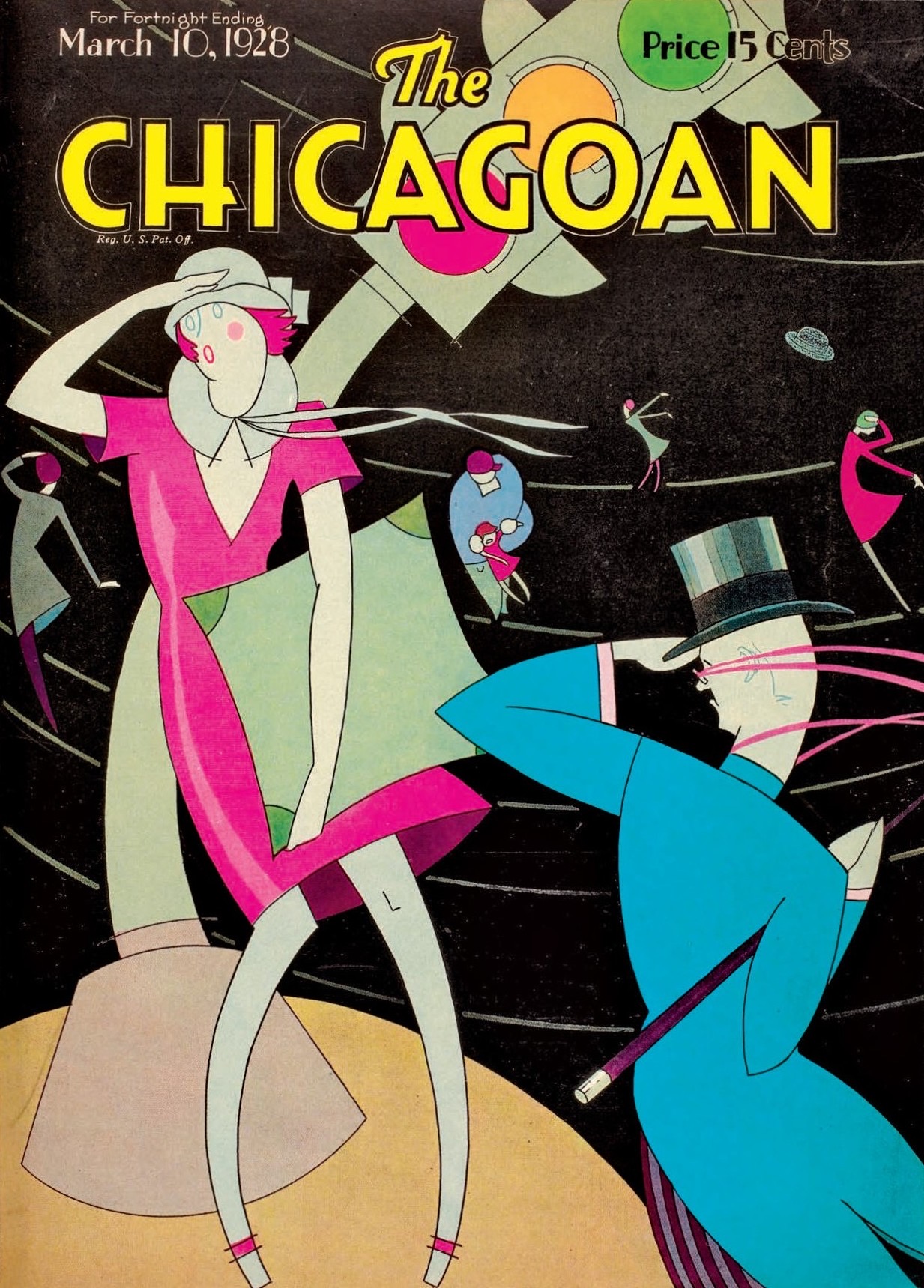
“The magazine sought passionately to redeem the Windy City’s unhappy reputation for organized crime, political mayhem, and industrial squalor by demonstrating the presence of style and sophistication in the Midwest. It wasn’t interested in equity or social reform, it was meant for the fashionable dwellers of the social world. And probably read in those great luxury apartment buildings sprouting along Lake Shore Drive in the 1920s, along with North Shore suburbanites.”
Harris’s introductory essay sets the stage, exploring the ambitions, tastes, and prejudices of Chicagoans during the 1920s and 30s. The author then lets the magazine speak for itself in lavish full-color segments that reproduce its many elements: from covers, cartoons, and editorials to reviews, features—and even one issue reprinted in its entirety.
The Chicagoan appeared twice a month at first and then once a month. It first cost 15 cents and increased to 25 cents which was the equivalent of about $5 an issue in those days. Smart shops in Chicago were among its advertisers. Other cities, including Washington D.C., Philadelphia, San Francisco, Brooklyn and Milwaukee tried to imitate New York by starting their own magazines. The Chicagoan lasted longer than most of these but its goal to become a national magazine was never realized.
Quigley Publications, which also did movie magazines and Polo, took over as publisher after the first six or seven issues. Martin Quigley was an opinionated commentator. A journalist, entrepreneur and active Catholic layman from Detroit, he loved the movies and helped formulate the notorious Motion Picture Production Code aimed at reshaping Hollywood films after star scandals and racy content aroused concern.
“He seems a strange person to be publisher of a New Yorker clone, but he really wanted to redeem Chicago from its Al Capone image. He emphasized the city’s culture to counter the condescension of East coast snobs. There was even a recurring ‘Talk of the Town’ piece. Unfortunately, there is no correspondence, no paper trail, nothing but a piece of letterhead left from his time, to tell us how he operated. Very different from Ross and The New Yorker”
Marie Armstrong Hecht, the soon to be the ex-wife of the legendary journalist and screenwriter Ben Hecht, was the first editor. “Quickly replaced, she led a group of literati who served as writers. They, and their successors, covered local theatre, clubs, sports, Ravinia, books, movies, and the Chicago Civic Opera, while artists depicted new institutions like the Shedd, the Field Museum, and the Planetarium, just going up or recently built.”
Who were the magazine’s contributors?
“Chicago had as many as eight daily newspapers during this time, reporters, columnists, and freelancers supplied the articles and reviews. Students and graduates from the School of the Art Institute produced many of the covers and illustrations. They probably worked for little, although we have no idea how much they were paid. At that time thousands of artists were studying in Chicago and they needed some income. As one of the largest art schools in the country, the School of the Art Institute was a useful source. Talented, but largely unknown today, these artists form part of a hidden history that still awaits a more complete telling. When the book was first published, I received emails from descendants, happy that their work was rediscovered.”
The World’s Fair of 1933 kept the magazine alive, Harris told us.
“It probably would have disappeared completely after 1929, if it hadn’t had the Fair to cover.”
Recalling a vivid moment in the life of the Windy City, The Chicagoan is a forgotten treasure. We are grateful to Harris for offering it to a whole new age to enjoy.
 ← Previous: About the Town in November