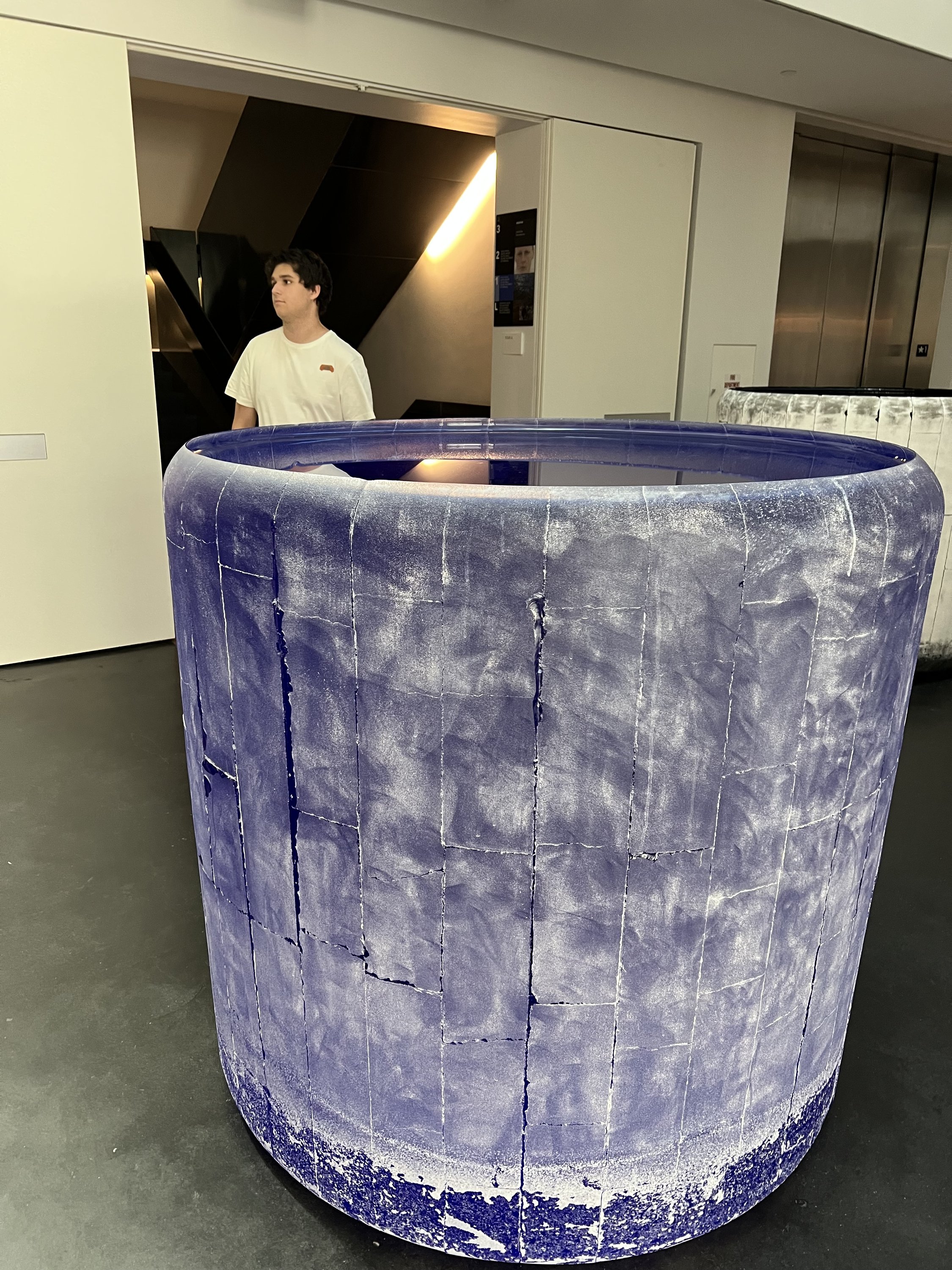
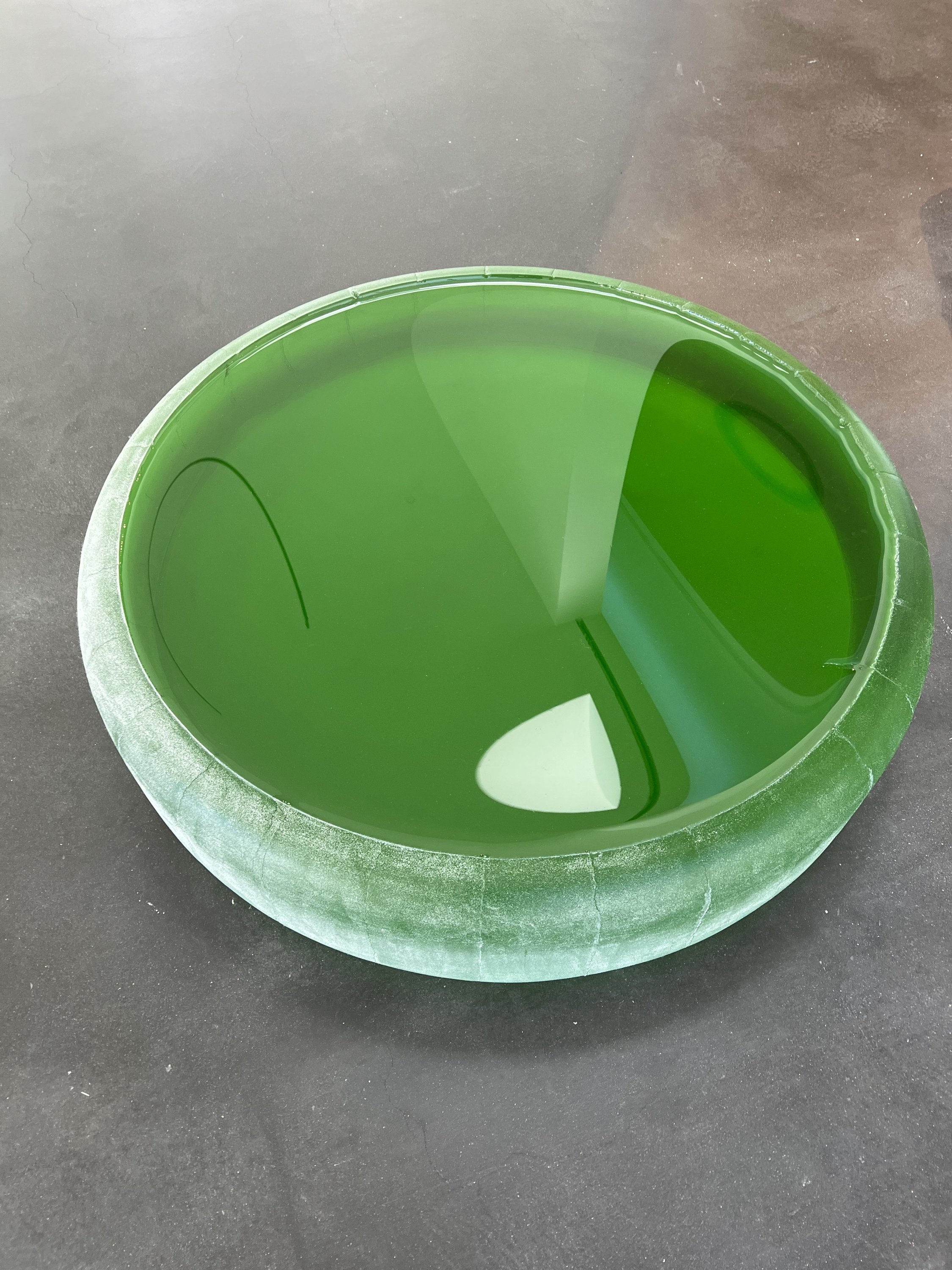
From September 2025-January 2026, the Museum of Contemporary Art Denver (MCA Denver,) presented an exhibition entitled “Roni Horn: Water, Water on the Wall, You’re the Fairest of Them All”. The exhibition, where Horn focused on the subject of water, included drawings, sculptures, installations, photography, video screenings, and book works. Visitors saw stunning cast glass sculptural forms that had reflective surfaces reminiscent of water pools, and works that explored Horn’s attachment to the powerful landscape of Iceland. NY-based artist Roni Horn (b. 1955) poetically expressed that “You say water is troubled or calm. You say water is rough and restless. You say water is quiet. Water is serene and sometimes clear, it might be pure and then it is brilliant. Water is heavy; that’s a fact. Water is often tranquil, even placid. Water is still and then it might be deep as well. Water is cold or hot, chilly or tepid. You say water is brash or brisk, sometimes crisp. You say water is soft and hard. You say water irritates and lubricates. You say water is foul. You say water is fresh. You say water is limpid and languorous. You say water is sweet.” (quoted from the MCA Denver’s press release, June 18, 2025). Horn showed that water, similar to human identity, was dynamic and amorphous.
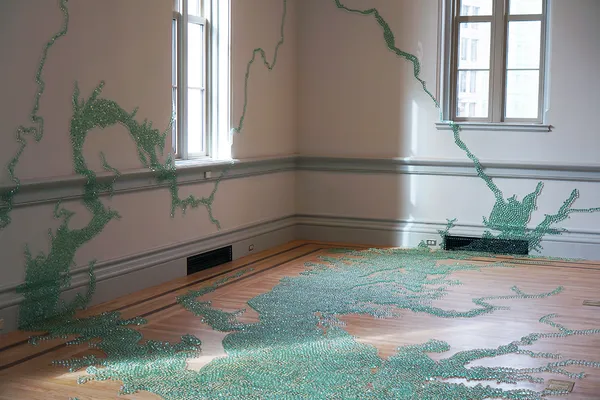
A decade earlier, for the group exhibition entitled “WONDER,” Nov 13, 2015-July 9, 2016, at the Renwick Gallery of the Smithsonian American Art Museum in Washington, D.C., another NY-based artist, Maya Lin (b. 1959,) created a marble map of the Chesapeake Bay. The dazzling map was made of 54,000 shimmering glass marbles that were glued to the walls and floor. Lin’s map was based on her artistic committment to environmental conservation, and the glass marbles represented thousands of unique yet interconnected species of flora and fauna forming the waterway’s ecosystem. Lin entitled the work “Folding the Chesapeake Bay.” Moreover, Lin grew up in Athens, Ohio, where she watched her father, Henry Huan Lin (at that time Dean of Fine Arts at Ohio University,) experiment with glass in the studio, and obtain steam in Toledo. In homage, the marbles Maya Lin employed in “Folding the Chesapeake Bay,” were made of the same industrial fiberglass product that her father and other glass-blowing artists used. In June 2016, the Renwick Gallery acquired the installation for its permanent collection.
In 2022, Virginia Museum of Contemporary Art (Virginia MOCA,) exhibited “Maya Lin: A Study of Water,” an exhibition that focused on Lin’s expressions of water. Virginia MOCA showed works that referenced rising rivers and oceans, melting icebergs and crushed passes. Lin’s artistic creativity and collected scientific data displayed the beauty of our planet, and the significance of water. The exhibition covered works from 1994 to 2022, and Lin created an old/new work, where she added the Delaware Bay to the 2015 marble map of the Chesapeake Bay. The work was entitled “Marble Chesapeake & Delaware Bay (2022,)” and was made of the same shimmering glass marbles that Lin employed for “Folding the Chesapeake Bay”.
Lin showed how everything was connected, and as she was an extension of her parents, both the Chesapeake and the Delaware bodies of water were connected waterways.
At Virginia MOCA Lin’s works summoned nature. Rivers, fields, canyons, and mountains, created through striking forms, focused viewers on the importance of conservation.
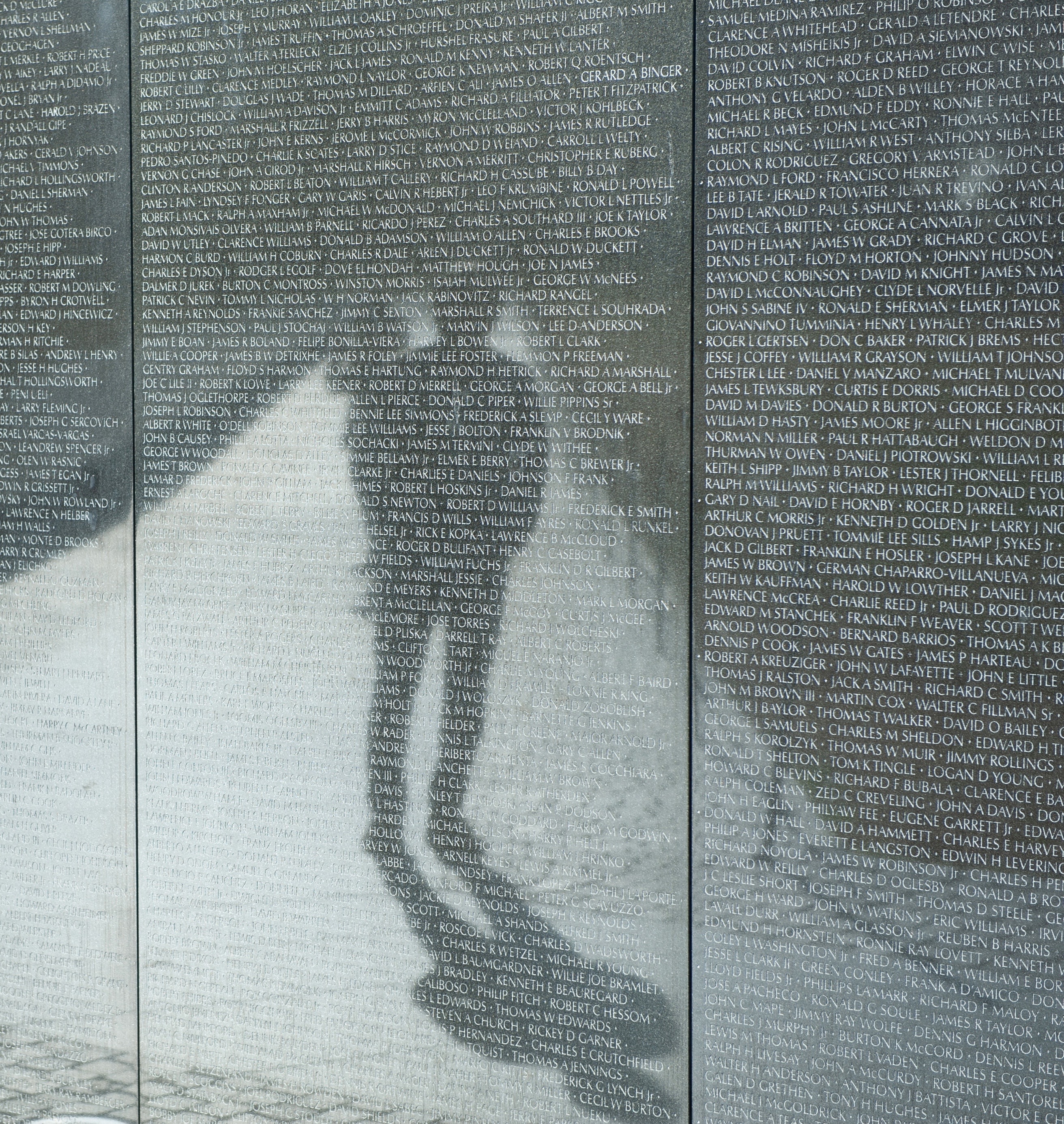
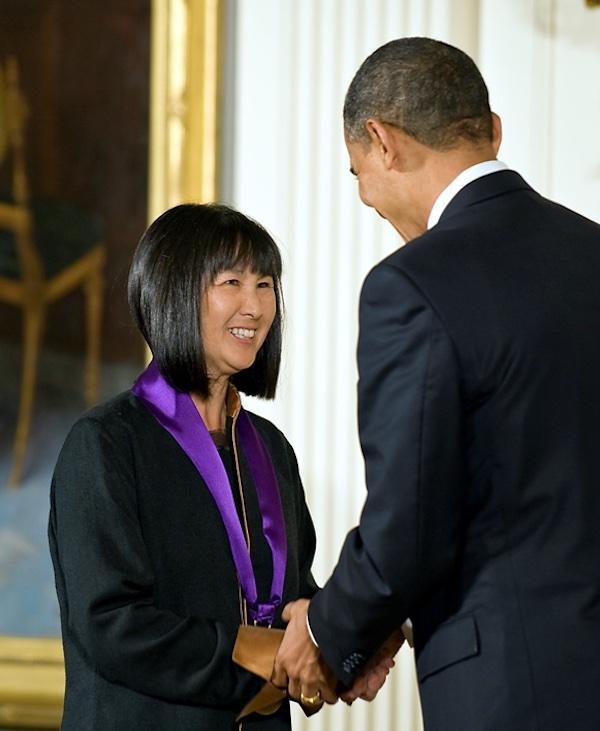
Lin began her career by designing memorials. She focused on the individuals that made the ultimate sacrifices and also on the viewers. While still an undergraduate at Yale, Lin won a nationwide competition for the Vietnam Veterans Memorial in Washington, D.C., which was completed in 1982. An environmental minimalist, Lin was inspired by Smithson’s earthworks and Serra’s sculptures. Lin designed the Civil Rights Memorial in Montgomery, Alabama (1989,) and the Women’s Table for Yale University (1995). She created many works including “Wave Field,” and “Ghost Forest”. In 2019, Lin’s exhibition “Flow,” at Grand Rapids Art Museum, included “The Traces Left Behind (From the Great Bear Lake to the Great Lakes,”) a relief made of recycled silver. In 2009, President Barack Obama honored Lin with the National Medal of Arts, and in 2016 with the Medal of Freedom.
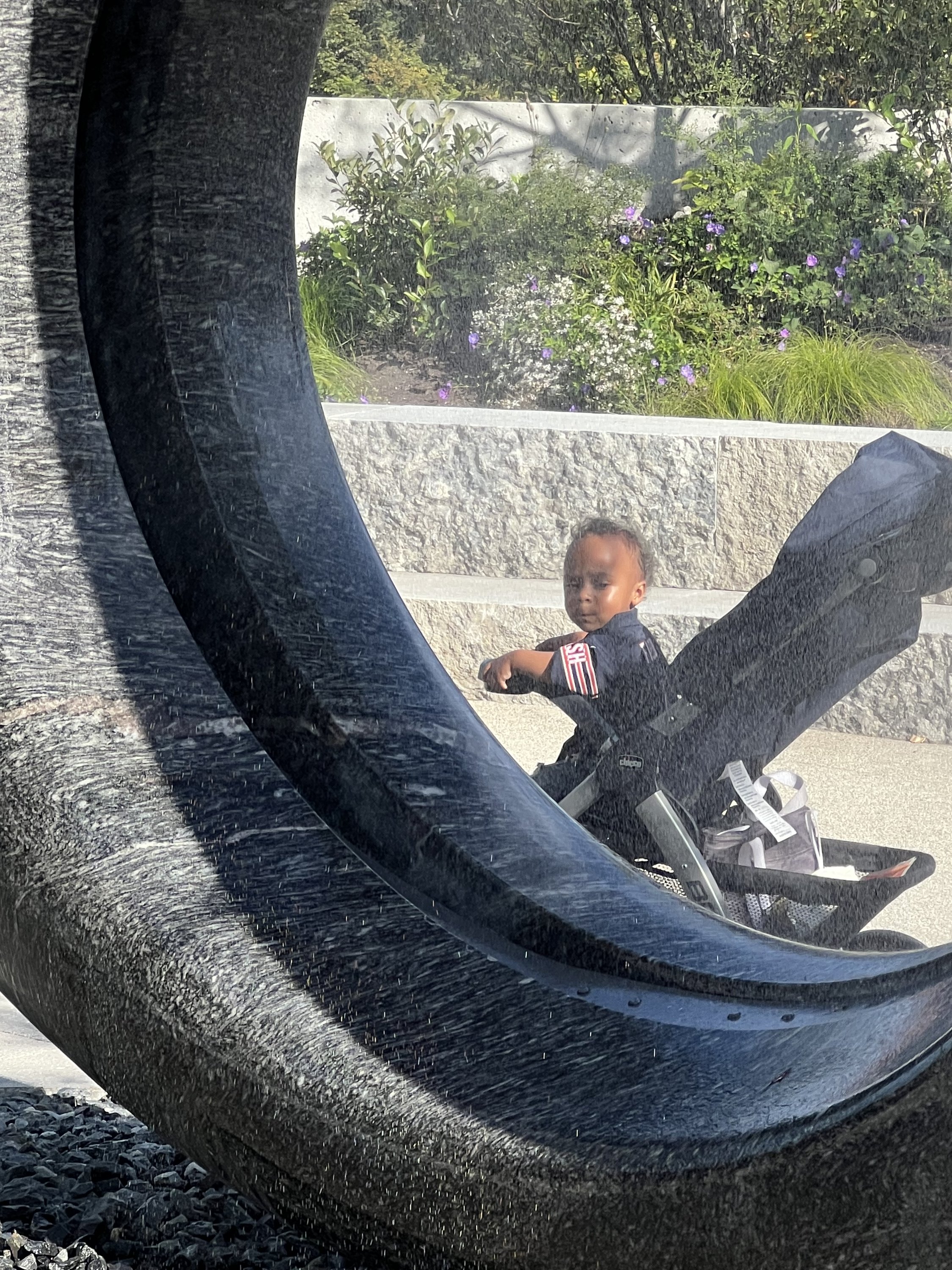
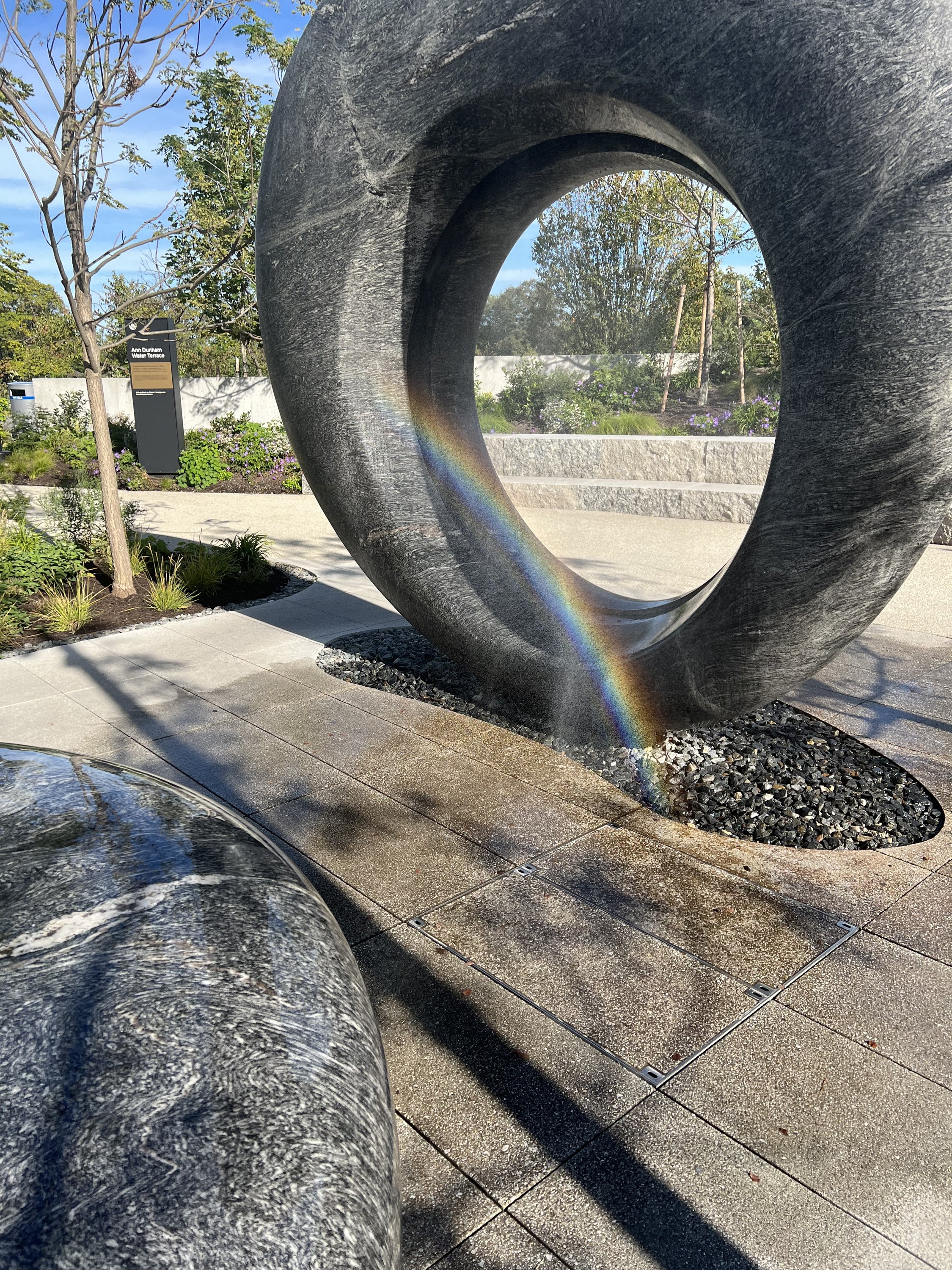
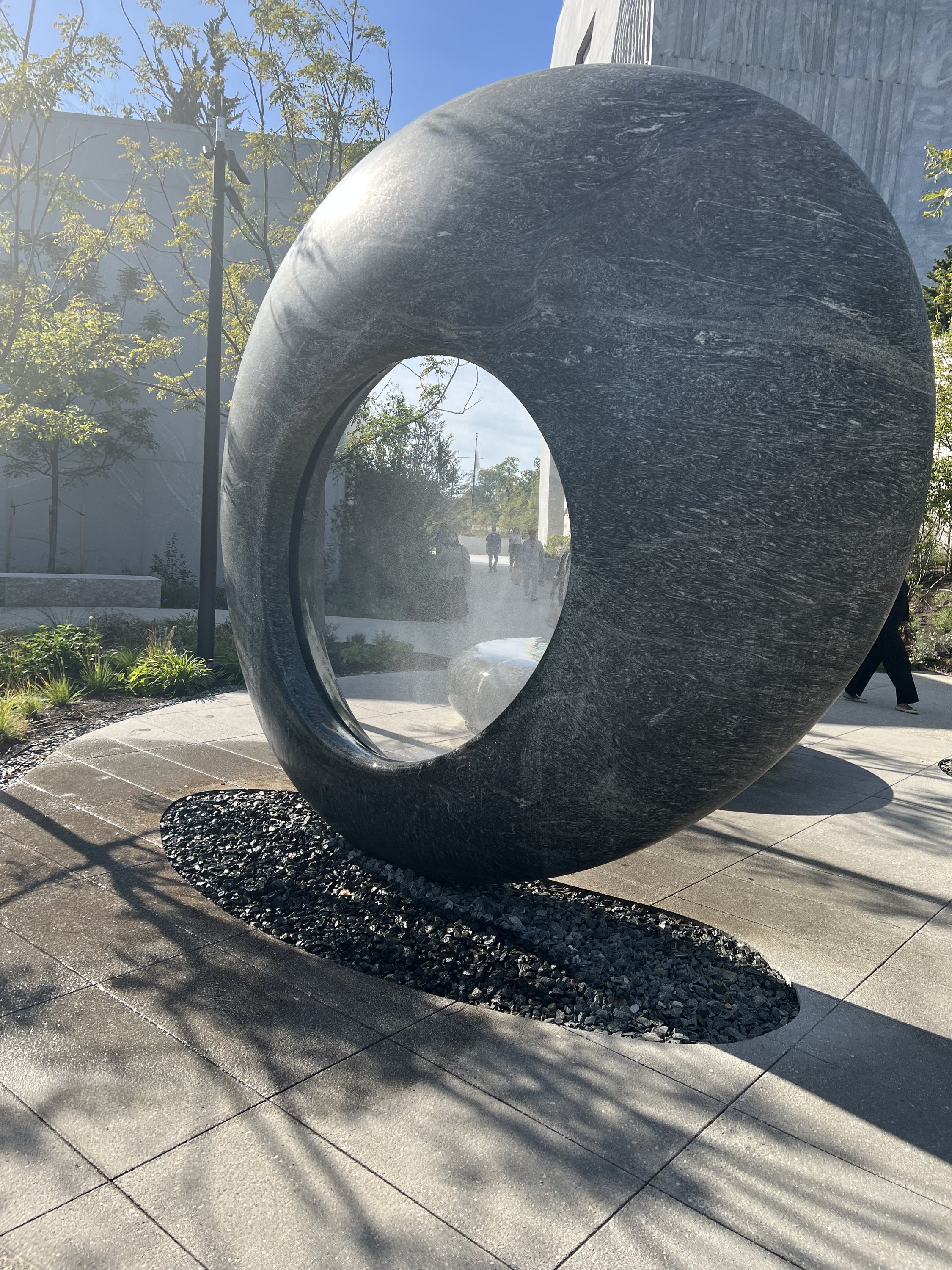
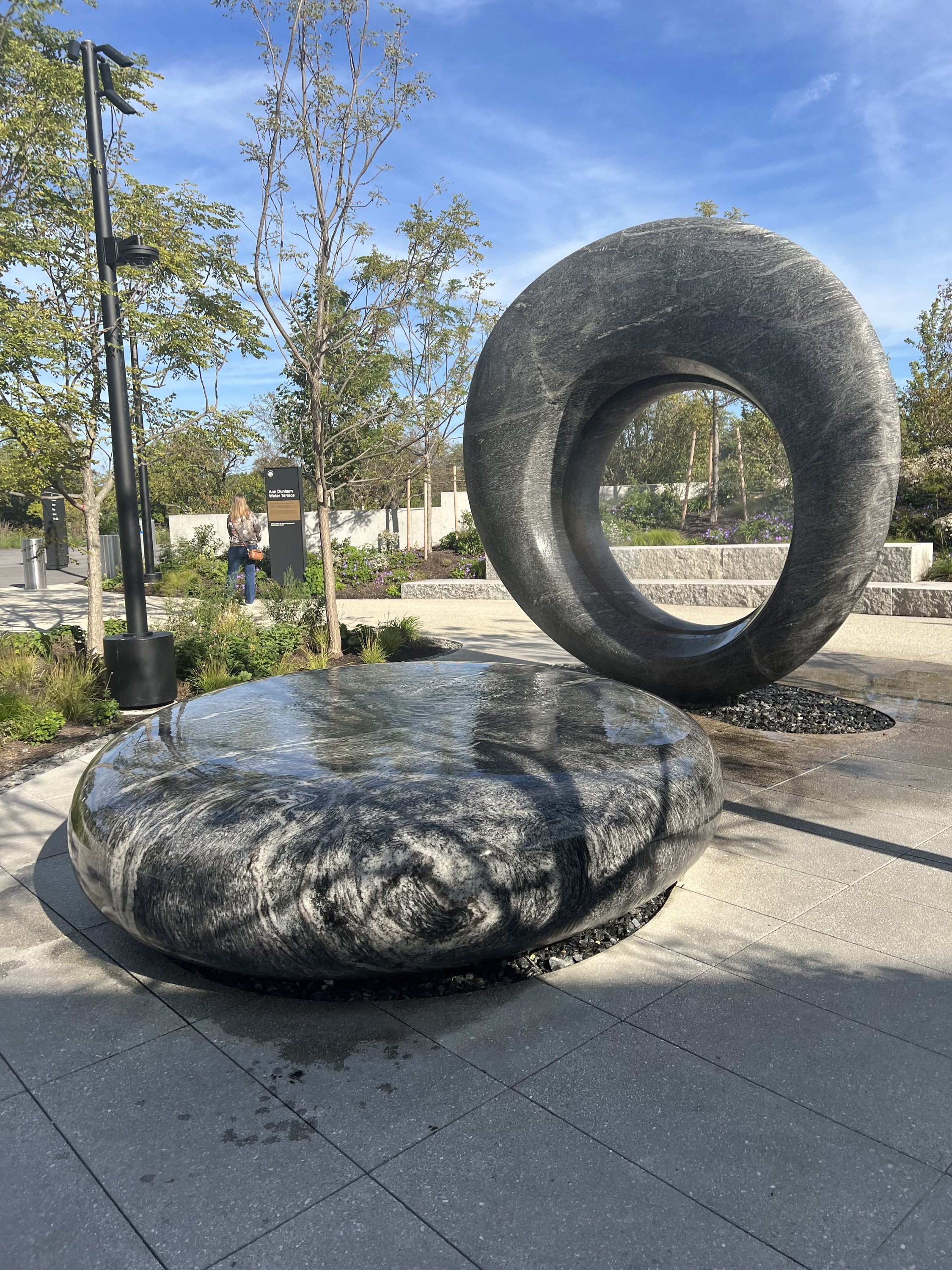
This year, in Chicago, Lin created “Seeing Through the Universe,” located near the Obama Presidential Center’s north entrance on the Ann Dunham Water Terrace. The Water Terrace was built in honor of President Obama’s mother, to serve as a place for reflection and relaxation. Lin designed two stone sculptures in dialogue. One of the stones, Oculus, was installed upright, misting water, and the second, Pebble, was installed reclining, capturing the water. Both structures originated from the same stone, Silver Cloud granite sourced from a quarry in Georgia. The place and Lin’s artwork were constructed to connect visitors to the fountains and gardens, creating a sense of play and delight in the flow and sounds of the water. Lin noted to the Obama Foundation that she was deeply honored to be a part of the Obama Presidential Center. President Obama noted that “When we thought about what may be a fitting way to commemorate my mother’s influence on my sister and me, I thought about where she would want to be in this space. I could picture her sitting on one of the benches on a nice summer afternoon, smiling and watching a bunch of kids running through the fountain, and I thought that would capture who she was as well as just about anything else." (https://www.obama.org/press-releases/ann-dunham-water-garden/)
 ← Previous: Meet Us in St. Louis: The Zoo, the Dining and Much More