
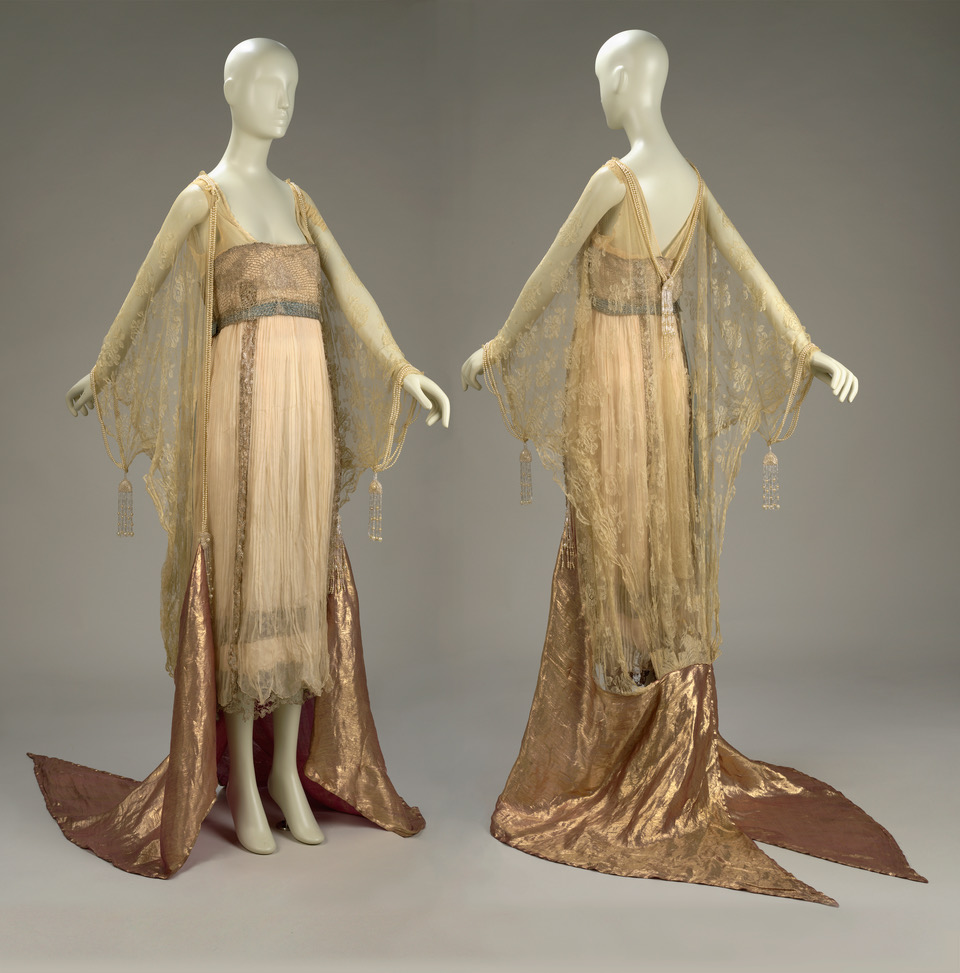
(Editor’s Note: Chicagoan Dwight Cleveland’s collection is currently playing a significant role in “Goddesses in the Machine” at the Bard Graduate Center Gallery on West 86th Street in New York. Charles Musser, Professor of Film and Media Studies at Yale told us: “Dwight Cleveland's remarkable collection provides us with an encyclopedic reference of film information and images that doesn't exist anywhere else in the world. It is a true national treasure”.)
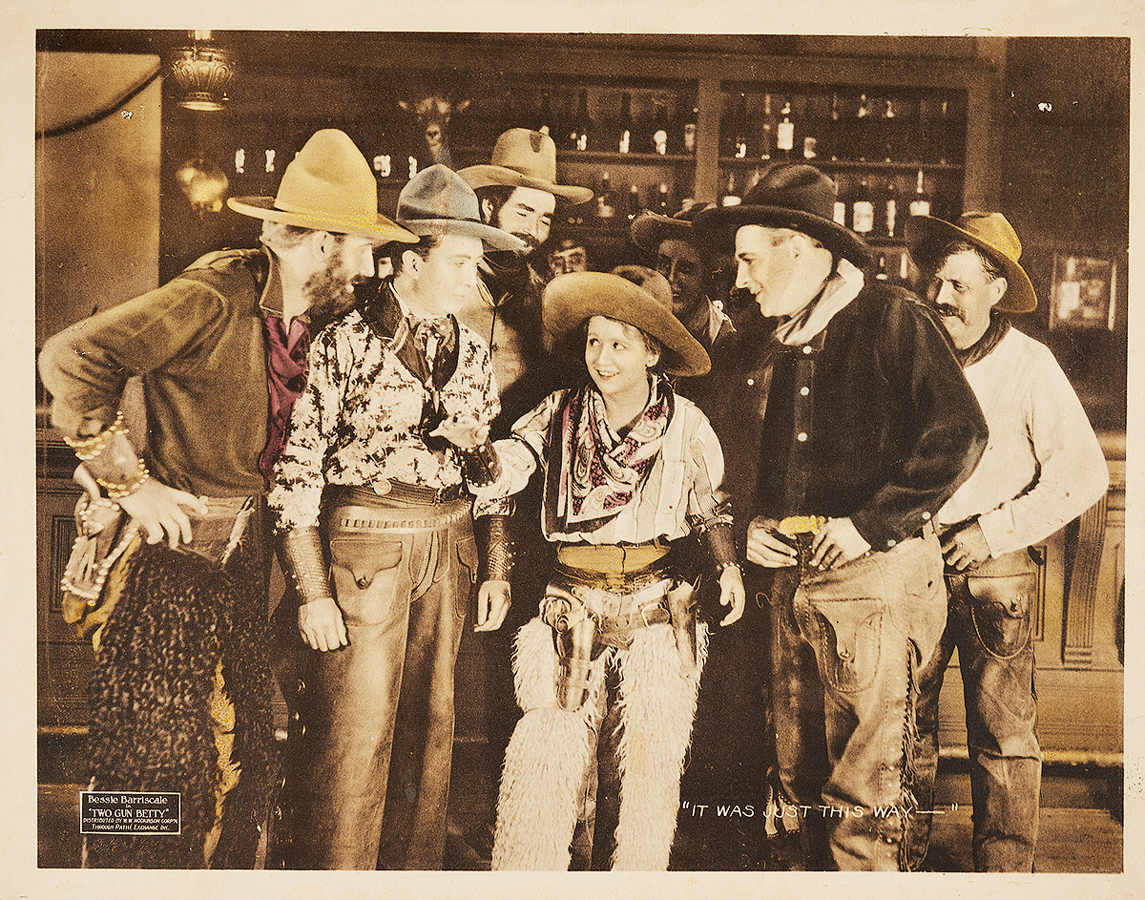
While the latest exhibition from the Bard Graduate Center, “Goddesses in the Machine: Fashion in American Silent Film,” is ostensibly about fashion, it in fact deals with a central question in early film studies today: How can this period of history be presented to the public when so much of its archive is lost?
The four-floor exhibition features a few dozen garments (such as a bejeweled flapper dress, a beaded bra, and a black velvet dancing gown), but the majority of the almost 200 objects on display are not attire at all. Like most films made between 1896 and 1930, the bulk of early film costumes – constructed with delicate materials such as fine silk and lace, studded with heavy beads, and worn again and again in different productions – have been lost to time.
The exhibition’s curators, Michelle Finamore, an independent fashion and design historian, and Emma Cormack, associate curator at BGC, grapple with this lacuna in playful, generative ways. Not only do the curators make ample use of extra-sartorial materials, such as a series of stunning lobby cards from renowned Chicago-based collector Dwight M. Cleveland, they immerse the viewer in an all-encompassing and multisensory world of silent film fashion.
Walking into the opening gallery on the ground floor, the viewer feels as if they’re entering the foyer of an early 20th century cinema. A mannequin wearing a cobalt blue usher’s uniform beckons visitors inside, where they can sit beside ladies’ “picture hats” in the glow of a looping short film. Showcasing ephemera such as fan magazines and paper doll cutouts of pioneering actresses, the ground floor of the exhibition encourages visitors to step inside the cultural and sensory reality of an early picture-show enthusiast.
Museumgoers are also invited to assume the role of costume designer, viewing the garments on display through colored glass “monotone filters” used to envision how clothing would appear in black-and-white. This emphasis continues on the second floor, which highlights women costume designers of the nascent moving picture industry such as Lady Duff-Gordon and Odessa Warren Gray. To further invoke the sensations of the silent film milieu, swatches of fabric are available for viewers to touch, prompting them to imagine what these garments would feel like both to wear and to construct.
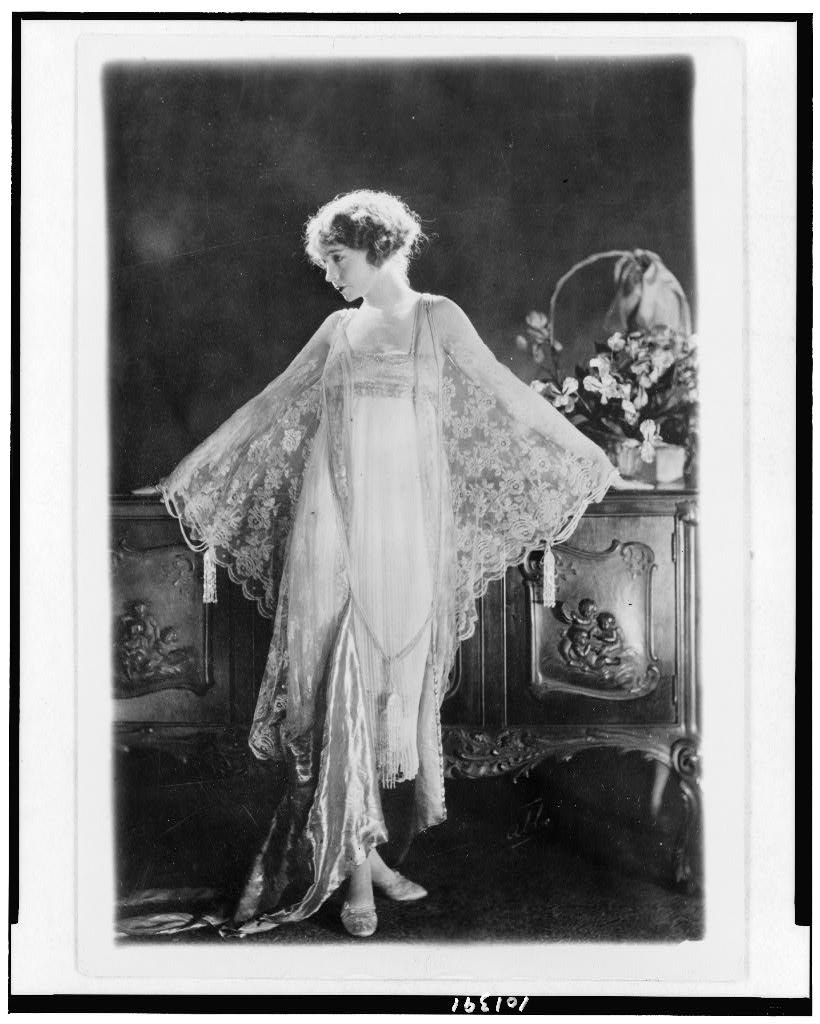
Alongside sketches, accessories, and photographs, the most eye-catching pieces on the second floor are two gowns worn by Lillian Gish in Way Down East (1920). Viewing these rare garments up close allows visitors to appreciate their materiality and consider how fabric, color, and texture translate to the silver screen. In the film (excerpts of which are shown nearby) Gish’s creamy silk peignoir, equipped with see-through lace sleeves rimmed with pearls, seems to evaporate into the actress’ exposed shoulders. The materials chosen for both gowns – glass beads, pearls, lamé, silk – demonstrate the emphasis on reflectivity and visibility in silent film costume design.
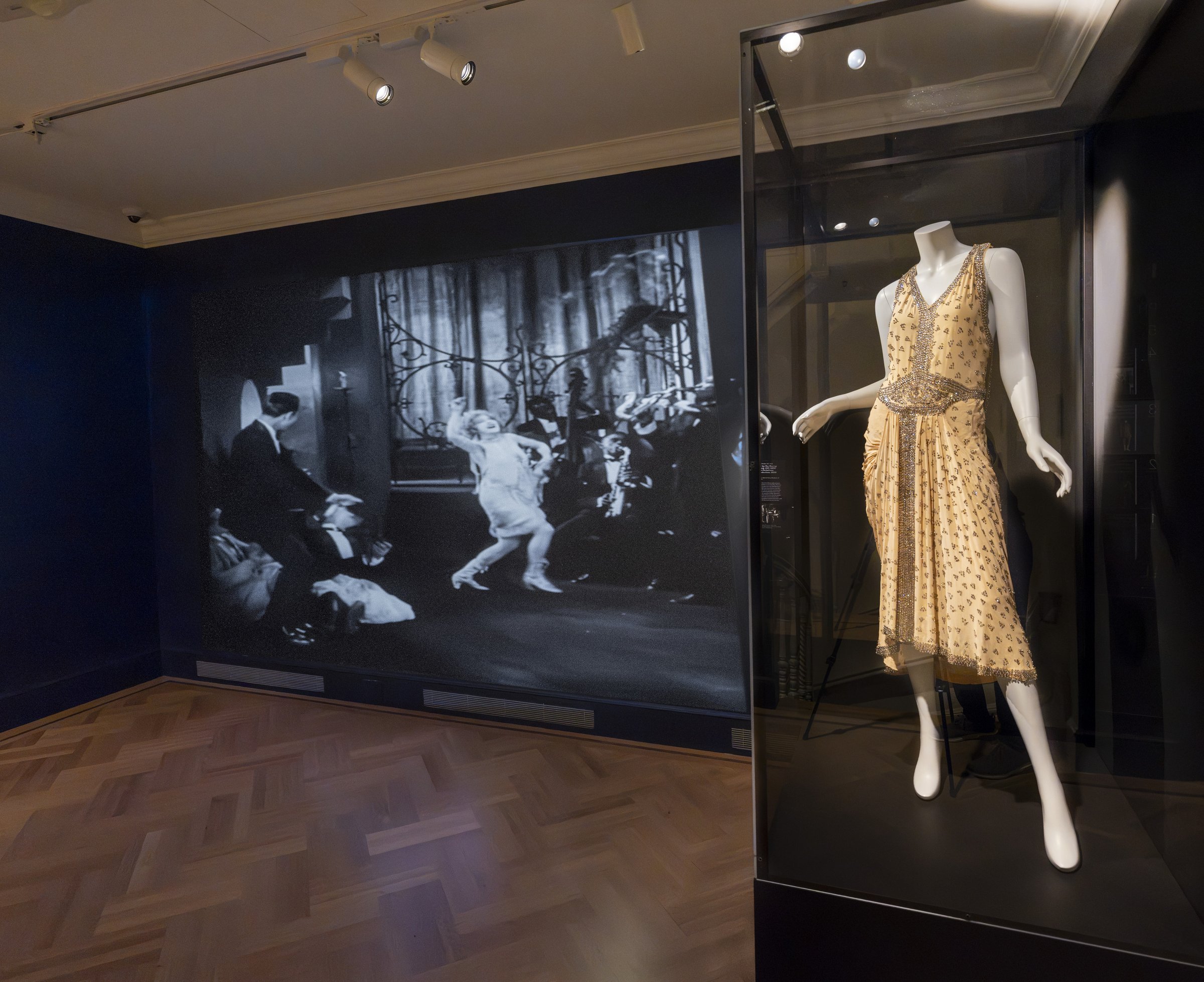
Ascending to the third floor, guests are greeted by Mae Murray clad in a dazzling ivory flapper dress, which she holds up with both hands to expose her rollicking legs. This famous dancehall scene from the film Circe the Enchantress (1924) is projected on loop while the featured dress stands watch nearby. Looking closely at the exquisite garment reveals missing beads precisely where Murray clutches the dress, hinting at its lived history and fragile materiality.
Just as costume designers had to consider which colors and embellishments looked best in black-and-white, they also had to account for which shapes and silhouettes were most conducive to onscreen movement, particularly dance. The glittering beads and loose silhouette of Murray’s dress emphasize the dynamism of her choreography and point to the new medium’s unprecedented potential for capturing gesture and motion.
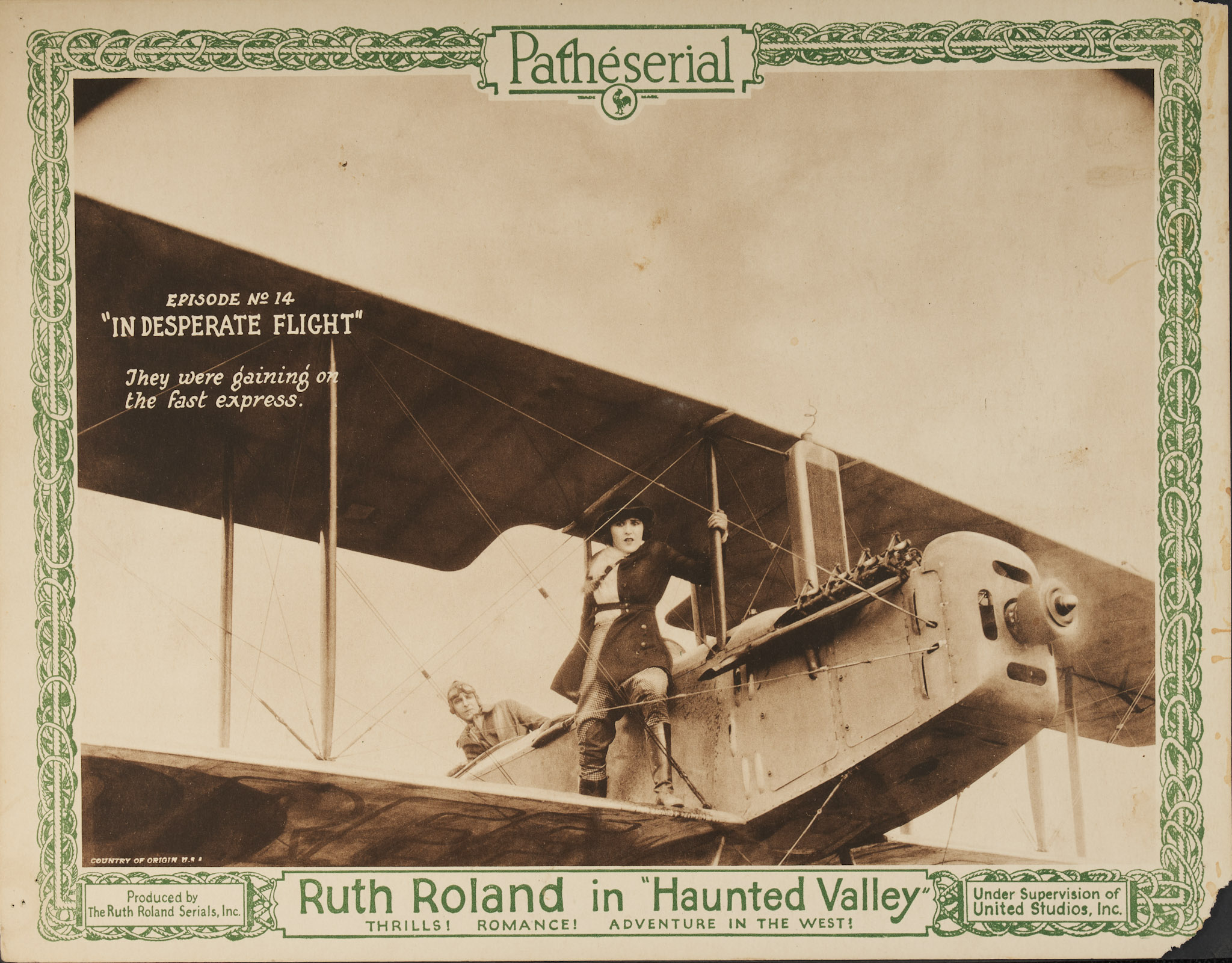
Early moving images gave women the license for a newfound range of kineticism. Women weren’t just dancing on the silver screen: they were shooting guns, riding horses, and jumping out of airplanes. The second part of the third floor gallery highlights the gender-bending costumes worn by serial queens (Hollywood’s first stuntwomen), from bathing suits to riding habits. Lobby cards on display from the Dwight M. Cleveland Collection are particularly striking. In stills from serials like The Black Secret (1919) and Haunted Valley (1923), gun-toting, pants-wearing actresses can be seen standing on airplane wings and getting into shootouts with military officers.
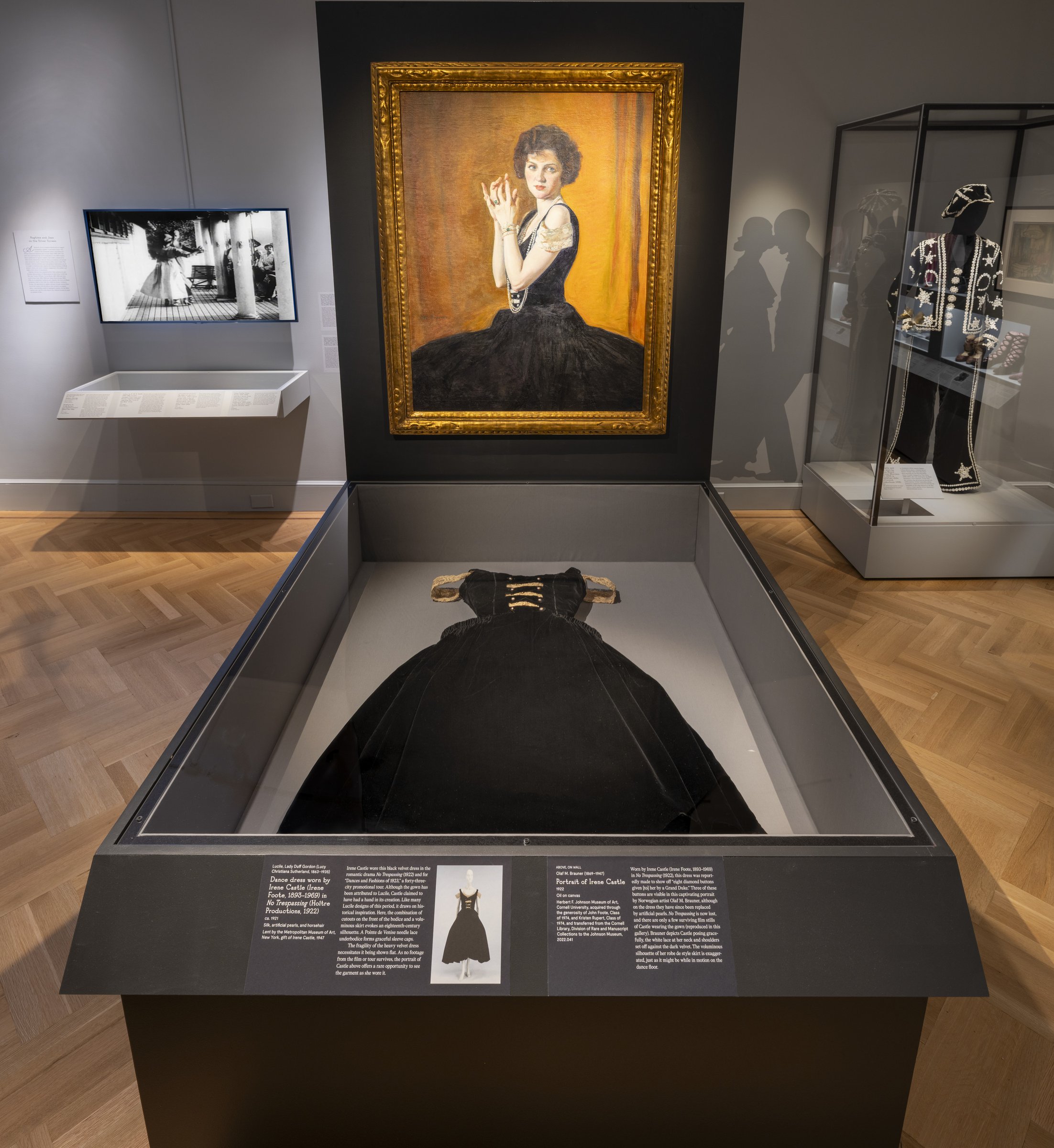
The fourth floor continues the exhibition’s emphasis on women’s labor and embodied viewership. There, two BGC PhD candidates meticulously recreate garments worn by Mae Murray and dance pioneer Irene Castle. Surrounded by photographs of costume designers and unnamed female seamstresses, the garment-making workshops of the silent era spring to life in this final section of the exhibition.
The first major exhibition of fashion in American silent film, “Goddesses in the Machine” doesn’t merely highlight the few surviving garments from this era but skillfully recreates the various milieus in which silent era fashion was experienced, from the black-and-white screen to the theater lobby, the pages of fan magazines to costume designer workshops. As such, whether you’re a film scholar, fashion enthusiast, or completely new to the subject, this groundbreaking and long overdue exhibition invites anyone to delight in the glamorous world of early film fashion.
(Editor’s note: Classic Chicago was delighted to hear more about Dwight Cleveland’s role in the exhibition):
Emma Cormack told us:
“The nearly 20 lobby cards on display from Dwight's collection are absolutely integral to Goddesses in the Machine. They not only offer us a glimpse of the many films that no longer survive, but they also infuse the exhibition with color, action, and emotion and showcase the type of promotional ephemera that silent-era moviegoers encountered in the early twentieth century. Collections like Dwight's are what make study of this fascinating period—and the women who shaped it—possible and we're incredibly grateful for his involvement in the project.
“Cleveland is among the largest lenders to this exhibition. Lobby Cards from his Remarkable Women Behind the Camera Collection are the only type of object that appear on all three levels of Bard Graduate Center Gallery, contributing crucial context to our overall narrative. The fourth floor is dedicated solely to a costume making workshop.
“Limited by the size of the Bard facility, we were challenged to limit ourselves to only 18 pieces from his 10,000 plus representing films where women played leadership roles like producer, director, screenwriter and, of course, wardrobe and costume design. It is an incomparable resource of American cultural history like no other, anywhere.”
Michelle Finamore added:
“As any silent film fan knows, reconstructing early cinema is incredibly challenging, and particularly so for an exhibition focused on costume, which is just as fragile and volatile as nitrate film.
In curating the exhibition, we were consistently struggling with how to tell a fuller story when so little material culture survives. Dwight's rich collection of lobby cards helped us to fill in those gaps throughout the exhibition, but particularly in the "women of action" gallery devoted to the dynamism and derring-do of serial queens such as Ruth Roland, Edith Johnson and Pearl White.
“Dwight's focus on women's history within silent film also shares an affinity with the exhibition's goals, which we have implied in its title - the exhibition is an homage to the goddesses on the screen, and the goddesses behind the screen.”
 ← Previous: Chicago’s Cultural Stadium: Falling in Love With Chicago All Over Again
 Next: 600 Guests Celebrate the 70th Gold Coast Fashion Show →