
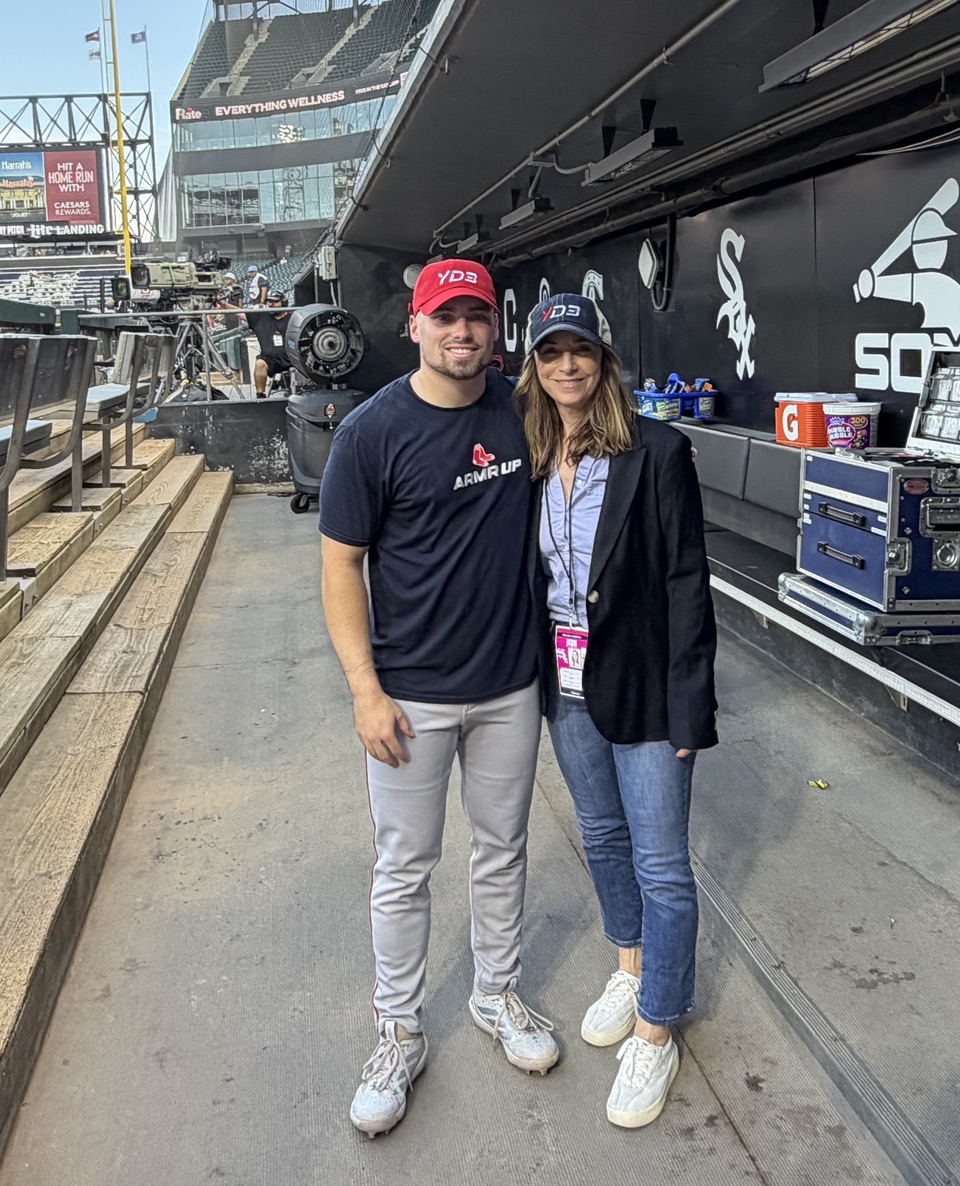
A devoted varsity tennis player at Division III Ithaca College, Jennifer Karras watched her two children also successfully play Division III sports at the University of Chicago and Kenyon College. At the same time, she often heard sad stories from students and parents about their choices at a variety of other colleges.
“They were so distraught their child had made this important decision, and the experience didn’t turn out to be anything they had expected,” said the Lake Forest resident, a former senior managing director at Guggenheim Partners.
Thus was born YD3, Karras’ brainchild. The firm aims to connect with eighth-grade students and their parents to introduce them to Division III student-athletes they can learn from, provide career opportunities (including internships) once they become college-student athletes, educate them through stories and webinars highlighting successful D3 players and coaches on their sleek website yd3.org and more.

“The impetus for me was, ‘Why are so many kids ending up in the wrong place?’” Karras explained about the project, which she started putting together four years ago. “Student-athletes aren’t getting the guidance needed to target schools where they’ll play, learn and thrive. We have built a platform that is designed to advance academic, athletic and career ambitions.”
“We’re really focused on the whole person, not just the athlete,” added LoriLee Bielski, another Lake Forest resident with a background in academia at Indiana University whom Karras tapped as the firm’s chief operating officer. “It’s about becoming a grownup with skills that lead to a productive career.”
Karras expects Student-Athlete Advancement -- the division of YD3 that works with high school student-athletes to help them identify and achieve their college experience goals -- to bring in two-thirds of the revenue. Job listings, advertisements, sponsorships and other sources will provide the remaining money. With more than 400 Division III institutions across the land featuring about 210,000 student-athletes, it looks to be a robust market to enter.
In fact, according to Forbes, youth sports itself is about a $38 billion market in the United States. At the same time, many players quit by age 13. Some are burned out by specialized training in and dedication to one sport.
“Sports is incredibly valuable to kids’ growth and development,” Karras said. “One of the detriments is to specialize early. To be a multi-sport athlete is more beneficial – you meet other kids, interact with other kind of coaches.”
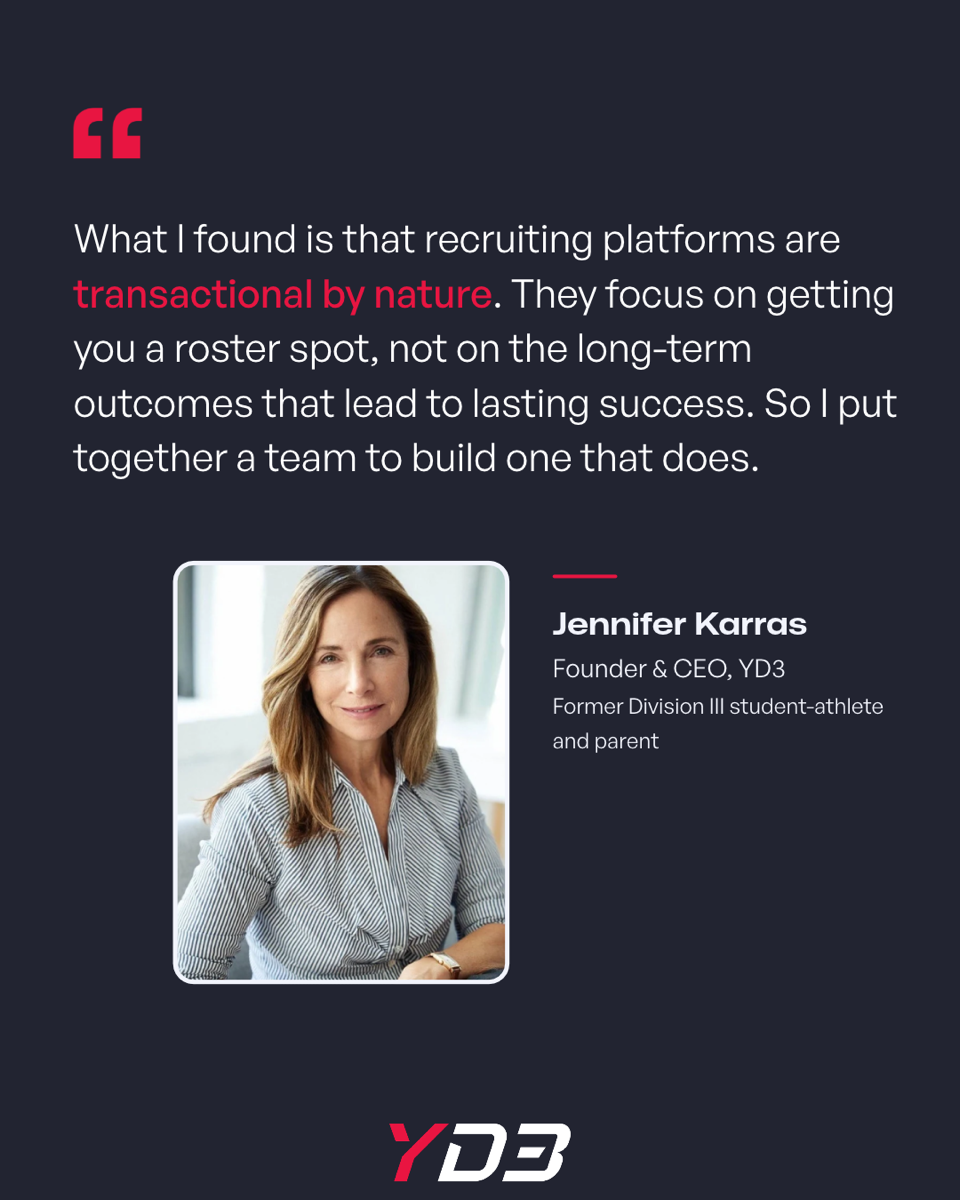
Karras pointed out that private equity firms, such as KKR, are investing in youth sports, buying elite training academies, travel leagues and more. Parents pay a premium for their children to be involved in these specialized ventures, even though fewer than 2 percent of those athletes will play Division I sports and only a handful of those top-level players will turn pro for the ultimate payday. That gives YD3 an opening.
“Private equity is focused on the immediate horizon,” Karras noted. “The approach is transactional, focused entirely on the roster spot versus a mentored method that considers college and career goals. Where we put a line in the sand is do not compromise your education.”
Karras said YD3’s market is predominantly high-school student athletes and their families. Aside from word of mouth, social media platforms from X to Instagram are ways they reach their target audience. As well, YD3’s strong relationships with high school coaches and successful D3 athletes – such as Lake Forest High School graduate Caleb Durbin, a Washington University alumnus who plays for the Boston Red Sox -- should help drive interest among teens and their parents.
“They can say, ‘We have friends at YD3 who can educate you.’” Bielski pointed out. “There’s no better reference than have a coach tell a student-athlete to check us out.”
On the other hand, why can’t students and parents just visit the web site of, say, a D3 lacrosse team for information?
“You see the names of players and statistics, but you don’t get the overall sense of the culture, how the coach leads its team, where kids interned over the summer,” Karras said. “We want to do a more thorough job of creating program profiles and what the program represents – to bring it to life.”
Plenty has changed since work began on YD3 (which is chiefly self-funded) in 2022. The college transfer portal has exploded, along with name, image and likeness (NIL) money. Getting that first job out of school has never been easy, and it has become harder as AI replaces entry-level workers in certain industries.
“We hear, ‘What does a degree mean anymore?’” Bielski noted. “We’ve had executives tell us that a D3 resume with athletic experience pops for them. There’s a consistency in character.”
Karras is excited about the opportunities ahead.
“There are so many ways to expand this brand and its mission,” she said.
“The sky’s the limit. We hope our work motivates kids to continue playing and competing in sports for the love of it.”
 ← Previous: 600 Guests Celebrate the 70th Gold Coast Fashion Show
 Next: Where to Get It →