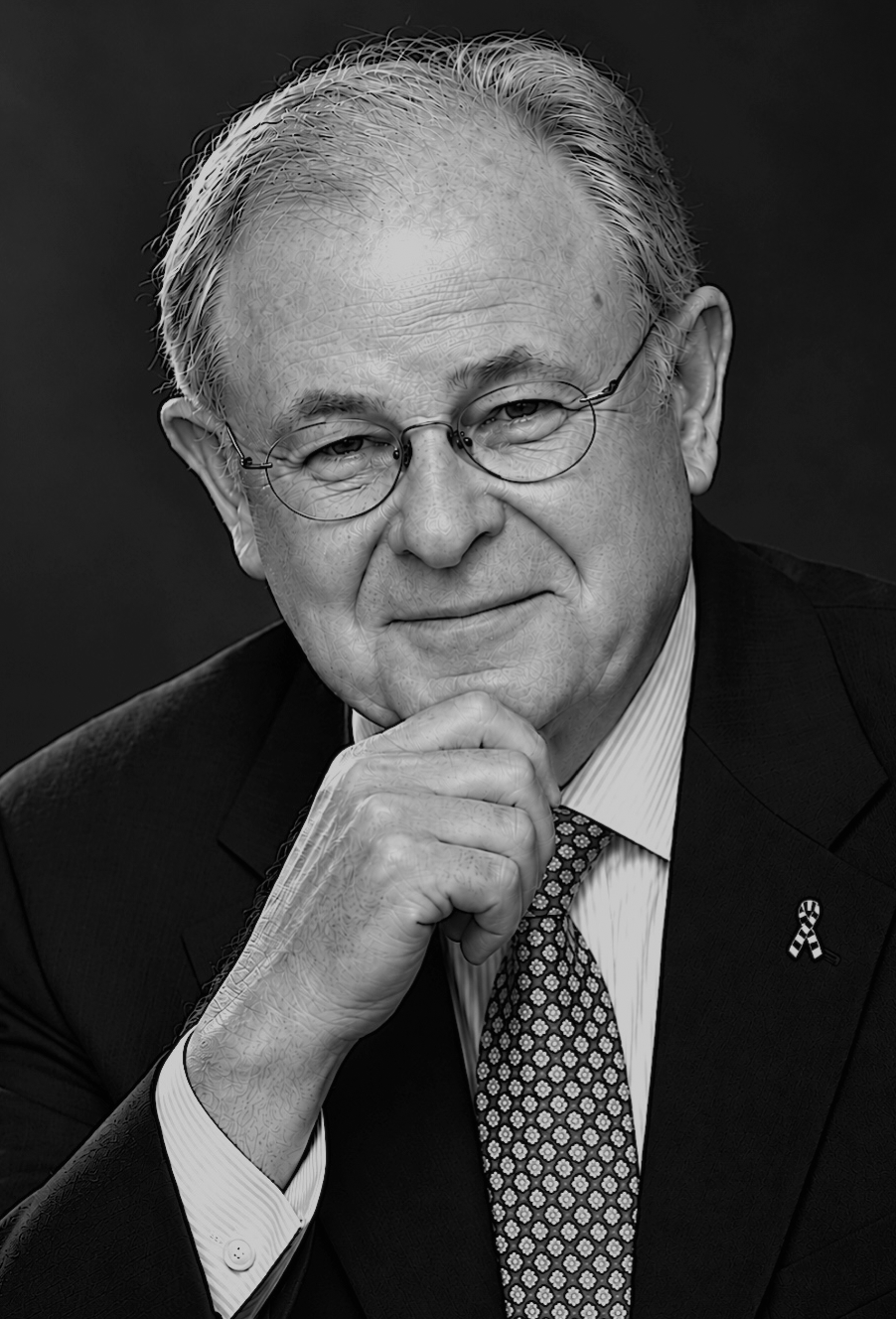
“The title American Echoes describes the method as much as the book. I am listening for something in the present that causes the past to echo back. And then I follow that echo to see where it leads.”—Chicago author Dusty Sang.
Whether it’s a chapter on the themes of presidential inaugural addresses, how spring breaks in Fort Lauderdale began with a swim team, how the dollar got its name, an architectural battle in Chicago, or Mark Twain’s gift to a dying president, Dusty Sang, President of the news and entertainment company Stay Thirsty Media, Inc, has created a book of fascinating facts about American history.
Many Chicagoans have seen how Sang inspires and educates through the Ryan Licht Sang Bipolar Foundation which he founded with his wife Joyce following the death of their only child at the age of 24 in 2004. The foundation’s mission is to foster awareness, understanding and research for early-onset Bipolar Disorder and the couple work every day to change the course of this illness by finding an empirical biomarker to make early detection and early intervention possible. Two years after Ryan’s death he founded Stay Thirsty with some of Ryan’s friends and launched Stay Thirsty Magazine, an online window into the world of artistic expression using Ryan’s mantra “stay thirsty,” which has published over 2600 works read in 150 countries. In addition, Stay Thirsty Publishing features best-selling authors and a Pulitzer prize author.
Delighted with fascinating new information American Echoes provides, we asked Sang how he chose his topics.
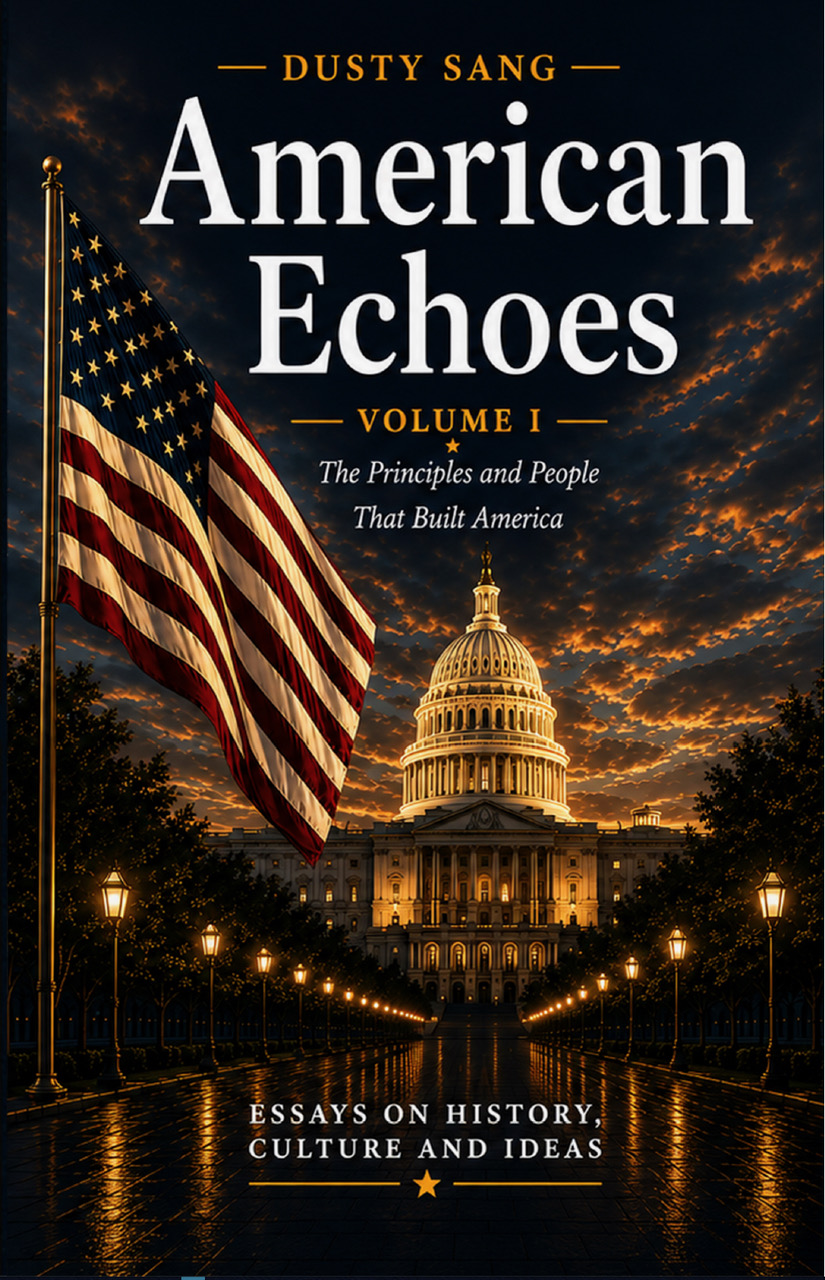
“There really wasn't a rigid formula. I followed my curiosity,” he told us.
“I might be filling my car with gasoline and begin wondering about the history of oil. I might flip a light switch and start thinking about the electrical grid and how electricity is always available on demand. I might fly over the Everglades and wonder how human beings transformed that slow moving river of grass. I might walk through Chicago and see the philosophical argument between Wright and Mies written into the buildings around me. Or I might visit or think about a monument we all recognize and realize that I don't really know its story.
“That curiosity became the connective tissue of the book. From there I used my nearly eight decades of personal experience to originate and create vehicles with the help of AI technologies to communicate issues that have resonated throughout the history of the American experiment.
“The subjects are very different, but they all pass through the same lens: Americana - those people, places, institutions, objects and ideas that tell us something about how the United States became what it is.”
We asked Sang to tell us more:
CCM: Your grandfather’s collections of Americana influenced American Echoes. What do you remember as most fascinating as a child and why is preserving Americana important?
DS: What fascinated me most was the realization that history was something you could actually touch and hold. My grandfather was the foremost collector of important American historical documents and manuscripts in the twentieth century, and I grew up around these extraordinary artifacts. I remember holding a letter George Washington had written to a general during the Revolutionary War. Even more remarkable was a request from Vice President Andrew Johnson on which Abraham Lincoln granted amnesty to Confederate prisoners of war only hours before Lincoln was assassinated at Ford’s Theatre.
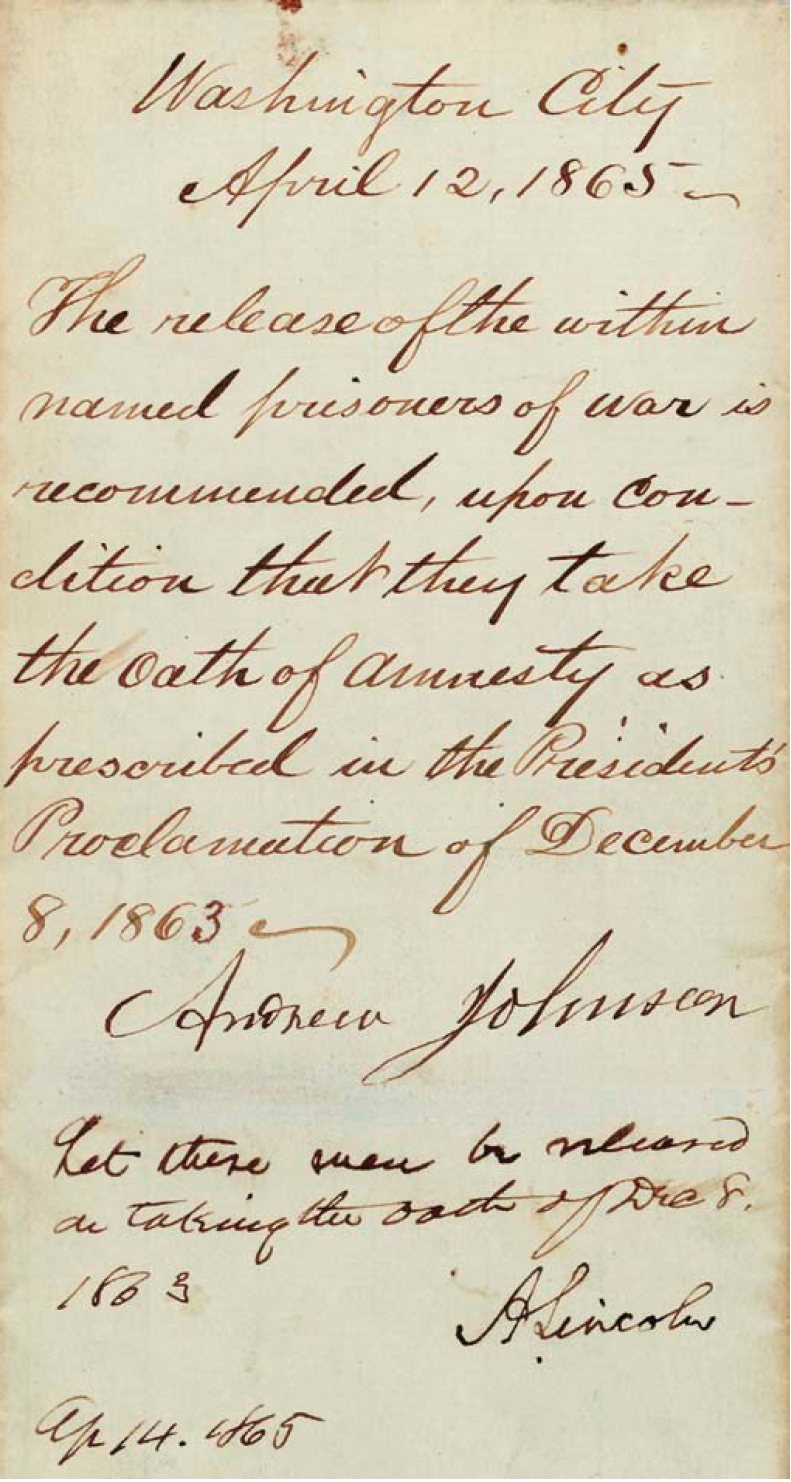
Washington wrote that letter and Lincoln signed that piece of paper, and generations later, I was holding them. It created a kind of “invisible time machine.” Suddenly these weren't remote historical figures in a textbook, they had been living human beings who memorialized their thoughts and their circumstances in writing.
That is why preserving Americana matters to me. Objects, letters, photographs and documents provide a physical connection between generations. They remind us that history is not an abstraction. It is a story of real people, in real places, making decisions without knowing how things would turn out. Once those objects disappear, part of that connection disappears with them.
In many ways, American Echoes is my attempt to do with words what my grandfather did with documents: preserve pieces of the American experience so future generations can encounter them.
CCM: Your book grew from 150 Substack essays. What encouraged you to use that mode of communication? How did you choose the ones to include in American Echoes?
DS: I began publishing on Substack in April 2023. I was attracted to it because it transported something old-fashioned into a very modern medium: the direct relationship between a writer and a reader.
On Substack, there is no printing press, no physical distribution system and very little standing between you and the person reading your work. In that sense, I think Substack has something in common with the pamphleteers of the eighteenth century or the independent newspaper editors of the nineteenth century. Although the technology is completely different, the essential act is the same: a writer has an idea, puts it into the written word and finds an audience willing to read it.
My essays initially ranged across movies, music and books, but gradually I found myself increasingly looking at contemporary life through the lens of American history. The more I wrote, the more I began hearing what I came to call the “echoes” of the past resonating in the present.
The book grew out of that evolution. My friend, the novelist and literary icon, Jerome Charyn, kept encouraging me to turn the essays into a book. He wore me down and eventually I followed his advice.
In choosing the essays, I wasn't trying simply to reproduce a Substack archive. The subjects may seem extraordinarily varied, from water, electricity, money, presidential power, the Constitution, Ulysses S. Grant, the Tomb of the Unknown Soldier, but they all share a common thread: How did America become the country it is today?
That became the organizing principle of American Echoes.
CCM: You write about Chicago as an architectural battleground between Frank Lloyd Wright and Mies van der Rohe. Tell us more.
DS: This essay is particularly personal because I experienced both architectural worlds as a child.When I was eleven, my family moved from Oak Park into a newly constructed Mies van der Rohe-designed apartment building on the northern edge of Lincoln Park. Suddenly I was what I jokingly call a “cliff dweller,” living inside a steel-and-glass box with floor-to-ceiling windows, separated from the ground by an elevator.
But I also remember visiting Frank Lloyd Wright’s Taliesin in Spring Green, Wisconsin, and being struck by exactly the opposite sensation: the connection between the building, the landscape and the human beings occupying it.
Those experiences eventually made me realize that Chicago was the battleground for two radically different architectural philosophies.
Wright essentially asked: How can a building remain human? His Prairie houses stretched horizontally, hugged the landscape and emphasized craftsmanship, natural materials and flowing interior spaces.
Mies asked a different question: What should architecture become in the industrial age? He embraced steel, glass, repetition, geometry and the possibilities of modern engineering. His Lake Shore Drive towers helped create an architectural language that was eventually repeated around the world.
What makes Chicago so fascinating is that neither philosophy completely defeated the other. You can travel from Wright's Oak Park to Mies' Lake Shore Drive buildings and literally move between two competing visions of modern life.
That is why I call Chicago an architectural battleground. It is really a debate in brick, steel, glass and stone about whether architecture should bend technology to human needs or embrace technology and allow it to redefine how human beings live.
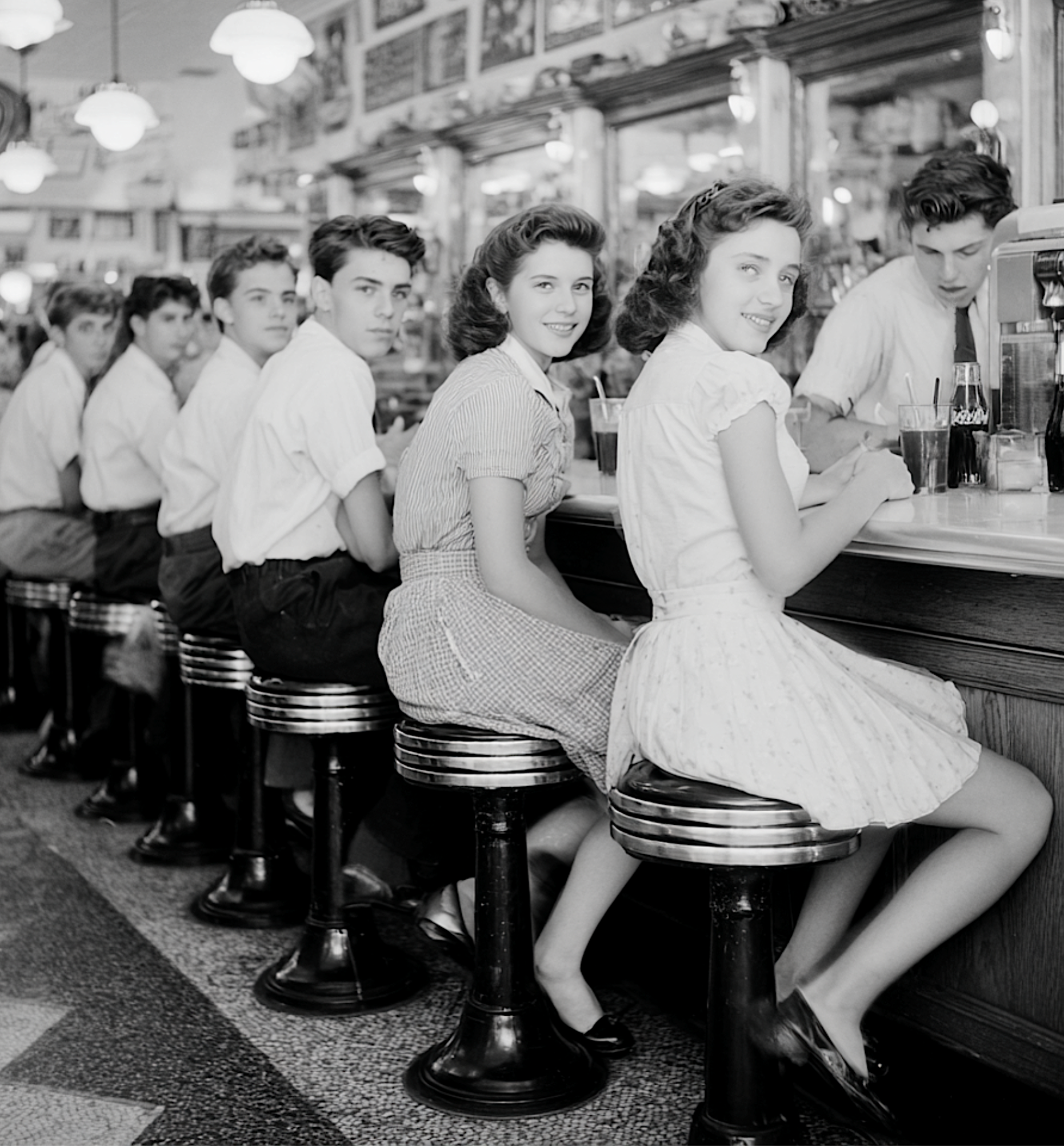
CCM: Drive-in movies, miniature golf and soda fountains invite us into your chapter on the slower America of the 1950s. Why do you describe these spaces with such fondness, and why do we still long for that slower time?
I think the important distinction is that we don't necessarily long for the 1950s themselves. We long for some of the spaces the 1950s created.
Miniature golf, drive-in theaters and soda fountains were inexpensive, communal and wonderfully ordinary. You didn't make an appointment to socialize. You simply went somewhere, and other people were there.
Miniature golf might cost twenty-five cents. Families played together. Teenagers went there on dates. Drive-ins had children in pajamas in the back seat, parents carrying sandwiches and teenagers discovering both movies and romance. And the soda fountain was almost a neighborhood town square, a place where teenagers gathered after school, neighbors caught up with one another and a cherry Coke or chocolate malt could occupy an hour.
We have vastly more entertainment today, but much of it is individualized. We sit in different rooms looking at different screens. Even our social lives are increasingly scheduled, curated and mediated by devices.
Those older institutions created accidental human contact. You ran into people. You talked. You waited. You lingered.
That, I think, is what the nostalgia is really about. It isn't necessarily a desire to return to 1955. It is a desire to recover places where life slowed down just enough for people to connect with one another. As I write in the book, what disappeared wasn't simply a drive-in or a soda fountain. It was a kind of informal community.
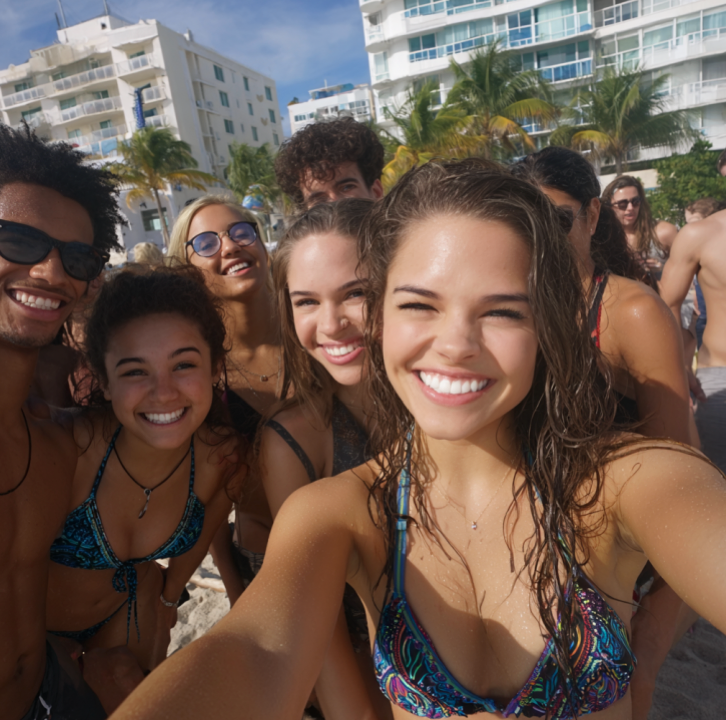
CCM: You also take us back to the origins of spring break, surely one of our country's most popular pastimes, immortalized in pop songs and movies. What was the origin?
DS: The origin is much more innocent than you might expect. In the mid-1930s, the Colgate University swim team traveled to Fort Lauderdale to practice in a newly built Olympic-size swimming pool. Other college swim teams followed because Florida offered warm weather and excellent training conditions during the northern winter.
Then something very American happened: a practical trip gradually became a cultural phenomenon.
By the 1950s, thousands of college students were coming to Fort Lauderdale every spring, not simply to swim, but to enjoy the beach, meet students from other colleges, dance and socialize.
Hollywood discovered it, and that changed everything. The 1960 film Where the Boys Are, with Connie Francis singing the title song, transformed Fort Lauderdale spring break into a national image of youth, romance and freedom. Elvis followed with Girl Happy in 1965. Eventually television, and particularly MTV, turned spring break into a national spectacle.
Fort Lauderdale ultimately became overwhelmed by its own success and discouraged the enormous crowds in the 1980s, so spring break migrated to Daytona Beach, Panama City Beach, South Padre Island, Miami Beach and Cancún.
What I find fascinating is that this enormous cultural ritual began with something as mundane as a college swim team looking for a warm place to practice.
CCM: One of the most fascinating chapters is on Inaugural Addresses and their legacies. Please share a few of the themes with readers.
DS: What interested me was that inaugural addresses are much more than ceremonial speeches. At their best, they tell us what a president believes the country needs at a particular moment. Looking across American history, certain themes keep recurring: unity, service, courage in crisis, civic responsibility and the promise of renewal.
George Washington established the model in 1789. His inaugural address expressed humility and even anxiety about assuming the enormous responsibility of an office that had never existed before. The National Archives preserves the handwritten address, and you can see in it Washington's awareness that the success of republican government itself was being tested.
Lincoln faced an entirely different America in 1861, a country literally coming apart. His first inaugural was therefore about Union and the rule of law, culminating in his appeal to the “better angels of our nature.”
Franklin Roosevelt took office in 1933 amid an economic catastrophe. His message was courage and action. His famous declaration that the nation had nothing to fear but fear itself was followed by a presidency that dramatically expanded the federal government's role in responding to the Depression.
Then there is John Kennedy in 1961. His theme was service and generational responsibility that was most memorably expressed in his challenge to Americans to ask what they could do for their country. That wasn't simply rhetoric; the call to public service was reflected almost immediately in the creation of the Peace Corps.
What fascinates me is that these speeches become snapshots of America at pivotal moments. Different presidents, different crises, different centuries, but the recurring question is remarkably similar: What does the country require from its citizens now?
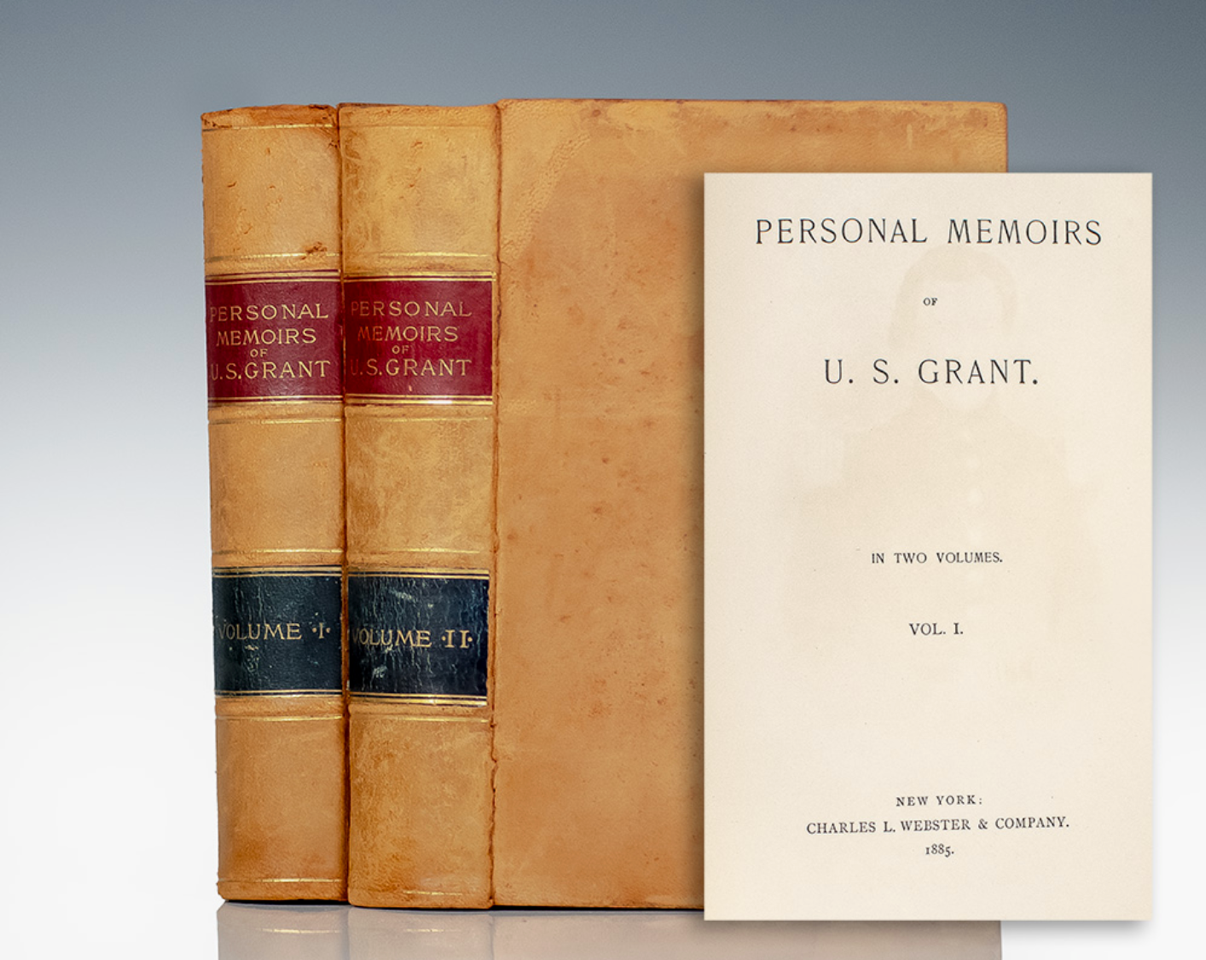
CCM: You write about President Grant’s grit and how Mark Twain helped him with his autobiography when the general was gravely ill. Please share a little of that story.
DS: This may be my favorite story in the book because it is really about character.
I had been fascinated by Grant since childhood. Because of my grandfather's collection, I had held presidential documents signed by Grant and seen original Mathew Brady photographs of him. What interested me was his grit and nowhere is that quality more apparent than in the final year of his life.
In 1884, Grant was financially ruined after the collapse of the investment firm Grant & Ward, in which his son was a partner. Then Grant learned that he was dying of throat cancer. His great fear was that he would leave his wife, Julia, without financial security.
So, he decided to write his memoirs.
That's where Mark Twain enters the story. Grant had been offered a conventional publishing arrangement, but Twain believed he was being badly underpaid. He persuaded Grant to publish through his own publishing company, Charles L. Webster & Company, run by Twain's nephew by marriage, and offered him 70 percent of the profits, an extraordinary arrangement.
Then came Grant's race against death.
Grant was desperately ill, increasingly unable to speak and in considerable pain from cancer, but he kept writing, eventually moving to Mount McGregor in upstate New York. He finished the manuscript in July 1885.
Three days later, he died.
The two-volume memoir became an enormous success. More than 300,000 sets were eventually sold and the royalties exceeded $450,000, providing Julia Grant and the family with financial security.
But the extraordinary part is that the book wasn't merely commercially successful. It became to be regarded as one of the finest military memoirs ever written.
That is why I called the essay “The Last Campaign of Ulysses S. Grant.” His final battle wasn't fought with an army. It was fought with a pencil, against cancer and against time, to protect his family after he was gone.
CCM: Your book tells us about places we have always regarded but never knew much about, including the Tomb of the Unknown Soldier. Tell us about that and how you picked the wide variety of topics in the book.
DS: The Tomb of the Unknown Soldier is a perfect example of what I was trying to accomplish with American Echoes. Millions of Americans recognize it. Far fewer know the remarkable story behind it.
The idea grew out of the enormous number of unidentified dead from World War I. In 1921, four unidentified American servicemen were exhumed from cemeteries in France. Sergeant Edward F. Younger, a decorated World War I veteran, was asked to choose one. He made his selection by placing a spray of white roses on one of the caskets. That unidentified soldier was brought home and interred at Arlington National Cemetery on November 11, 1921.
Eventually Unknowns from World War II and Korea were also interred there. The Vietnam Unknown was later identified through DNA testing as Air Force First Lieutenant Michael Blassie and returned to his family. Today three Unknown service members remain interred at the Tomb.
The inscription captures the entire meaning of the place: “Here rests in honored glory an American soldier known but to God.”
What moves me is that the Tomb transforms anonymity into remembrance. We don't know the soldier's name, family, hometown or individual story, and that is precisely why he can represent all those whose identities were lost to war.
A look at the table of contents of American Echoes is an invitation to explore topics you want to learn more about, written in a clear and effective way.
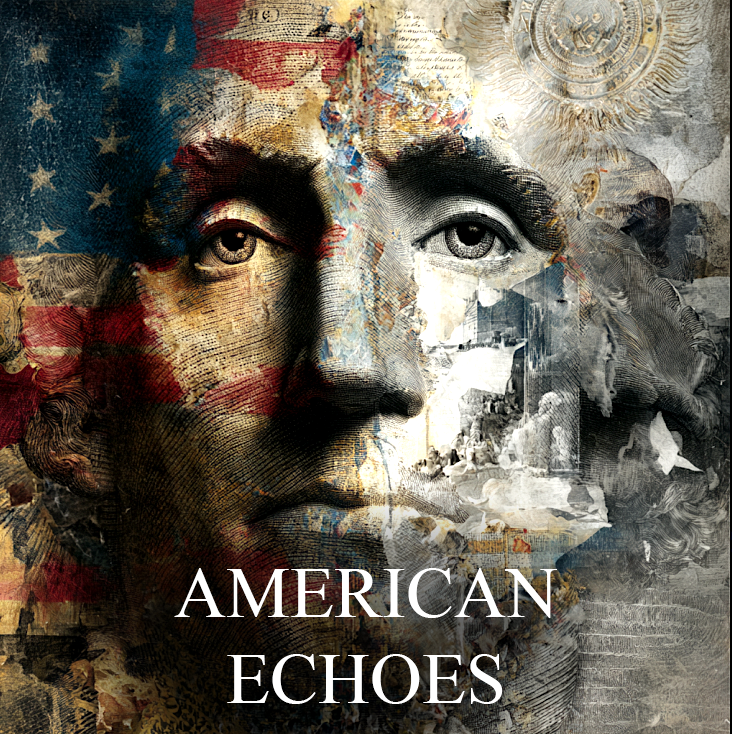
LINKS:
American Echoes is available on Amazon in Kindle, Audio and Paperback editions.
Stay Thirsty Media: https://www.staythirstymedia.com
Dusty Sang on Substack: dustysang.substack.com
Author website: dustysang.com
 ← Previous: My Silk Roads, September 2026